Hair treatments
Scalp microneedling in São Mateus, Brazil
Learn when this procedure may complement hair-loss treatment, what research shows and which questions to discuss during your consultation.
Explore hair-loss informationHow does scalp microneedling work?
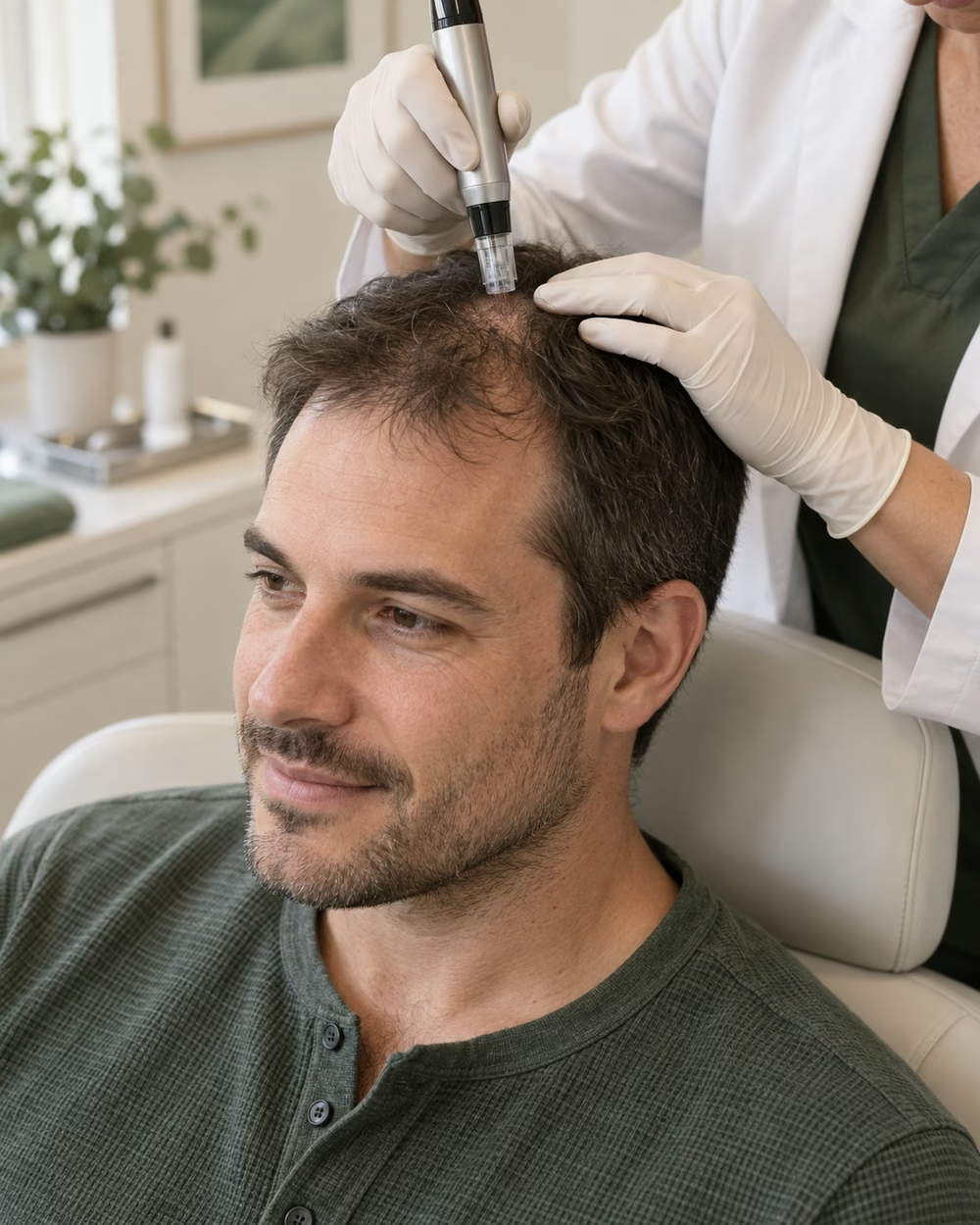
Fine needles create controlled punctures in the scalp. The local repair response is being investigated as a way to support hair growth. This is not a hair transplant and is distinct from radiofrequency microneedling. [2]
What does the evidence show?
A 2025 review included 12 trials with 631 participants. Adding microneedling to minoxidil improved hair counts and diameter compared with minoxidil alone. However, findings varied across studies and cannot guarantee an individual benefit. [1]
Who might benefit?
Evidence mainly concerns androgenetic alopecia. Suitability depends on the diagnosis; these findings should not be extended to every cause of shedding. Reviews highlight methodological limitations and the lack of a universal protocol. [2]
Setting realistic expectations
A pilot trial followed men for 12 weeks and found better outcomes with microneedling plus minoxidil. This short follow-up does not establish a cure, an ideal maintenance plan or permanent results. Comparable photographs and follow-up assessments help discuss progress. [3]
Before and after: practical safety
Discuss medical conditions, medicines, allergies and bleeding problems. Pain, redness and minor bleeding may occur; infection and pigment changes are also possible. Suitability and aftercare need individual assessment. Do not share devices or reuse needle cartridges. [4]
Frequently asked questions
1Does it replace minoxidil?
Do not stop prescribed treatment on your own. The stronger evidence concerns combination treatment rather than replacement. [1]
2How many sessions are needed?
No universal number has been established. Frequency and treatment duration differ between studies and should be discussed after assessment. [2]
3Can I apply products immediately afterwards?
Do not apply medicines or cosmetics to freshly needled skin without professional advice. Combination safety depends on the product and clinical assessment. [4]
4Are results guaranteed?
No. Research describes group averages; individual responses and the duration of benefit may differ. [1] [3]
5What should I bring to my appointment?
Bring your medication list, previous treatments and questions. Ask about the diagnosis, proposed goal and how progress will be assessed.
Discuss your hair loss
An assessment is the first step towards deciding whether this approach fits your case.
Contact and assessmentReferences
- Ahmed KMA, et al. Evaluating the efficacy and safety of combined microneedling therapy versus topical Minoxidil in androgenetic alopecia: a systematic review and meta-analysis. Arch Dermatol Res. 2025;317(1):528. DOI: 10.1007/s00403-025-04032-1.
- English RS Jr, Ruiz S, DoAmaral P. Microneedling and Its Use in Hair Loss Disorders: A Systematic Review. Dermatol Ther (Heidelb). 2022;12(1):41–60. DOI: 10.1007/s13555-021-00653-2.
- Dhurat R, Sukesh MS, Avhad G, Dandale A, Pal A, Pund P. A randomized evaluator blinded study of effect of microneedling in androgenetic alopecia: a pilot study. Int J Trichology. 2013;5(1):6–11. DOI: 10.4103/0974-7753.114700.
- U.S. Food and Drug Administration. Microneedling devices: getting to the point on benefits, risks and safety. [Internet; cited 2026 Sep 19]. Available from: FDA.
Educational information. Treatment decisions require medical assessment; results are not guaranteed.