Seek prompt care
After treatment, worsening pain, spreading redness, discharge or fever need medical assessment. Eye pain or a change in vision require urgent care. Do not wait for a message reply in an emergency.
Dermatology · informed decisions
Understand what plasma skin treatment means, when to discuss it during a consultation and which questions support an informed decision. Suitability depends on your skin, your goal and the specific device.
Arrange a skin assessmentInstagramEducational guide · updated 19 September 2026
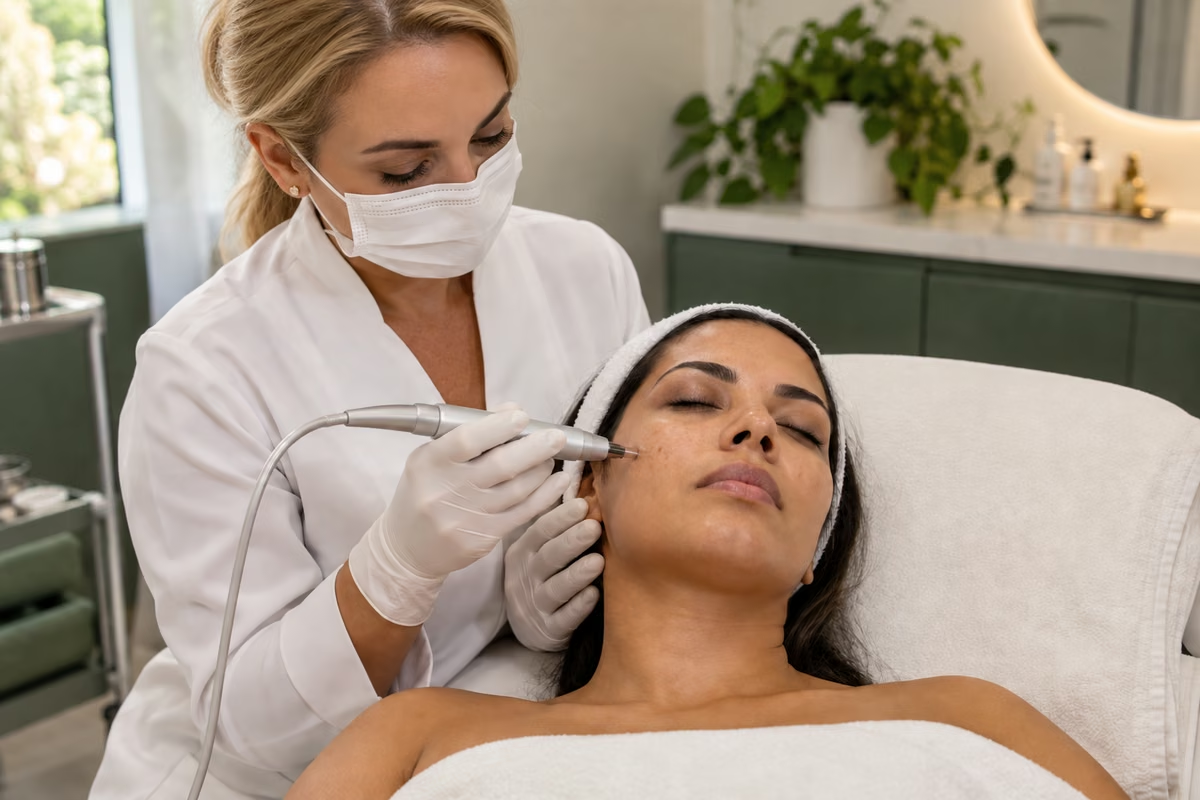
THE RIGHT TIME TO SEEK CARE
After treatment, worsening pain, spreading redness, discharge or fever need medical assessment. Eye pain or a change in vision require urgent care. Do not wait for a message reply in an emergency.
A changing, bleeding or persistently unhealed lesion needs a diagnosis before any cosmetic procedure. Contact a clinician to discuss assessment rather than booking treatment directly.
Stable wrinkles or skin laxity usually allow time to compare options and organise recovery. Plasma is not an emergency treatment; its suitability must be assessed first.
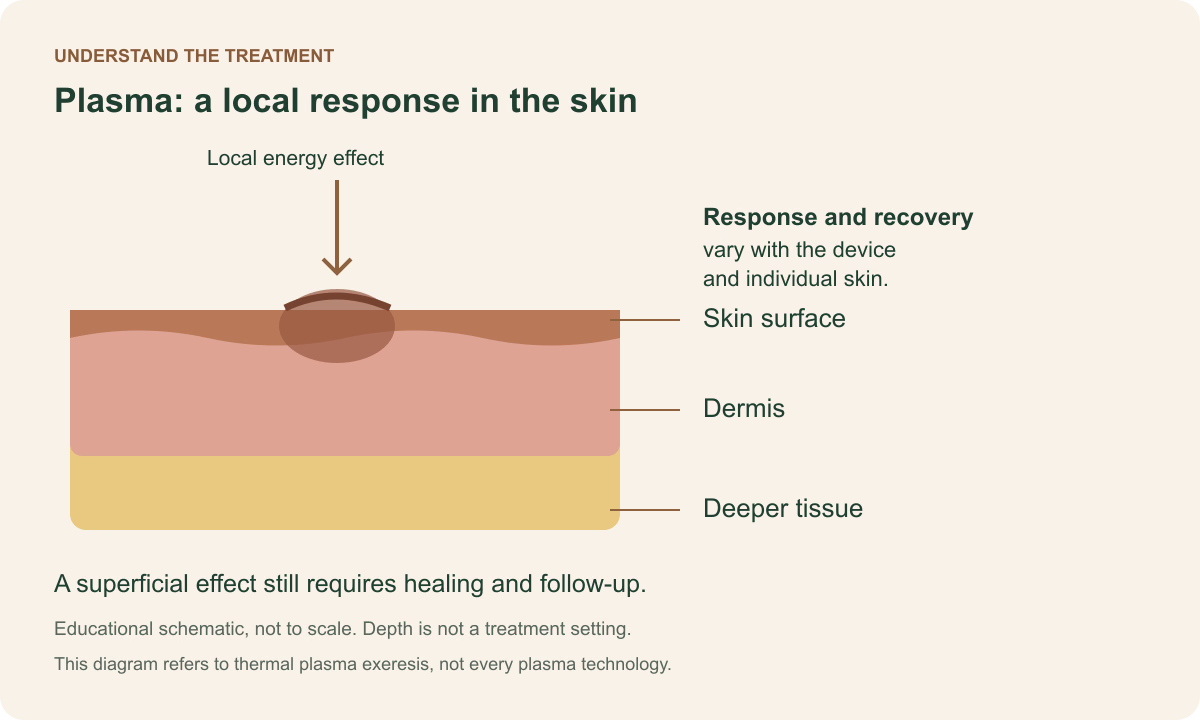
Plasma is an ionised gas. In dermatology, the term describes devices that generate and deliver energy in different ways. Plasma exeresis devices, often called plasma pens, produce a local thermal effect at the skin surface. This triggers repair but also creates a skin injury that must heal. The word plasma alone does not establish treatment depth, intensity, safety or the result you should expect.
This is different from platelet-rich plasma prepared from blood. Cold atmospheric plasma, nitrogen plasma regeneration and plasma pens should not be treated as equivalent technologies. Evidence obtained with one device does not automatically apply to another. Ask which technology is being considered, its intended use and the alternatives appropriate for your concern.
Research has explored plasma exeresis for eyelid laxity and selected benign lesions. That does not make it a universal solution for wrinkles, pigmentation or excess skin. The first step is to define the concern: texture, a raised lesion, pigment, laxity and volume loss require different assessments.
A mole or lesion that changes, grows, bleeds or fails to heal needs diagnosis first. Destroying tissue may prevent examination of a suitable sample. Dermoscopy, biopsy or surgery may be more appropriate than a cosmetic procedure. The decision should consider expected benefit, possible scarring and the need to monitor the area.
It should not be presented as equivalent to blepharoplasty. Excess skin, fat pads, brow position and a drooping eyelid are different problems. A surface treatment does not necessarily correct deeper structures. Even without a scalpel incision, skin injury, recovery and complications remain possible.
Treatment near the eyes requires specific assessment and protection. Visual symptoms, difficulty closing the eyes or eyelid drooping need appropriate investigation. Read the site's blepharoplasty guide to prepare questions, then discuss which options address your particular anatomy and concern.
A pilot study published in 2018 followed ten patients after three upper-eyelid plasma exeresis interventions. It reported clinical improvement and changes seen with confocal microscopy, while calling for further research. Its small size limits how confidently the findings can be applied to other patients, skin types or devices. See reference 1 below.
A clinical study published in 2022 included 56 women with periorbital concerns and reported improvement following three treatments. These findings are encouraging in selected settings, but the absence of serious events in that group does not establish zero risk or superiority over surgery or lasers. A research schedule is not an individual prescription. See reference 2.
Bring a list of medicines, supplements, allergies and previous procedures. Mention cold sores, raised scars, pigmentation after inflammation, healing problems and relevant skin conditions. Also disclose pregnancy, breastfeeding, implanted devices and recently used irritating skincare. These details help determine whether to proceed, postpone or consider another approach.
Make the goal concrete: describe what bothers you, what degree of improvement would matter and how much recovery time fits your routine. Clinical photographs may document the starting point with consent and privacy. Do not stop prescribed medicines or prepare the skin with acids or numbing products on your own.
Thermal injury can cause pain, swelling, redness, crusting, infection, lighter or darker marks and scarring. Depth, location, technique and individual healing influence the outcome. Health Canada has issued a plasma-pen risk advisory; this is a communication from that country, not a statement about a particular device's regulatory status in Brazil. See reference 3.
If inflammation has previously left dark marks, discuss this before choosing treatment. People with brown or black skin should not be promised freedom from pigmentation problems. Melasma also needs its own diagnosis and plan: provoking inflammation is not an automatic solution for pigment. A test area, when appropriate, cannot eliminate every risk.
Sources: [3]
Recovery appearance and duration depend on the technology, treatment area and extent. Ask how to clean the skin, which products to use, when to return and whom to contact if problems develop. Do not pick crusts to speed healing. Avoid home remedies and do not start antibiotics, bleaching agents or acids without advice.
Agree with the team when to resume makeup, exercise, swimming and sun exposure. Skin that appears closed may still be sensitive. Increasing pain, spreading redness, discharge or fever require assessment. Eye pain or altered vision after a procedure near the eyes require urgent care. There is no recovery timetable that applies to everyone.
These procedures are not interchangeable. Electrocautery and other electrosurgical methods can be used for selected superficial lesions and bleeding control. Microneedling creates small punctures and has different indications. Lasers differ in target, depth and intended use. A commercial name or an outcome photograph is not enough to select treatment.
Sometimes observation, treatment of an underlying disease or biopsy matters more than choosing a device. Surgery, cryotherapy or topical care may also enter the discussion. Ask why a particular option is recommended, what it cannot accomplish and what would happen if you chose to wait.
Ask for the device name and model and check its status through Anvisa, Brazil's health regulatory agency. It provides a public product search. Verifying a specific device is different from claiming that every procedure marketed as plasma treatment is authorised. Intended use and device instructions also matter. See reference 4.
A quotation should explain what is included: assessment, treatment area, follow-up and possible additional procedures. There is no universal price or session count. Use the site's contact options to discuss your concern in São Mateus and confirm availability after assessment. This educational guide does not replace a consultation.
Sources: [4]
Discomfort is possible. Anaesthesia and pain control depend on the site, device and assessment. Report significant pain promptly and do not apply numbing medicines without advice.
There is no standard number for everyone. Research schedules are specific to each study; an individual plan depends on response, healing and the risk of further treatment.
Permanence cannot be guaranteed. Ageing, sun exposure and the underlying condition continue to affect the skin. Follow-up is more useful than a promise of a permanent result.
No. Pigmented lesions need assessment before destruction. If tissue analysis is needed, the approach must preserve an appropriate sample.
Not necessarily. These terms can refer to different mechanisms. Ask which technology will be used and read the electrocautery guide for a clearer comparison.
Discuss your dates, destination and ability to attend follow-up. Sun exposure, swimming and distance from the treating team may make another date more appropriate.
Sometimes, but combining injuries or inflammation in the same area may change the risks. Timing and sequence should be planned by the treating professional.
It is not a safe self-care option. Burns, scars, eye injury and destruction of a lesion that required diagnosis are possible concerns.
Early appearance may reflect swelling and healing. Agree on an assessment time with the team rather than treating the first few days as a final comparison.
Use the contact options on this page and describe your concern. Assessment is an opportunity to discuss diagnosis, alternatives, risks and availability, without a commitment to undergo a procedure.
Sources accessed 19 September 2026. Study findings apply to their specific devices and populations.