What can happen when treatment is delayed?
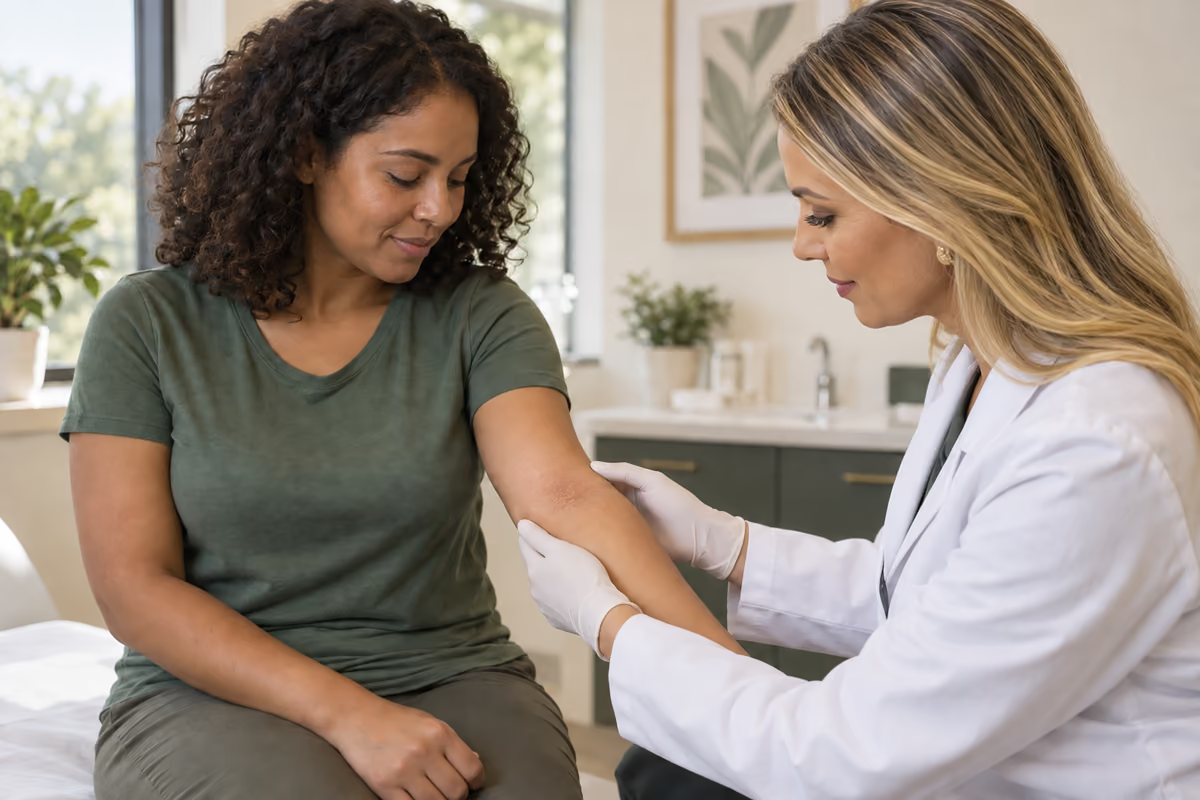
Delaying effective care for active atopic dermatitis can prolong scratching and skin injury, leading to cracks, thickened skin and pigment changes. Lost sleep can affect concentration, work or school and family well-being. Broken skin is also more vulnerable to infection.
A less common but important complication is eczema herpeticum: rapidly appearing clusters of similar painful blisters or sores, sometimes with fever. This needs urgent assessment, particularly on the face or near the eyes. Do not wait for a routine appointment in this situation.
Complications are not inevitable. Seeking care early aims to relieve active disease and recognise changes before the skin becomes extensively damaged.
[1] [2]When to seek medical care
Seek same-day assessment for fever, increasing pain, pus or spreading redness. Rapidly developing painful blisters, sores near the eyes, significant illness or extensive worsening also require urgent care. Recurring itch that disrupts sleep warrants a consultation even without these warning signs.
[1] [2]What it is and why it happens
Atopic dermatitis is a chronic inflammatory condition that often alternates between calmer periods and flares. Both the skin barrier and immune response contribute: the skin loses moisture more easily and becomes more vulnerable to irritants. It is not caused by poor hygiene and is not contagious. It can begin in childhood or develop and persist in adulthood.
A personal or family history of asthma, hay fever or eczema can support the assessment but is not required. Atopic dermatitis is not simply a food allergy. Scratching may briefly relieve itching, yet it further damages the barrier and reinforces the itch–scratch cycle.
[1] [2]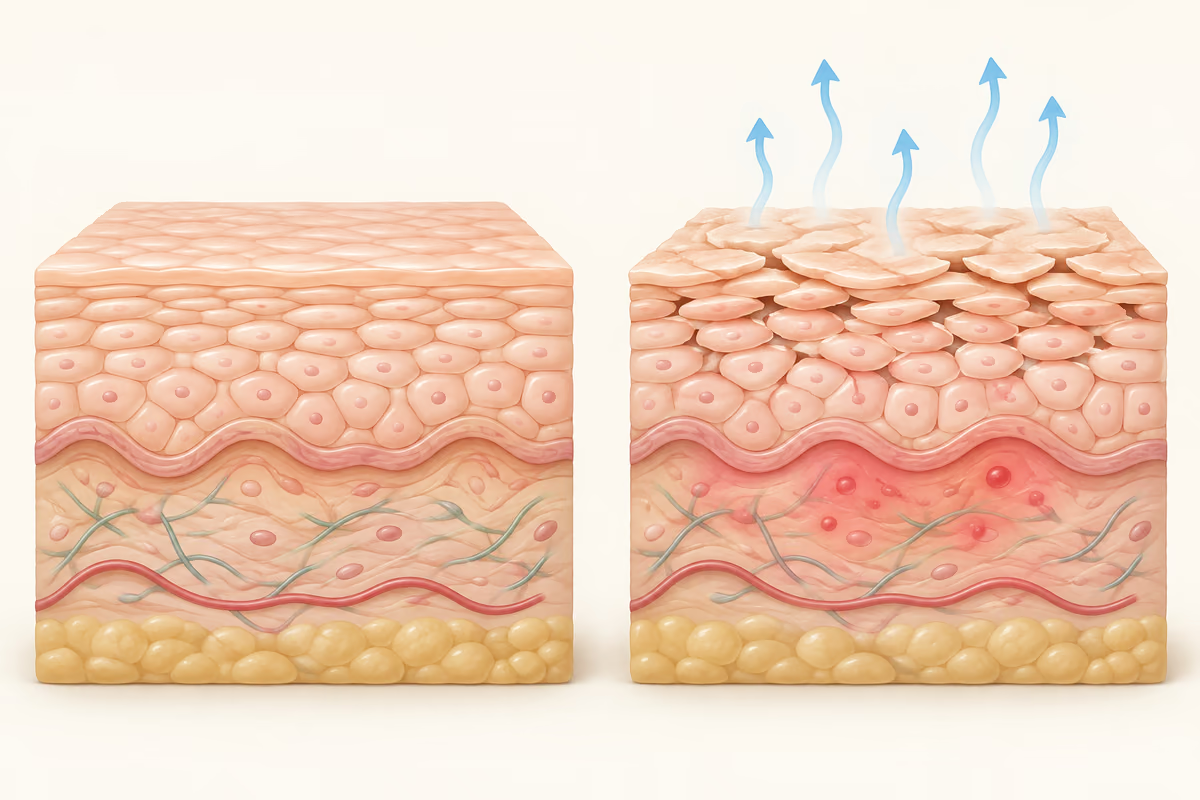
Symptoms and similar-looking conditions
Common features include itching, dryness, scaling and inflamed patches. Elbow and knee creases are typical sites in older children and adults, although distribution changes with age. In darker skin, inflammation may look darker, greyish or purple rather than bright red.
Heat, sweating, friction, harsh cleansers and some personal-care products can aggravate flares. Stress may increase discomfort without making the condition “just emotional”. A record of exposures and symptoms is more useful than repeatedly buying new products or removing foods without clinical advice.
[1] [2]How diagnosis is established
Diagnosis is usually clinical, drawing on appearance, distribution, duration and the history of itching. Assessment should include sleep, daily activities, affected area and previous treatment. Dated photographs can help if a flare settles before the appointment.
Allergy testing is not routinely necessary for everyone. Targeted tests may be appropriate when contact allergy, infection or another condition is suspected. Unnecessary elimination diets can compromise nutrition, especially in children, and should not be started as an eczema experiment.
[1] [2] [3]Specialist treatment and follow-up
Care combines barrier support with control of inflammation. Suitable moisturisers, gentle cleansing and a clear flare plan form the foundation. Topical corticosteroids and other anti-inflammatory medicines may be prescribed according to age, severity and body site; eyelids, face and skin folds need particular care.
Moderate or severe disease that remains active may require phototherapy or systemic treatment, including targeted immune therapies, after assessment of suitability, risks and monitoring. Available options depend on regulatory approvals and individual circumstances. Repeated oral steroid courses are not a long-term maintenance solution.
Follow-up helps clarify where and how to use prescribed products, assess response and reduce recurrence. Improvement does not always mean stopping every element of care. Agree on maintenance rather than extending a flare prescription indefinitely on your own.
[1] [2] [3]Safe care between appointments
Use short lukewarm baths or showers, gentle cleansing and a suitable moisturiser that your skin tolerates. Avoid scrubbing and keep nails short. Change damp clothing after sweating and cleanse gently. Do not add chemicals to bathwater or use occlusive wet dressings without specific professional instructions.
Bring the names of creams, supplements and cosmetics you use. If a product causes persistent burning or worsens the rash, stop that product and seek advice. A sustainable routine should fit your daily life and budget; consistent appropriate care matters more than a complicated product collection.
[1] [2]Do not treat inflammation with household remedies
Do not apply lemon juice, vinegar, alcohol, concentrated essential oils, acids or mixtures with unknown ingredients to inflamed skin. Natural products can irritate or cause allergy. Do not self-prescribe steroids, antibiotics or antifungals, or use someone else’s prescription.
Cure claims involving supplements, homeopathy or unproven methods should not replace investigation and treatment. Evidence varies between interventions; discuss any complementary product before using it. Delaying appropriate care while trying a remedy may prolong symptoms and obscure important changes.
Clinician-guided gentle cleansing, moisturising and barrier protection are legitimate home care. The goal is a safe, understandable plan with application instructions and clear reasons to return.
[4]Prepare for your appointment
- Record when symptoms began, affected areas and whether flares recur.
- Bring progress photographs and the names or labels of products you use.
- Mention medicines, known allergies, pregnancy, breastfeeding and other health conditions where applicable.
- Ask about the likely diagnosis, required investigations and what to do if treatment does not help.
- Agree on duration, maintenance, follow-up and warning signs.
10 PRACTICAL ANSWERS
Frequently asked questions
Can atopic dermatitis be cured permanently?
Periods of good control and relapse are common. Some children improve with age, while others need ongoing care. A permanent cure cannot be promised.
Can I use the same cream on my face and body?
Only if your clinician has advised it. Skin thickness, proximity to the eyes and age affect the appropriate product, strength and duration.
Should I avoid milk, eggs or gluten?
Not routinely. Suspected food allergy requires assessment; broad restrictions can cause nutritional problems, particularly in children.
My skin improved. Should I still attend follow-up?
Follow-up can help adjust maintenance and identify triggers. Agree on its timing and purpose with your clinician.
Does itching matter when there is little redness?
Yes. Itching, sleep disruption and cracks matter, and inflammation can look different across skin tones.
Can moisturiser alone control every flare?
No. It supports the barrier, but active inflammation may require specific treatment. Relying on moisturiser alone may prolong symptoms.
Can home remedies or alternative treatments replace medical assessment?
No. Irritating mixtures, products with unknown ingredients and cure claims can worsen skin disease and delay diagnosis. Clinician-guided home care, such as gentle cleansing and appropriate barrier care, is part of medical treatment.
Can I reuse an old prescription?
Not automatically. The diagnosis, site, age or severity may have changed. Share previous treatment details so the clinician can judge whether it remains appropriate.
What should I bring to the appointment?
Dated photographs, medicine and skincare names, previous results and a brief record of onset, aggravating factors and effects on sleep and everyday activities.
When should I request an earlier review?
For worsening, increasing pain, discharge, a product reaction or no improvement within the agreed period. Urgent warning signs in this guide must not wait for routine follow-up.
What the evidence supports and its limits
Guidelines distinguish topical care from treatments for more extensive disease. The strength of a recommendation does not replace individual assessment, and adult study findings cannot automatically be applied to infants. Natural products and supplements do not replace an evidence-based treatment plan.
[1] [2] [3]Related reading
Bibliography and sources
References in Vancouver/NLM style. Sources accessed September 20, 2026. Guidelines, reviews and institutional guidance do not replace individual assessment.
- NATIONAL INSTITUTE OF ARTHRITIS AND MUSCULOSKELETAL AND SKIN DISEASES. Atopic dermatitis [Internet]. Bethesda: NATIONAL INSTITUTE OF ARTHRITIS AND MUSCULOSKELETAL AND SKIN DISEASES; 2022 [cited 2026 Sep 20]. Available from: https://www.niams.nih.gov/health-topics/atopic-dermatitis.
- Sidbury R, et al. Guidelines of care for the management of atopic dermatitis in adults with topical therapies. J Am Acad Dermatol. 2023;89(1):e1–e20. DOI: 10.1016/j.jaad.2022.12.029. Read source.
- AMERICAN ACADEMY OF DERMATOLOGY. Atopic dermatitis clinical guideline [Internet]. Rosemont: AMERICAN ACADEMY OF DERMATOLOGY; 2026 [cited 2026 Sep 20]. Available from: https://www.aad.org/member/clinical-quality/guidelines/atopic-dermatitis.
- NATIONAL CENTER FOR COMPLEMENTARY AND INTEGRATIVE HEALTH. Skin conditions and complementary health approaches: what the science says [Internet]. Bethesda: NATIONAL CENTER FOR COMPLEMENTARY AND INTEGRATIVE HEALTH; [date unknown] [cited 2026 Sep 20]. Available from: https://www.nccih.nih.gov/health/providers/digest/skin-conditions-and-complementary-health-approaches-science.