What can happen when treatment is delayed?
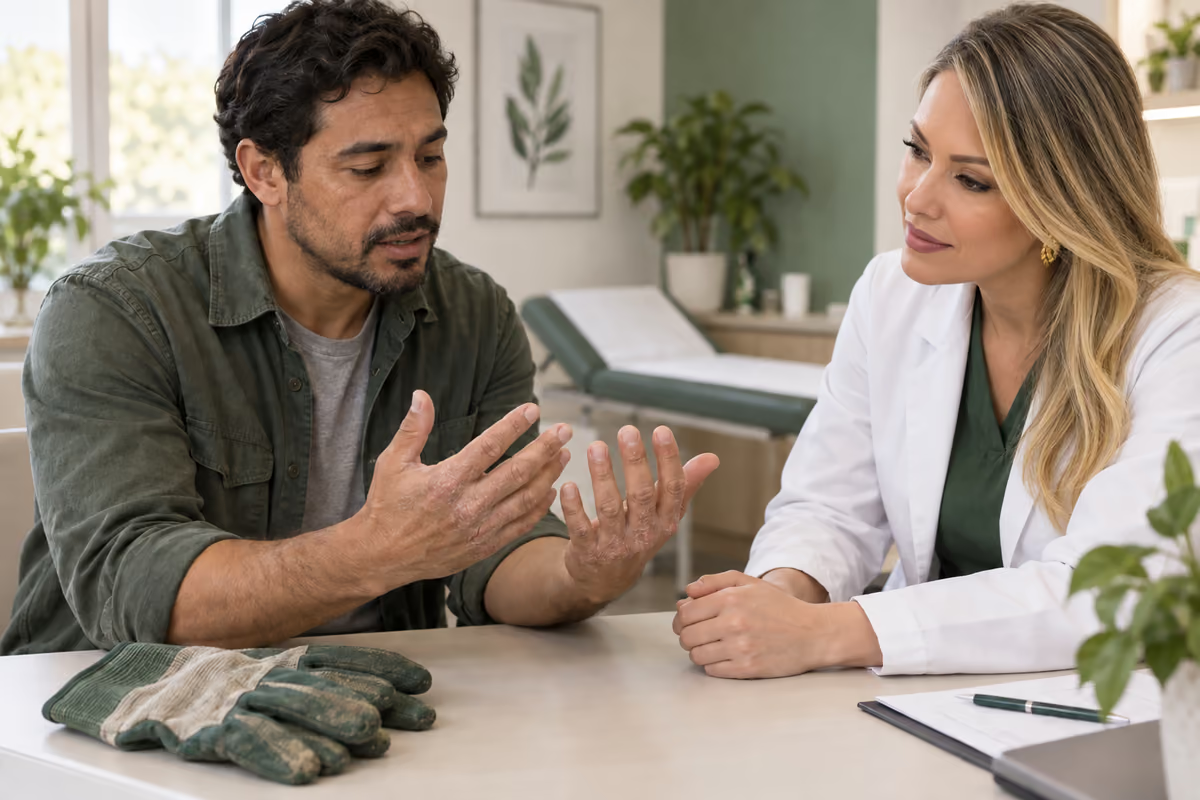
Delaying care while exposure continues can deepen cracks, sustain pain and contribute to chronic inflammation. Everyday tasks, hygiene and work may become increasingly difficult. Broken skin makes secondary infection more likely and may require additional treatment.
Associated contact allergy may also remain unrecognised. Trying successive creams or repeatedly applying alcohol to disinfect cracks does not restore the barrier and can worsen irritation. Earlier assessment allows protection to be adapted before substantial functional limitation develops.
Mild irritation is not automatically an emergency. Nevertheless, recurring symptoms, bleeding cracks or interference with everyday activities should not be accepted as an unavoidable part of work.
[1] [2]When to seek medical care
Pus, marked warmth, increasing swelling, fever or spreading redness need prompt assessment. Exposure to a corrosive product may be a chemical burn and requires immediate emergency advice; do not try to neutralise it with another chemical.
[1] [2]What it is and why it happens
Irritant contact dermatitis develops when direct damage exceeds the skin’s ability to protect and repair itself. It does not require a pre-existing allergy. It may follow a single strong exposure or gradually develop with repeated contact with water, detergents, solvents and friction.
Cleaning, healthcare, food handling, beauty work and other jobs involving wet work can be relevant. Anyone can develop irritation, but a vulnerable barrier, as in atopic eczema, increases susceptibility. Irritant and allergic contact dermatitis may occur together.
[1] [2]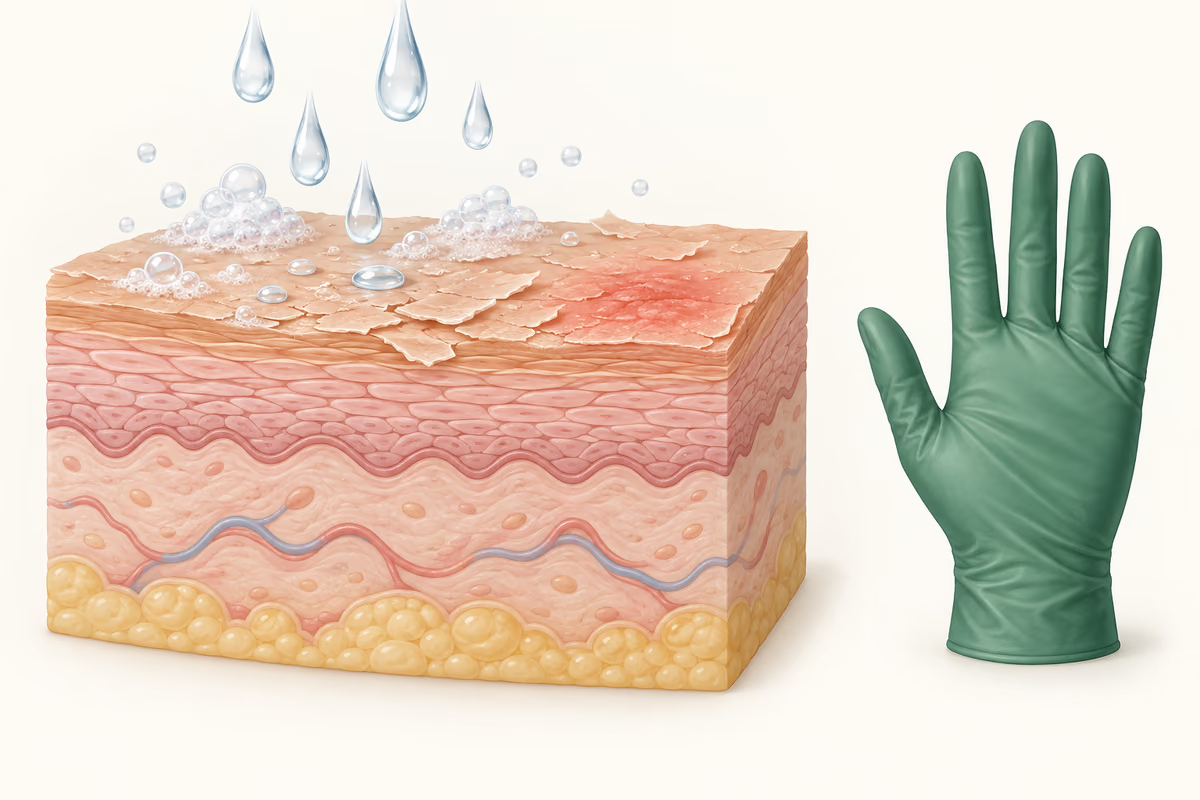
Symptoms and similar-looking conditions
Dryness, burning, tightness, scaling and cracks are common; itching may also occur. Hand disease can make bending fingers, washing objects or wearing gloves painful. Inflammation is not always bright red, especially in darker skin.
The relationship between symptoms and repeated tasks can offer clues. Gloves may protect against particular exposures, but sweating, unsuitable materials and prolonged wear can also contribute. The aim is appropriate protection while preserving necessary hygiene.
[1] [2]How diagnosis is established
Assessment considers the rash pattern, exposure duration, products, glove use and practical opportunities to reduce contact. Include home products and hobbies in the history. Improvement on days away from work can be a clue but does not establish the diagnosis alone.
There is no single test that confirms all irritant dermatitis. Patch testing may investigate associated allergy when indicated, but it does not measure irritation. Fungal infection, psoriasis and other hand eczemas may need consideration if appearance or progression is unusual.
[1] [2] [3]Specialist treatment and follow-up
Management combines reducing irritants, supporting barrier repair and treating inflammation when necessary. Suitable moisturisers and less aggressive cleansing matter. Gloves should be selected according to the substance handled, exposure time and any allergy to their material.
Topical anti-inflammatory medicines may be prescribed for a defined area and duration during flares. Persistent, extensive or function-limiting disease requires reassessment and sometimes specialist management of chronic hand eczema. Repeated cream use without changing exposure can leave the underlying problem active.
Barrier recovery can continue after the skin looks better. Planned follow-up checks cracks, product tolerance and whether work changes are realistic, rather than dismissing persistent symptoms as simply “sensitive skin”.
[1] [2] [3]Safe care between appointments
Reduce unnecessary irritant contact while maintaining the hygiene required for your activity. Avoid very hot water, abrasive brushes and fragrance on damaged skin. Dry gently and use the recommended moisturiser.
Do not clean your hands with solvents or mix products to disinfect the skin. Discuss suitable protection and breaks when wet work is involved. Record product names and, where available, the safety information for materials used at work.
[1] [2]Do not treat inflammation with household remedies
Do not apply lemon juice, vinegar, alcohol, concentrated essential oils, acids or mixtures with unknown ingredients to inflamed skin. Natural products can irritate or cause allergy. Do not self-prescribe steroids, antibiotics or antifungals, or use someone else’s prescription.
Cure claims involving supplements, homeopathy or unproven methods should not replace investigation and treatment. Evidence varies between interventions; discuss any complementary product before using it. Delaying appropriate care while trying a remedy may prolong symptoms and obscure important changes.
Clinician-guided gentle cleansing, moisturising and barrier protection are legitimate home care. The goal is a safe, understandable plan with application instructions and clear reasons to return.
[4]Prepare for your appointment
- Record when symptoms began, affected areas and whether flares recur.
- Bring progress photographs and the names or labels of products you use.
- Mention medicines, known allergies, pregnancy, breastfeeding and other health conditions where applicable.
- Ask about the likely diagnosis, required investigations and what to do if treatment does not help.
- Agree on duration, maintenance, follow-up and warning signs.
10 PRACTICAL ANSWERS
Frequently asked questions
Is this always a detergent allergy?
No. Detergents can directly irritate the skin without an allergy. Both mechanisms can also coexist.
Should I put alcohol on cracks?
Do not use alcohol as a treatment for cracks. It can sting and irritate. Necessary occupational hygiene should continue within a skin-protection plan.
Will any glove protect my skin?
No. The choice depends on the substance, glove material and contact time. Unsuitable protection may fail or increase moisture.
Can moisturiser replace protective equipment?
No. It supports the barrier but does not replace appropriate equipment or make harmful chemical exposure safe.
Can it be dermatitis without itching?
Yes. Burning, pain, dryness and cracks can be more prominent than itching.
How long does recovery take?
It depends on severity and whether exposure can be reduced. Lack of improvement calls for review, not increasing medication without advice.
Can home remedies or alternative treatments replace medical assessment?
No. Irritating mixtures, products with unknown ingredients and cure claims can worsen skin disease and delay diagnosis. Clinician-guided home care, such as gentle cleansing and appropriate barrier care, is part of medical treatment.
Can I reuse an old prescription?
Not automatically. The diagnosis, site, age or severity may have changed. Share previous treatment details so the clinician can judge whether it remains appropriate.
What should I bring to the appointment?
Dated photographs, medicine and skincare names, previous results and a brief record of onset, aggravating factors and effects on sleep and everyday activities.
When should I request an earlier review?
For worsening, increasing pain, discharge, a product reaction or no improvement within the agreed period. Urgent warning signs in this guide must not wait for routine follow-up.
What the evidence supports and its limits
Contact dermatitis and hand eczema guidelines support exposure assessment, appropriate protection and treatment tailored to inflammation. No cream provides complete protection against every chemical. Prevention must reflect the actual hazards of the activity.
[1] [2] [3]Related reading
Bibliography and sources
References in Vancouver/NLM style. Sources accessed September 20, 2026. Guidelines, reviews and institutional guidance do not replace individual assessment.
- Johnston GA, Exton LS, Mohd Mustapa MF, Slack JA, Coulson IH, English JSC, et al. British Association of Dermatologists’ guidelines for the management of contact dermatitis 2017. Br J Dermatol. 2017;176(2):317–329. DOI: 10.1111/bjd.15239. Read source.
- Thyssen JP, et al. Guidelines for diagnosis, prevention, and treatment of hand eczema. Contact Dermatitis. 2022;86(5):357–378. DOI: 10.1111/cod.14035. Read source.
- BRITISH ASSOCIATION OF DERMATOLOGISTS. Contact dermatitis [Internet]. London: BRITISH ASSOCIATION OF DERMATOLOGISTS; 2021 [cited 2026 Sep 20]. Available from: https://cdn.bad.org.uk/uploads/2021/11/29200038/Contact-Dermatitis-Updated-April-2021-Lay-reviewed-Feb-2021.pdf.
- NATIONAL CENTER FOR COMPLEMENTARY AND INTEGRATIVE HEALTH. Skin conditions and complementary health approaches: what the science says [Internet]. Bethesda: NATIONAL CENTER FOR COMPLEMENTARY AND INTEGRATIVE HEALTH; [date unknown] [cited 2026 Sep 20]. Available from: https://www.nccih.nih.gov/health/providers/digest/skin-conditions-and-complementary-health-approaches-science.