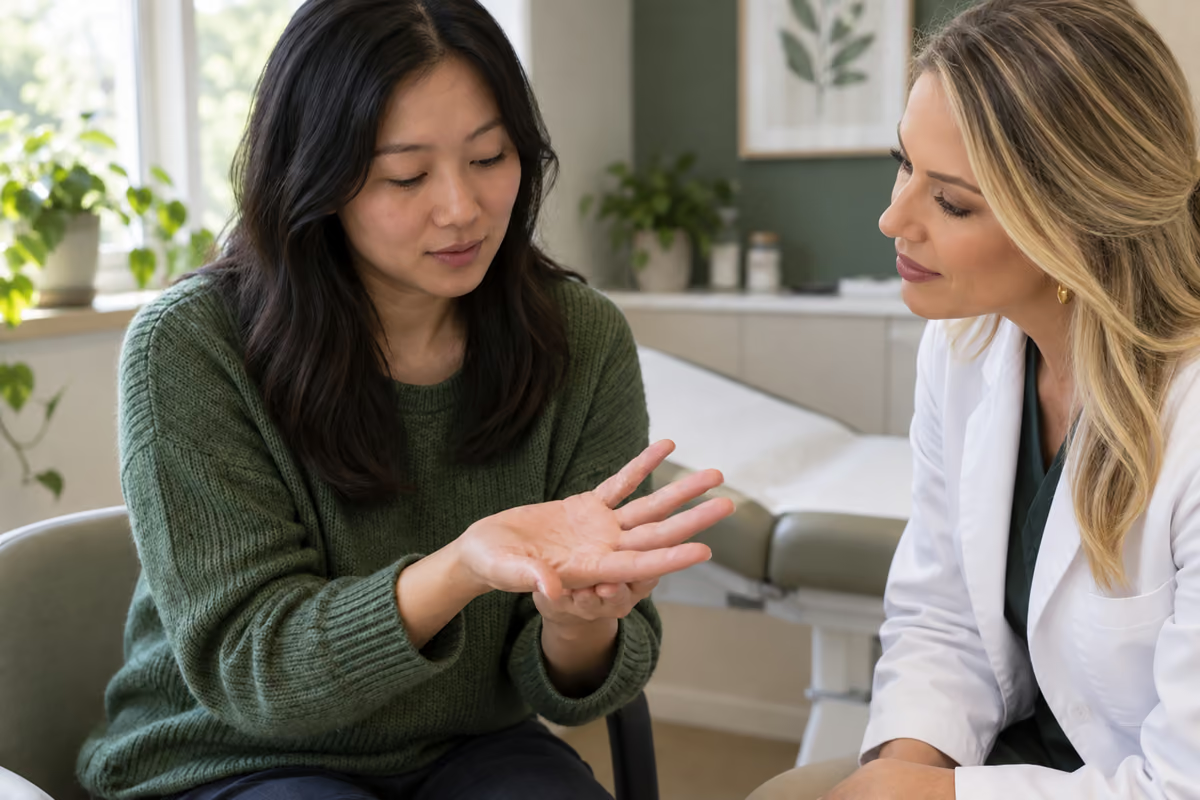
What can happen when treatment is delayed?
Delaying care for repeated flares can sustain a cycle of blistering, peeling and cracks. Hands may hurt during work, cooking, writing or washing, while foot involvement can make walking uncomfortable. Itch-related sleep disruption also matters.
Scratching and opening blisters create entry points for infection. Deep cracks can increase pain and prolong recovery. Delay may also leave a fungal or other infection mistaken for eczema, postponing the treatment it actually requires.
These risks do not make every small blister dangerous. Recurrence, functional limitation or a changing pattern are reasons for assessment rather than repeated attempts to dry the skin with household remedies.
[1] [2]When to seek medical care
Pus, fever, spreading redness, marked warmth or increasing pain require prompt assessment. Very painful blisters concentrated on one finger should be examined before manipulation or self-directed steroid treatment.
[1] [2]What it is and why it happens
Dyshidrotic eczema, also called pompholyx or dyshidrosis, is an eczema pattern involving small deep-seated vesicles on the palms, sides of the fingers and sometimes soles. It is not simply trapped sweat or blocked sweat glands.
Its cause is multifactorial and may not be fully identified. Heat, sweating, stress and irritant exposure can accompany flares. Contact allergy or another condition may coexist. Noticing an association is different from proving that one trigger explains every episode.
[1] [2]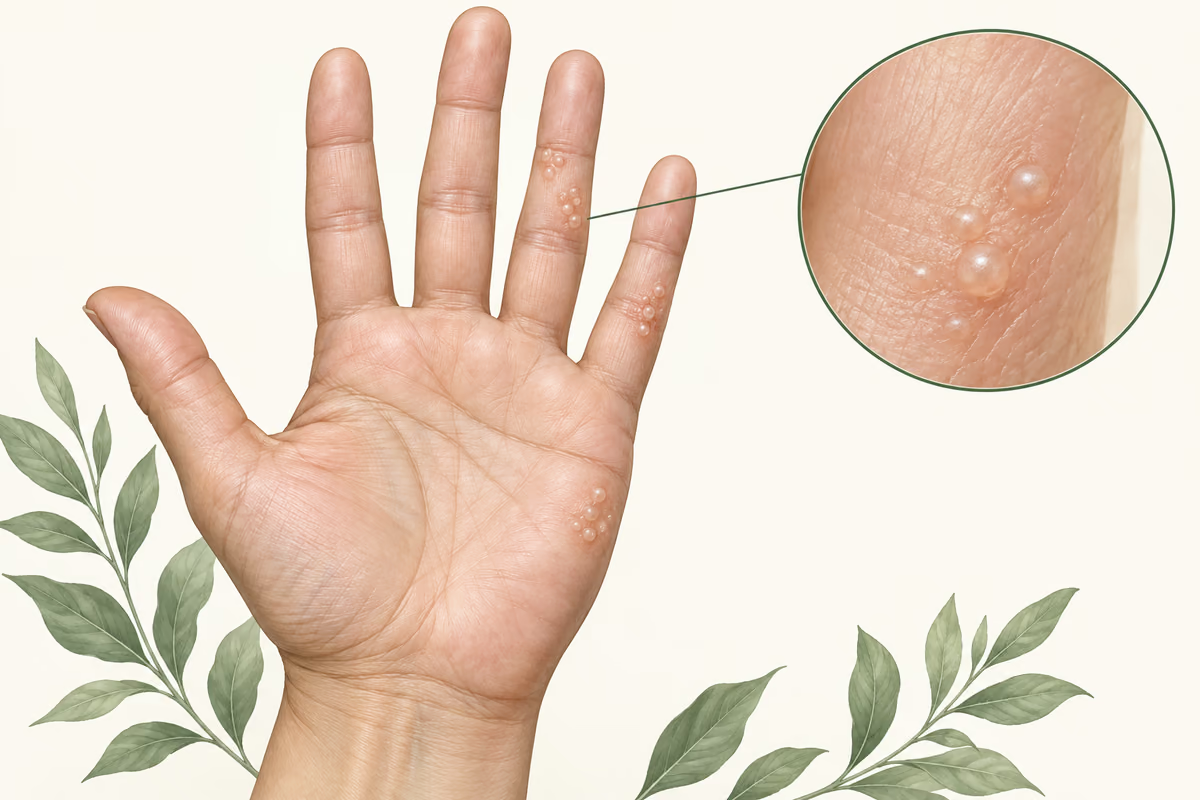
Symptoms and similar-looking conditions
The small blisters are often intensely itchy and may also burn. Peeling and painful cracks can follow. Both hands or feet may be affected, but distribution alone cannot establish the diagnosis.
Severe pain in one finger, very painful grouped blisters, pus or a new pattern needs attention. Fungal infection, pustular psoriasis, contact dermatitis and infections such as herpetic whitlow can require different treatment. Do not puncture blisters to investigate their contents.
[1] [2]How diagnosis is established
Diagnosis is usually clinical, considering location, appearance, recurrence and exposures. Mention wet work, cleaning agents, gloves, footwear, sweating and previous treatment. Photographs from the start of a flare may help when the blisters have disappeared by the appointment.
Fungal testing or patch testing may be appropriate when fungal disease or associated allergy is suspected. Not everyone needs every test. Persistent hand eczema should also be assessed by its functional impact, not only by the area of skin involved.
[1] [2] [3]Specialist treatment and follow-up
Management includes barrier protection, appropriate moisturising and inflammation control. Topical medicines may be needed. Palm skin differs from facial skin, but this does not justify choosing a stronger steroid without advice; a clinician determines the product, site and duration.
Persistent or substantial disease may require further investigation and selected options such as phototherapy or systemic treatment. Associated excessive sweating can need separate management, without assuming that controlling sweat will resolve every case.
Follow-up checks blister activity, healing of cracks and return to normal tasks. Repeated flares prompt review of exposure, treatment use and diagnosis. Antibiotics have a role only when specifically indicated; fluid inside a vesicle does not automatically mean infection.
[1] [2] [3]Safe care between appointments
Do not puncture blisters or apply alcohol, vinegar, lemon juice or drying mixtures. Avoid unnecessary friction and irritant contact. Use suitable protection for tasks and change damp clothing, socks or gloves as appropriate.
The routine should avoid both chemical injury and excessive occlusion. Moisturisers and cleansing advice need to suit your skin. Report a new reaction to a prescribed product or increasing pain rather than adding another cream yourself.
[1] [2]Do not treat inflammation with household remedies
Do not apply lemon juice, vinegar, alcohol, concentrated essential oils, acids or mixtures with unknown ingredients to inflamed skin. Natural products can irritate or cause allergy. Do not self-prescribe steroids, antibiotics or antifungals, or use someone else’s prescription.
Cure claims involving supplements, homeopathy or unproven methods should not replace investigation and treatment. Evidence varies between interventions; discuss any complementary product before using it. Delaying appropriate care while trying a remedy may prolong symptoms and obscure important changes.
Clinician-guided gentle cleansing, moisturising and barrier protection are legitimate home care. The goal is a safe, understandable plan with application instructions and clear reasons to return.
[4]Prepare for your appointment
- Record when symptoms began, affected areas and whether flares recur.
- Bring progress photographs and the names or labels of products you use.
- Mention medicines, known allergies, pregnancy, breastfeeding and other health conditions where applicable.
- Ask about the likely diagnosis, required investigations and what to do if treatment does not help.
- Agree on duration, maintenance, follow-up and warning signs.
10 PRACTICAL ANSWERS
Frequently asked questions
Is dyshidrotic eczema contagious?
No. However, some similar-looking conditions have different causes, which is why diagnosis matters.
Can I pop the blisters?
No. This does not treat inflammation and may cause wounds and infection.
Is sweating always the cause?
No. Heat and sweat can aggravate symptoms in some people, but the disease is not simply blocked sweat glands.
Can it affect my feet?
Yes. Soles and toe edges can be involved, although fungal infection also needs consideration.
Do I need antibiotics?
Not routinely. They require a specific medical indication rather than the presence of blisters alone.
Is a small affected area worth assessing?
Yes, particularly if recurrent, painful or function-limiting. A small hand lesion can substantially affect daily activities.
Can home remedies or alternative treatments replace medical assessment?
No. Irritating mixtures, products with unknown ingredients and cure claims can worsen skin disease and delay diagnosis. Clinician-guided home care, such as gentle cleansing and appropriate barrier care, is part of medical treatment.
Can I reuse an old prescription?
Not automatically. The diagnosis, site, age or severity may have changed. Share previous treatment details so the clinician can judge whether it remains appropriate.
What should I bring to the appointment?
Dated photographs, medicine and skincare names, previous results and a brief record of onset, aggravating factors and effects on sleep and everyday activities.
When should I request an earlier review?
For worsening, increasing pain, discharge, a product reaction or no improvement within the agreed period. Urgent warning signs in this guide must not wait for routine follow-up.
What the evidence supports and its limits
Hand eczema guidelines support combining diagnosis, protection and treatment. Not every study specifically addresses the dyshidrotic subtype. Response depends on associated causes, exposure and disease severity.
[1] [2] [3]Related reading
Bibliography and sources
References in Vancouver/NLM style. Sources accessed September 20, 2026. Guidelines, reviews and institutional guidance do not replace individual assessment.
- NATIONAL HEALTH SERVICE. Pompholyx (dyshidrotic eczema) [Internet]. London: NATIONAL HEALTH SERVICE; 2026 [cited 2026 Sep 20]. Available from: https://www.nhs.uk/conditions/pompholyx/.
- Thyssen JP, et al. Guidelines for diagnosis, prevention, and treatment of hand eczema. Contact Dermatitis. 2022;86(5):357–378. DOI: 10.1111/cod.14035. Read source.
- Johnston GA, Exton LS, Mohd Mustapa MF, Slack JA, Coulson IH, English JSC, et al. British Association of Dermatologists’ guidelines for the management of contact dermatitis 2017. Br J Dermatol. 2017;176(2):317–329. DOI: 10.1111/bjd.15239. Read source.
- NATIONAL CENTER FOR COMPLEMENTARY AND INTEGRATIVE HEALTH. Skin conditions and complementary health approaches: what the science says [Internet]. Bethesda: NATIONAL CENTER FOR COMPLEMENTARY AND INTEGRATIVE HEALTH; [date unknown] [cited 2026 Sep 20]. Available from: https://www.nccih.nih.gov/health/providers/digest/skin-conditions-and-complementary-health-approaches-science.