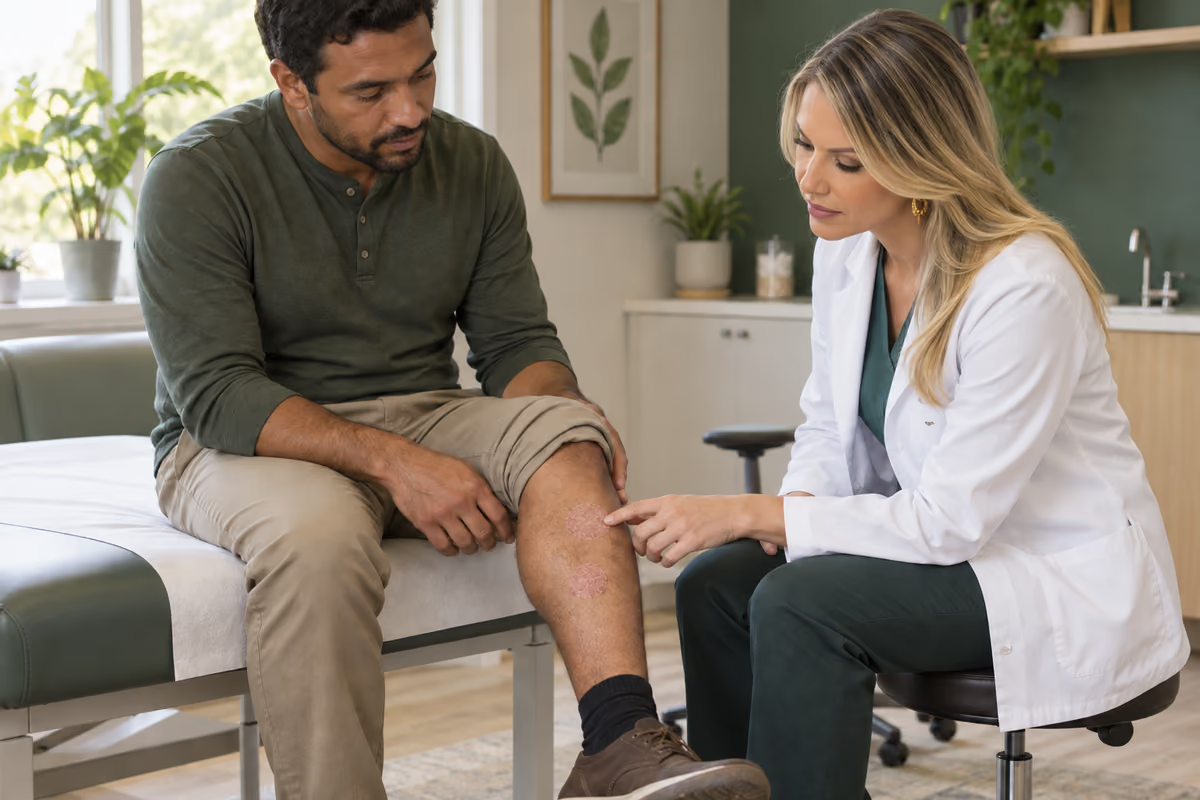
What can happen when treatment is delayed?
Delaying effective care can prolong itching, scratch wounds and disrupted sleep. Patches may persist or recur, and inflammation can leave temporary pigment changes. Cracks and manipulation increase the possibility of secondary infection.
A major risk of repeated unsupervised treatment is managing the wrong disease. Steroids applied to a fungal infection can alter its appearance and make recognition harder. Conversely, antifungals do not treat every round eczema patch.
Assessment before another treatment trial helps explain persistence. The aim is to restore comfortable skin and daily functioning without promising one fixed timeline for every patch or pigment mark.
[1] [2]When to seek medical care
Increasing pain, pus, warmth, fever or spreading redness need prompt assessment. A solitary lesion that bleeds spontaneously, ulcerates or fails to heal should be examined, even if it initially resembled eczema.
[1] [2]What it is and why it happens
Nummular eczema, also called discoid eczema, produces coin-shaped patches. Dryness and impaired barrier function contribute, although the exact cause is not always identified. It can occur alone or alongside other eczema patterns.
The name describes the shape, not a specific infection. Surrounding skin may also be dry. Some cases follow minor skin injury, but a round mark or wound is not automatically nummular eczema.
[1] [2]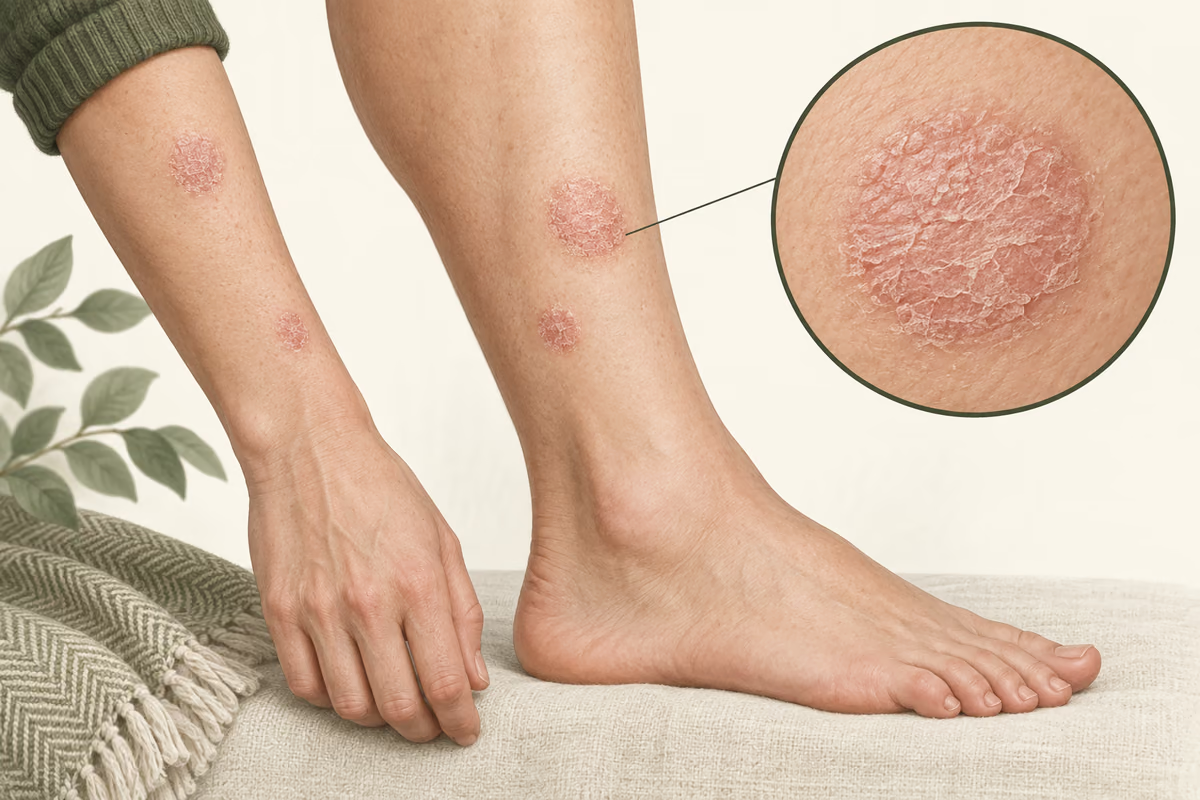
Symptoms and similar-looking conditions
Well-defined patches, itching and scaling are typical, often on arms and legs. More active patches may develop small blisters, crusting or surface oozing. Colour varies with skin tone and the duration of inflammation.
Fungal infection can also form round patches. Psoriasis, contact allergy and other conditions may need consideration. Choosing between an antifungal and a steroid by comparing online photographs is unreliable.
[1] [2]How diagnosis is established
Assessment examines the distribution, edge, centre and surrounding skin together with the course of the condition. Mention onset, spread, itch, applied products and any partial treatment response.
Fungal testing may be requested when the diagnosis is uncertain. Patch testing is reserved for situations suggesting associated contact allergy. Biopsy may be considered for persistent or atypical lesions, but it is not necessary for every case of nummular eczema.
A solitary changing, bleeding or nonhealing lesion needs its own assessment. It should not remain indefinitely labelled as eczema without diagnostic review.
[1] [2] [3]Specialist treatment and follow-up
Consistent moisturising and inflammation control are central. The formulation and strength of topical treatment depend on location, severity and whether the skin is cracked or oozing. The clinician may recommend separate flare and maintenance plans.
Extensive or resistant disease may need phototherapy or selected systemic treatment. Evidence specific to some options is limited; suitability, monitoring and any off-label use require a transparent discussion. There is no universal medicine for every coin-shaped patch.
When a lesion does not improve, follow-up checks the diagnosis, application technique, irritant exposure and possible infection. Extending a cream indefinitely without advice can postpone that review.
[1] [2] [3]Safe care between appointments
Cleanse gently and use the recommended moisturiser on surrounding dry skin as well as advised areas. Avoid scrubbing, picking crusts and acidic household remedies. Reduce unnecessary friction and do not share another person’s prescription cream.
Dated photographs under similar lighting can document progress without establishing a diagnosis. Report increasing pain, discharge or new lesions despite the plan. Follow-up timing should reflect response and any remaining diagnostic uncertainty.
[1] [2]Do not treat inflammation with household remedies
Do not apply lemon juice, vinegar, alcohol, concentrated essential oils, acids or mixtures with unknown ingredients to inflamed skin. Natural products can irritate or cause allergy. Do not self-prescribe steroids, antibiotics or antifungals, or use someone else’s prescription.
Cure claims involving supplements, homeopathy or unproven methods should not replace investigation and treatment. Evidence varies between interventions; discuss any complementary product before using it. Delaying appropriate care while trying a remedy may prolong symptoms and obscure important changes.
Clinician-guided gentle cleansing, moisturising and barrier protection are legitimate home care. The goal is a safe, understandable plan with application instructions and clear reasons to return.
[4]Prepare for your appointment
- Record when symptoms began, affected areas and whether flares recur.
- Bring progress photographs and the names or labels of products you use.
- Mention medicines, known allergies, pregnancy, breastfeeding and other health conditions where applicable.
- Ask about the likely diagnosis, required investigations and what to do if treatment does not help.
- Agree on duration, maintenance, follow-up and warning signs.
10 PRACTICAL ANSWERS
Frequently asked questions
Is every round patch ringworm?
No. Nummular eczema and other diseases can form round patches. Examination and sometimes fungal testing help distinguish them.
Is nummular eczema contagious?
No. However, fungal infection should be excluded when appropriate before applying that conclusion to an undiagnosed patch.
Can I try a steroid to see what happens?
That is not a reliable diagnostic strategy. Steroids can alter a fungal infection and delay recognition.
Does a dark mark mean the eczema is still active?
Not always. Pigment changes can remain after inflammation, while itch, scale and changes in the patch help guide reassessment.
Is a biopsy always necessary?
No. It is considered when appearance or progression creates an important diagnostic uncertainty.
Can it return after treatment?
Yes. Barrier care and follow-up may reduce recurrence, and repeated flares warrant review of associated factors.
Can home remedies or alternative treatments replace medical assessment?
No. Irritating mixtures, products with unknown ingredients and cure claims can worsen skin disease and delay diagnosis. Clinician-guided home care, such as gentle cleansing and appropriate barrier care, is part of medical treatment.
Can I reuse an old prescription?
Not automatically. The diagnosis, site, age or severity may have changed. Share previous treatment details so the clinician can judge whether it remains appropriate.
What should I bring to the appointment?
Dated photographs, medicine and skincare names, previous results and a brief record of onset, aggravating factors and effects on sleep and everyday activities.
When should I request an earlier review?
For worsening, increasing pain, discharge, a product reaction or no improvement within the agreed period. Urgent warning signs in this guide must not wait for routine follow-up.
What the evidence supports and its limits
A clinical review and the 2026 European consensus discuss investigation and management. The consensus is structured expert opinion rather than a clinical trial and acknowledges research gaps, particularly for systemic therapies.
[1] [2] [3]Related reading
Bibliography and sources
References in Vancouver/NLM style. Sources accessed September 20, 2026. Guidelines, reviews and institutional guidance do not replace individual assessment.
- Leung AKC, Lam JM, Leong KF, Leung AAM, Wong AHC, Hon KL. Nummular eczema: an updated review. Recent Pat Inflamm Allergy Drug Discov. 2020;14(2):146–155. DOI: 10.2174/1872213X14666200810152246. Read source.
- NATIONAL HEALTH SERVICE. Discoid eczema [Internet]. London: NATIONAL HEALTH SERVICE; 2023 [cited 2026 Sep 20]. Available from: https://www.nhs.uk/conditions/discoid-eczema/.
- Deleuran M, et al. European consensus recommendations for nummular eczema: a modified Delphi study. J Eur Acad Dermatol Venereol. 2026 Jul 7. Online ahead of print. DOI: 10.1111/jdv.70560. Read source.
- NATIONAL CENTER FOR COMPLEMENTARY AND INTEGRATIVE HEALTH. Skin conditions and complementary health approaches: what the science says [Internet]. Bethesda: NATIONAL CENTER FOR COMPLEMENTARY AND INTEGRATIVE HEALTH; [date unknown] [cited 2026 Sep 20]. Available from: https://www.nccih.nih.gov/health/providers/digest/skin-conditions-and-complementary-health-approaches-science.