No matching questions. Try another word.
01Is a boil just a large pimple?
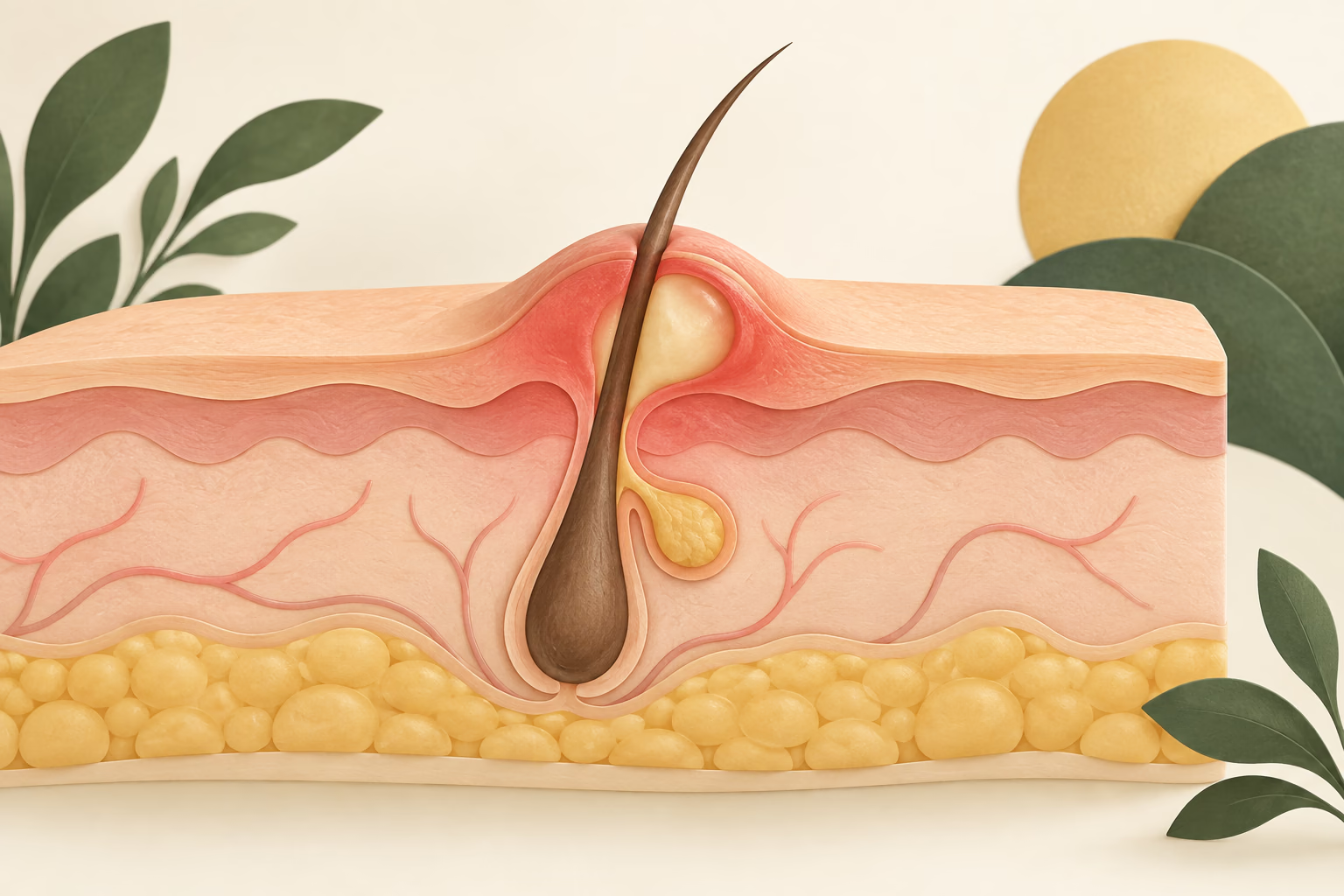
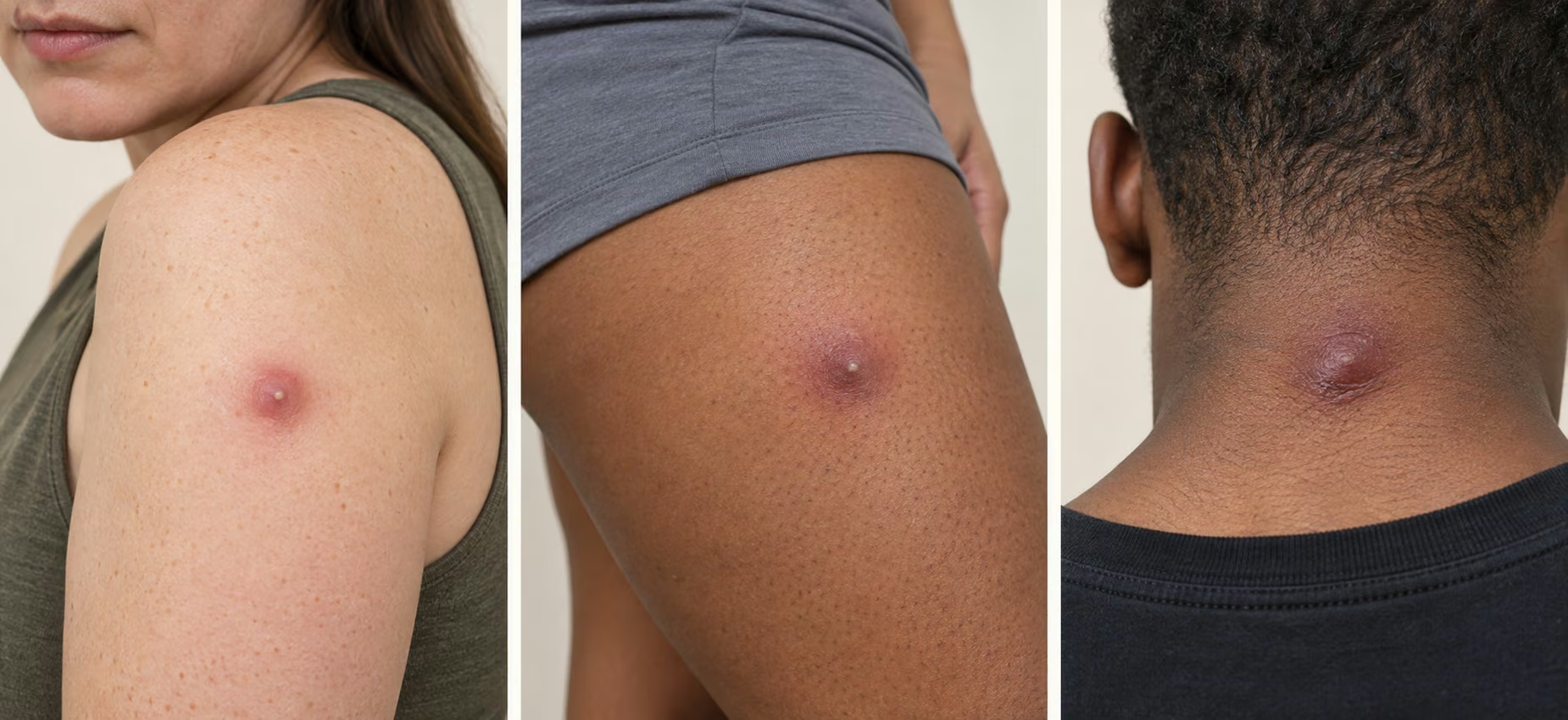
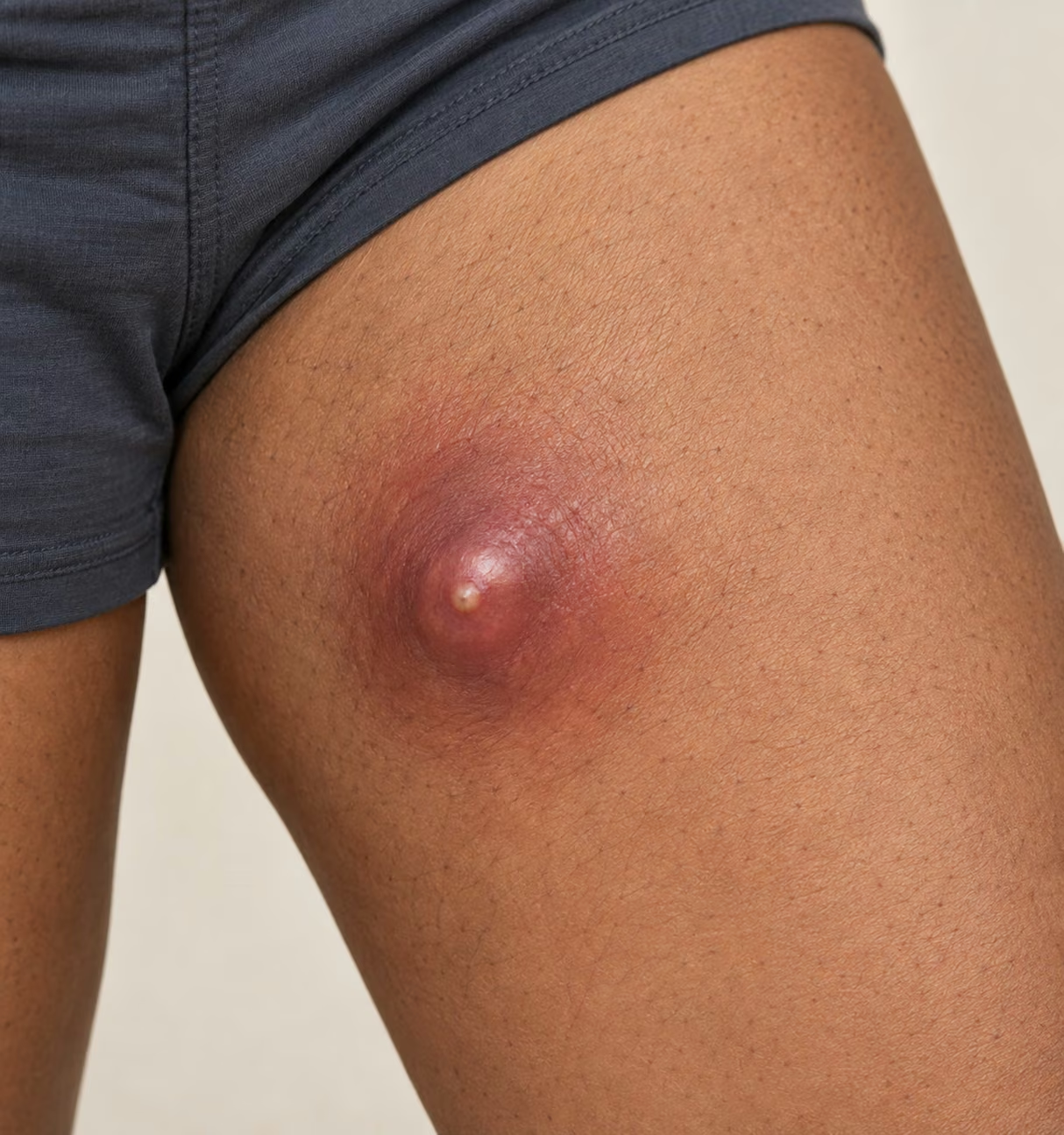
No. A boil involves a deeper follicular infection. Similar-looking lesions may have different causes.[9]
02Which bacteria usually cause boils?
Staphylococcus aureus is a common cause. Carrying it on your skin or in your nose does not automatically mean you have an active infection.[8] [7]
03Does a boil mean poor hygiene?
Not necessarily. Healthy people can develop boils too. Friction and small skin injuries can allow bacteria to enter.[8]
04Can I squeeze it or pierce it with a needle?
No. This can spread infection. A visible head does not make home drainage safe.[1]
05Should the compress be very hot?
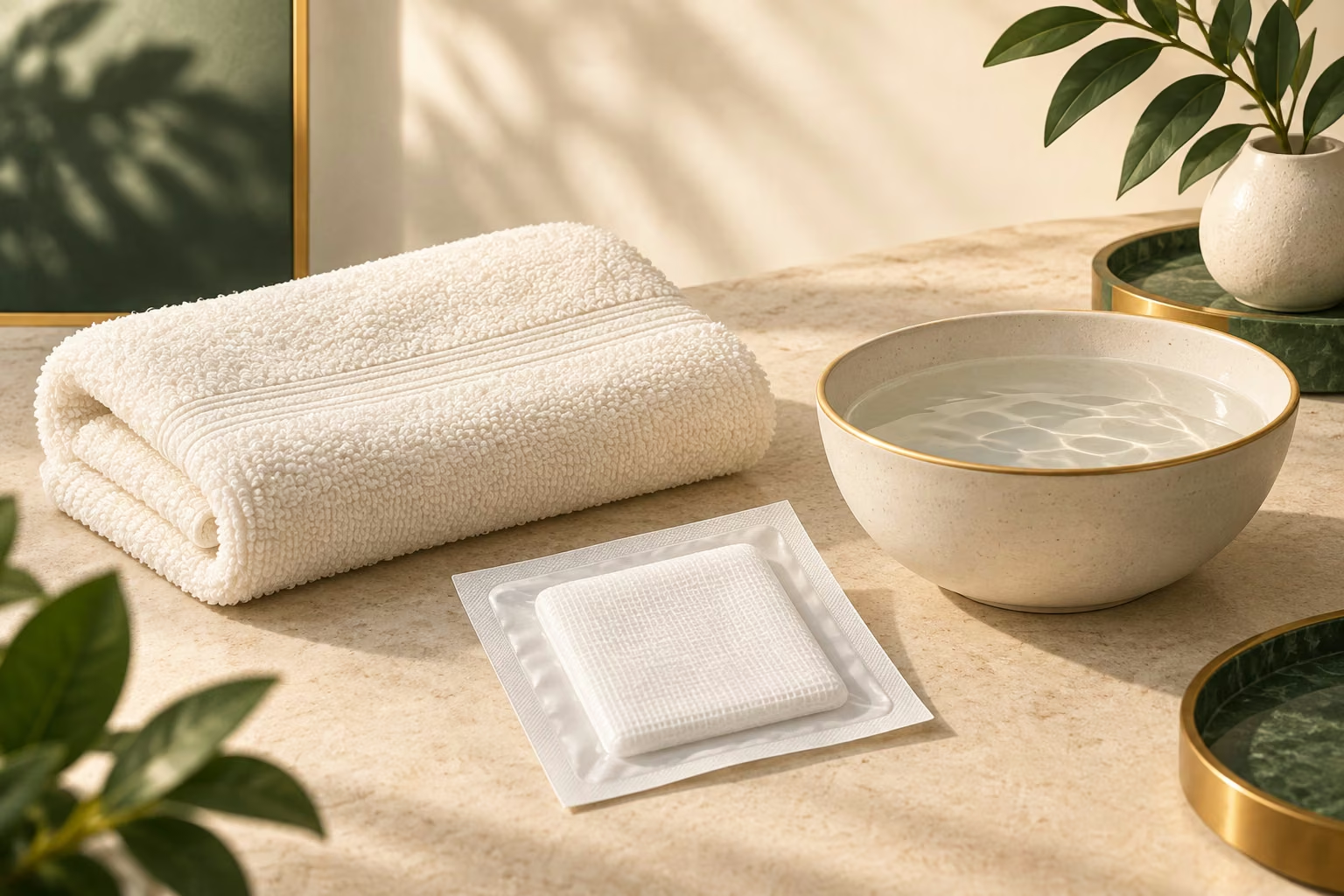
No. It should be comfortably warm to avoid burns. It does not replace assessment if symptoms worsen or warning signs appear.[1] [2]
06How long does healing take?
Many resolve within one to three weeks. Worsening needs earlier assessment; this range is not advice to wait with concerning symptoms.[1]
07Does every boil need drainage?
No. Some drain on their own. Large boils and carbuncles often need professional drainage, depending on examination.[3]
08Is drainage the same as squeezing?
No. It involves assessment, appropriate technique and usually local anaesthesia. The clinician also plans wound care afterwards.[10]
09Can an antibiotic replace drainage?
Do not assume so. The cited trials studied antibiotics after drainage; they do not show that medicine replaces drainage when it is needed.[4] [5]
10Is one antibiotic best for everyone?
No. Benefits, adverse effects, allergies and the individual situation affect the choice. Research findings are not a basis for self-medication.[5]
11What if it opens on its own?
Protect it with a clean dressing, wash your hands and do not force more drainage out.[6]
12Can it spread to another person?
Bacteria from infected wounds can spread through contact and contaminated objects. Avoid sharing towels and keep the lesion covered.[6]
13Could it be MRSA?
Possibly, but appearance cannot identify antibiotic resistance. When needed, laboratory testing of a sample identifies the organism.[7]
14Does a boil on the face need special attention?
Yes. Seek urgent assessment, particularly with pain, swelling or fever. Do not open it yourself.[2]
15Should someone with diabetes seek help sooner?
Yes. Diabetes and reduced immunity are reasons to seek early assessment for a possible boil.[2]
16Can it leave a scar?
Yes. Deep follicular infections can leave scars. Scar assessment comes after the active lesion is controlled.[9]
17Why does it recur in the same place?
A clinician may investigate local causes, such as a pilonidal cyst or hidradenitis, and consider a drainage sample for recurrent infections.[3]
18Are repeated groin lumps always boils?
No. Hidradenitis suppurativa can cause recurring nodules, drainage and scars in skin folds.[11]
19Can I swim or go to the gym?
The NHS advises avoiding swimming pools and gyms while a boil is present to reduce transmission. Ask when to resume activities.[2]
20What matters most to watch now?
Changes in pain, swelling, fever and general wellbeing. Seek emergency care immediately for confusion or breathing difficulty.[12]
21Can an untreated boil become serious?
Yes, particularly if infection worsens or spreads. Serious complications are not the usual outcome of a small lesion. Fever, rapid worsening or feeling unwell requires assessment; confusion or breathing difficulty requires emergency care.[2] [7] [12]
22Does every boil need surgical removal?
No. Many improve with simple care. When a collection of pus needs emptying, the procedure is drainage. A clinician decides whether it is needed and whether to add antibiotics; squeezing at home is not a substitute.[1] [3]