
What can happen when treatment is delayed?
Delaying diagnosis can prolong severe itching, scratch injuries, secondary infection and lost sleep. Associated coeliac disease may also remain unmanaged even when digestive symptoms are mild or absent. Nutritional deficiencies and bone-health concerns may require investigation.
Trying to manage only the skin through household remedies or incomplete dietary restrictions can delay confirmation and appropriate care. Using dapsone without testing adds medication risks and is not a safe substitute for assessment.
Urgency depends on symptoms and general health. The point is not to create alarm, but to investigate recurring itch with this pattern because the diagnosis changes care beyond the skin surface.
[1] [2]When to seek medical care
Fever, pus, increasing pain or extensive lesions with significant illness need prompt assessment. During medication treatment, breathlessness, blue lips, marked weakness, pronounced pallor or other sudden symptoms require urgent care; tell the team which medicines you take.
[1] [2]What it is and why it happens
Dermatitis herpetiformis is an autoimmune disease associated with gluten sensitivity and coeliac disease. Despite its name, it is not caused by the herpes virus and is not contagious. The immune response produces characteristic skin changes associated with immunoglobulin A deposits.
Intestinal involvement may exist without diarrhoea or abdominal pain. Treating only visible lesions can therefore leave an important part of the disease unaddressed. Investigation should connect skin findings, clinical history and appropriate tests.
[1] [2]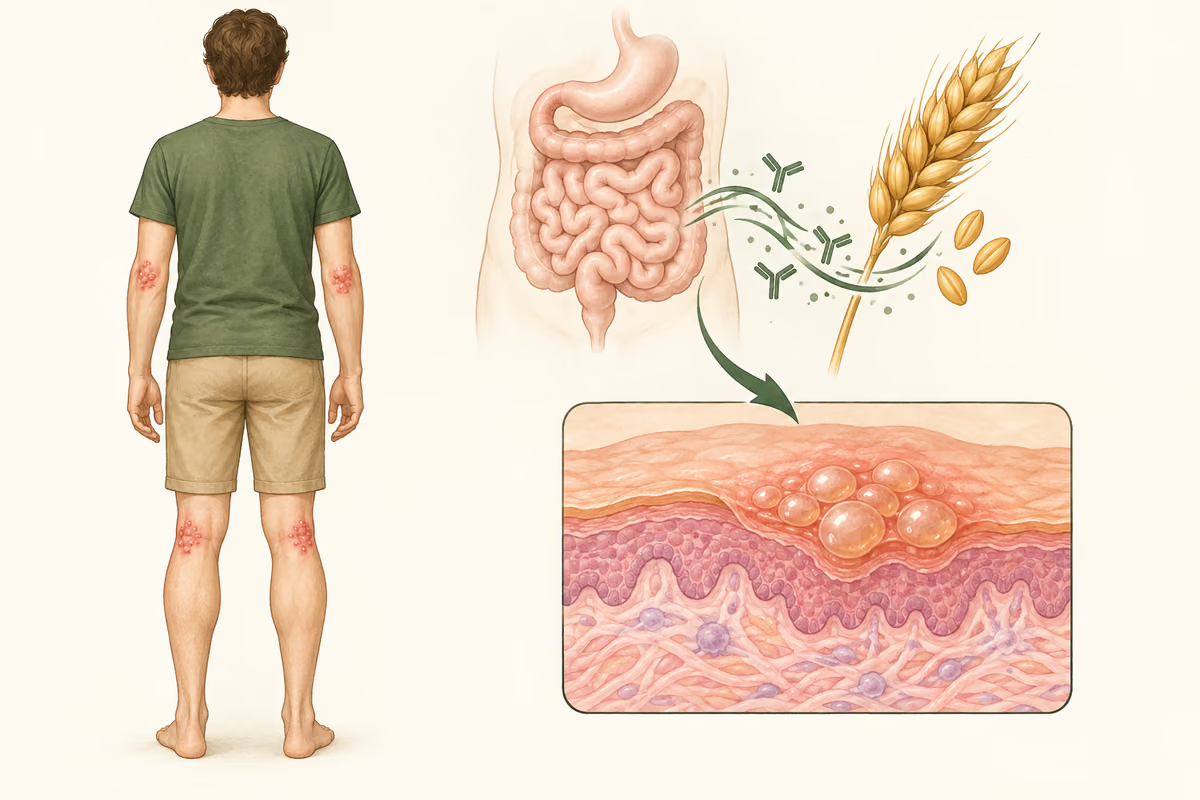
Symptoms and similar-looking conditions
Itching is often intense. Small papules, vesicles and scratch marks can appear symmetrically, commonly around the elbows, knees, buttocks or scalp. Scratching may destroy blisters before they are noticed.
This pattern raises a possibility but does not confirm the diagnosis. Eczema, scabies, other blistering diseases and different causes of itch can look similar. Illustrations cannot replace examination or properly planned sampling when indicated.
[1] [2]How diagnosis is established
Investigation may include a biopsy of skin next to a lesion for direct immunofluorescence, together with blood tests and assessment for coeliac disease. Sampling site and handling matter: a routine biopsy from any sore does not necessarily answer the same question.
Do not start a gluten-free diet before discussing testing. Removing gluten may change test results and make confirmation harder. If you already avoid gluten, explain how strictly and for how long; do not reintroduce it as a self-directed diagnostic experiment.
Dermatology, gastroenterology and nutrition professionals may be involved. Further intestinal investigations depend on individual assessment. The aim is a reliable diagnosis and sustainable plan rather than imposing a diet based on appearance alone.
[1] [2] [3]Specialist treatment and follow-up
After confirmation, a strict gluten-free diet with professional nutritional guidance is a central treatment. In this setting it is a specific medical intervention, not an alternative remedy for every dermatitis. Ingredient checking and cross-contamination advice belong in follow-up.
Dapsone may control skin symptoms quickly in selected patients, but requires pretreatment assessment and monitoring. Blood-related and other adverse effects make self-medication unsafe. Skin improvement with this medicine does not replace management of gluten-related disease.
Follow-up considers symptoms, feasible dietary adherence, nutritional status, medication requirements and adverse effects. Skin response to diet can be gradual; do not abandon the plan or increase medication because improvement is not immediate.
[1] [2] [3]Safe care between appointments
Before assessment, avoid picking lesions or using irritating mixtures. Record foods already excluded, digestive symptoms, family history of coeliac disease and medicines. Bring previous results so they can be interpreted in context.
After diagnosis, discuss dietary difficulties with the team rather than making unplanned exceptions. Gluten management and nutritional follow-up have specific purposes. Gluten-free products are not automatically nutritionally complete, and supplements should reflect assessed needs.
[1] [2]Do not treat inflammation with household remedies
Do not apply lemon juice, vinegar, alcohol, concentrated essential oils, acids or mixtures with unknown ingredients to inflamed skin. Natural products can irritate or cause allergy. Do not self-prescribe steroids, antibiotics or antifungals, or use someone else’s prescription.
Cure claims involving supplements, homeopathy or unproven methods should not replace investigation and treatment. Evidence varies between interventions; discuss any complementary product before using it. Delaying appropriate care while trying a remedy may prolong symptoms and obscure important changes.
Clinician-guided gentle cleansing, moisturising and barrier protection are legitimate home care. The goal is a safe, understandable plan with application instructions and clear reasons to return.
[4]Prepare for your appointment
- Record when symptoms began, affected areas and whether flares recur.
- Bring progress photographs and the names or labels of products you use.
- Mention medicines, known allergies, pregnancy, breastfeeding and other health conditions where applicable.
- Ask about the likely diagnosis, required investigations and what to do if treatment does not help.
- Agree on duration, maintenance, follow-up and warning signs.
10 PRACTICAL ANSWERS
Frequently asked questions
Is dermatitis herpetiformis herpes?
No. The name refers to the grouped appearance of some lesions. This is an autoimmune disease, not herpes-virus infection.
Can I have it without digestive symptoms?
Yes. Absence of diarrhoea or abdominal pain does not exclude associated intestinal involvement.
Should I remove gluten before my appointment?
Discuss testing first. Avoidance can affect results; tell the clinician if you have already started.
Does a gluten-free diet treat every dermatitis?
No. It has a specific role in confirmed gluten-related disease, not as a universal eczema treatment.
Does dapsone replace the diet?
No. It can control skin symptoms but does not replace gluten-related disease care and requires monitoring.
Will any skin biopsy confirm the diagnosis?
Not necessarily. The suspected diagnosis should guide sampling site, specimen handling and direct immunofluorescence when indicated.
Can home remedies or alternative treatments replace medical assessment?
No. Irritating mixtures, products with unknown ingredients and cure claims can worsen skin disease and delay diagnosis. Clinician-guided home care, such as gentle cleansing and appropriate barrier care, is part of medical treatment.
Can I reuse an old prescription?
Not automatically. The diagnosis, site, age or severity may have changed. Share previous treatment details so the clinician can judge whether it remains appropriate.
What should I bring to the appointment?
Dated photographs, medicine and skincare names, previous results and a brief record of onset, aggravating factors and effects on sleep and everyday activities.
When should I request an earlier review?
For worsening, increasing pain, discharge, a product reaction or no improvement within the agreed period. Urgent warning signs in this guide must not wait for routine follow-up.
What the evidence supports and its limits
The European guideline combines consensus and evidence for diagnosis and management. NIDDK resources explain the coeliac association and the importance of assessment before dietary changes. This advice should not be generalised to eczema without that relationship.
[1] [2] [3]Related reading
Bibliography and sources
References in Vancouver/NLM style. Sources accessed September 20, 2026. Guidelines, reviews and institutional guidance do not replace individual assessment.
- Görög A, et al. S2k guidelines (consensus statement) for diagnosis and therapy of dermatitis herpetiformis initiated by the European Academy of Dermatology and Venereology (EADV). J Eur Acad Dermatol Venereol. 2021;35(6):1251–1277. DOI: 10.1111/jdv.17183. Read source.
- NATIONAL INSTITUTE OF DIABETES AND DIGESTIVE AND KIDNEY DISEASES. Dermatitis herpetiformis [Internet]. Bethesda: NATIONAL INSTITUTE OF DIABETES AND DIGESTIVE AND KIDNEY DISEASES; 2014 [cited 2026 Sep 20]. Available from: https://www.niddk.nih.gov/health-information/professionals/clinical-tools-patient-management/digestive-diseases/dermatitis-herpetiformis.
- NATIONAL INSTITUTE OF DIABETES AND DIGESTIVE AND KIDNEY DISEASES. Diagnosis of celiac disease [Internet]. Bethesda: NATIONAL INSTITUTE OF DIABETES AND DIGESTIVE AND KIDNEY DISEASES; [date unknown] [cited 2026 Sep 20]. Available from: https://www.niddk.nih.gov/health-information/digestive-diseases/celiac-disease/diagnosis.
- NATIONAL CENTER FOR COMPLEMENTARY AND INTEGRATIVE HEALTH. Skin conditions and complementary health approaches: what the science says [Internet]. Bethesda: NATIONAL CENTER FOR COMPLEMENTARY AND INTEGRATIVE HEALTH; [date unknown] [cited 2026 Sep 20]. Available from: https://www.nccih.nih.gov/health/providers/digest/skin-conditions-and-complementary-health-approaches-science.