
What can happen when treatment is delayed?
Delaying assessment of a worsening or non-improving rash can prolong pain during changes and allow erosions or secondary infection. Discomfort may interfere with the baby’s sleep and feeding.
Delay can also leave yeast infection, allergy or another disease unrecognised. Talc, household mixtures and strong creams add risks from irritation, inhaled particles and medicines. Infant skin should not be used to test home remedies.
A mild recent rash in an otherwise well baby can be managed initially with appropriate barrier care. That is different from persisting at home when fever, sores, substantial pain, ongoing rash or worsening develops. These changes require assessment.
[1] [2]When to seek medical care
Seek prompt assessment for fever, blisters, pus, extensive sores, marked pain, rapid worsening, unusual lethargy, poor feeding or fewer wet diapers. Fever in a young infant, especially under three months, requires urgent medical assessment.
[1] [2]What it is and why it happens
Diaper dermatitis is inflammation in the area covered by a diaper or nappy. Moisture, urine and stool contact, friction and barrier changes contribute to the common irritant form. It can occur despite attentive care and should not be a source of parental blame.
Not every rash in this area is simple irritation. Yeast infection, product allergy, seborrheic dermatitis, psoriasis and other conditions can require different approaches. Context, distribution and progression help guide diagnosis.
[1] [2]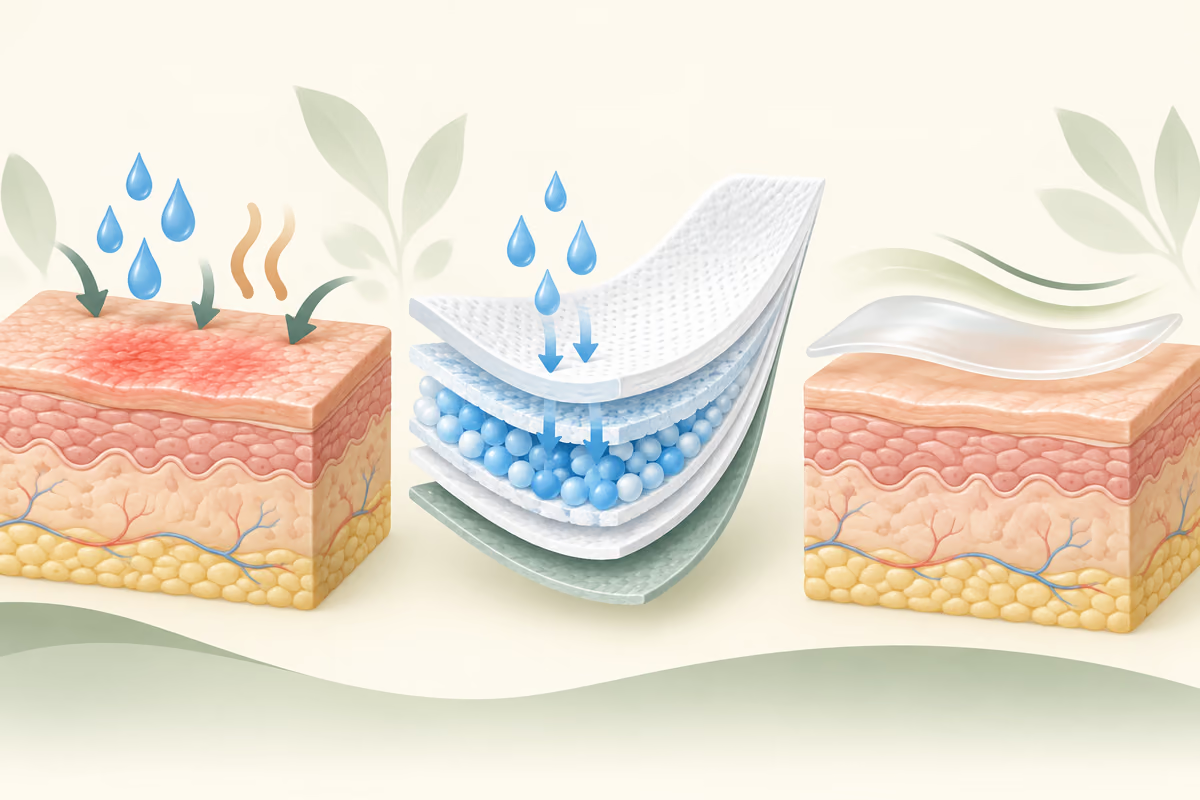
Symptoms and similar-looking conditions
Skin may be red or show another colour change, with tenderness during cleaning. Severity ranges from mild irritation to marked inflammation. Skin folds can be relatively spared in common irritant dermatitis; fold involvement and small surrounding lesions may suggest another cause, including Candida.
These clues cannot confirm the cause from an image. Diarrhoea, product changes and recent medicines may matter. Report if the baby seems unwell, feeds less, has fever or develops lesions outside the diaper area.
[1] [2]How diagnosis is established
Assessment considers age, duration, changing frequency, cleansing methods and products. Bring packaging for wipes, creams and ointments. A product that helped another baby may be unsuitable for this rash.
Mild recent irritation may respond to barrier care. Persistence, recurrence, worsening, sores or an unusual pattern warrants paediatric or dermatology assessment. Tests are selected when needed; not every diaper rash requires a swab or other sample.
Distinguishing irritation from infection matters before using antifungals, antibiotics or steroids. Partial improvement with a combination cream can obscure the diagnosis while exposing the child to unnecessary ingredients.
[1] [2] [3]Specialist treatment and follow-up
Frequent changes, gentle cleansing, drying without friction and an appropriate barrier product are central. Product selection should reflect age and tolerance. Avoid scrubbing to remove every trace of barrier cream at each change.
If Candida or another cause is identified, specific medication may be needed. Any topical anti-inflammatory should have a professionally defined strength, amount and duration. Occlusion beneath a diaper increases concern about absorption and adverse effects from inappropriate use.
Do not independently use combinations containing a potent steroid, antibiotic and antifungal. Follow-up checks improvement, comfort and whether the diagnosis needs review. The aim is to minimise further skin injury while treating the actual cause.
[1] [2] [3]Safe care between appointments
Change wet or soiled diapers promptly and cleanse gently with water or an appropriate mild product. Dry without rubbing and apply the recommended barrier. Brief diaper-free periods may help when the environment is safe, supervised and comfortably warm.
Avoid talc, alcohol, bicarbonate, essential oils and kitchen mixtures. Do not apply adult medicines or add plastic wrapping over the area. Monitor progress and seek advice if basic care does not help or warning signs appear.
[1] [2]Do not treat inflammation with household remedies
Do not apply lemon juice, vinegar, alcohol, concentrated essential oils, acids or mixtures with unknown ingredients to inflamed skin. Natural products can irritate or cause allergy. Do not self-prescribe steroids, antibiotics or antifungals, or use someone else’s prescription.
Cure claims involving supplements, homeopathy or unproven methods should not replace investigation and treatment. Evidence varies between interventions; discuss any complementary product before using it. Delaying appropriate care while trying a remedy may prolong symptoms and obscure important changes.
Clinician-guided gentle cleansing, moisturising and barrier protection are legitimate home care. The goal is a safe, understandable plan with application instructions and clear reasons to return.
[4]Prepare for your appointment
- Record when symptoms began, affected areas and whether flares recur.
- Bring progress photographs and the names or labels of products you use.
- Mention medicines, known allergies, pregnancy, breastfeeding and other health conditions where applicable.
- Ask about the likely diagnosis, required investigations and what to do if treatment does not help.
- Agree on duration, maintenance, follow-up and warning signs.
10 PRACTICAL ANSWERS
Frequently asked questions
Does every diaper rash need a specialist?
No. Mild cases may improve with appropriate care. Persistence, recurrence, wounds, an unusual pattern or failure of initial care warrants assessment.
Can I use talcum powder?
Avoid it. Particles can be inhaled, and powder does not replace changing, gentle cleansing and barrier care.
Should I scrub off all the cream?
No. Friction can worsen irritation. Clean gently according to professional and product instructions.
Is a multi-medicine cream better?
Not necessarily. It may contain unnecessary ingredients or a steroid unsuitable for infant skin under a diaper.
How can I tell if it is a yeast infection?
Certain patterns suggest the possibility, but assessment determines treatment. Do not select an antifungal solely by comparing photographs.
Does diaper rash mean poor care?
No. Moisture, diarrhoea, sensitivity and other factors can cause a rash despite attentive care. Focus on the baby’s comfort and recovery.
Can home remedies or alternative treatments replace medical assessment?
No. Irritating mixtures, products with unknown ingredients and cure claims can worsen skin disease and delay diagnosis. Clinician-guided home care, such as gentle cleansing and appropriate barrier care, is part of medical treatment.
Can I reuse an old prescription?
Not automatically. The diagnosis, site, age or severity may have changed. Share previous treatment details so the clinician can judge whether it remains appropriate.
What should I bring to the appointment?
Dated photographs, medicine and skincare names, previous results and a brief record of onset, aggravating factors and effects on sleep and everyday activities.
When should I request an earlier review?
For worsening, increasing pain, discharge, a product reaction or no improvement within the agreed period. Urgent warning signs in this guide must not wait for routine follow-up.
What the evidence supports and its limits
Reviews and paediatric guidance support prevention through moisture and friction reduction, gentle cleansing and appropriate barrier care. Medicines depend on the cause. Brand preference or a “natural” label cannot replace suitability and tolerance.
[1] [2] [3]Related reading
Bibliography and sources
References in Vancouver/NLM style. Sources accessed September 20, 2026. Guidelines, reviews and institutional guidance do not replace individual assessment.
- NATIONAL HEALTH SERVICE. Nappy rash [Internet]. London: NATIONAL HEALTH SERVICE; 2026 [cited 2026 Sep 20]. Available from: https://www.nhs.uk/baby/caring-for-a-newborn/nappy-rash/.
- Blume-Peytavi U, Kanti V. Prevention and treatment of diaper dermatitis. Pediatr Dermatol. 2018;35(Suppl 1):s19–s23. DOI: 10.1111/pde.13495. Read source.
- AMERICAN ACADEMY OF PEDIATRICS. Common diaper rashes & treatments [Internet]. Itasca: AMERICAN ACADEMY OF PEDIATRICS; [date unknown] [cited 2026 Sep 20]. Available from: https://www.healthychildren.org/English/ages-stages/baby/diapers-clothing/Pages/Diaper-Rash.aspx.
- NATIONAL CENTER FOR COMPLEMENTARY AND INTEGRATIVE HEALTH. Skin conditions and complementary health approaches: what the science says [Internet]. Bethesda: NATIONAL CENTER FOR COMPLEMENTARY AND INTEGRATIVE HEALTH; [date unknown] [cited 2026 Sep 20]. Available from: https://www.nccih.nih.gov/health/providers/digest/skin-conditions-and-complementary-health-approaches-science.