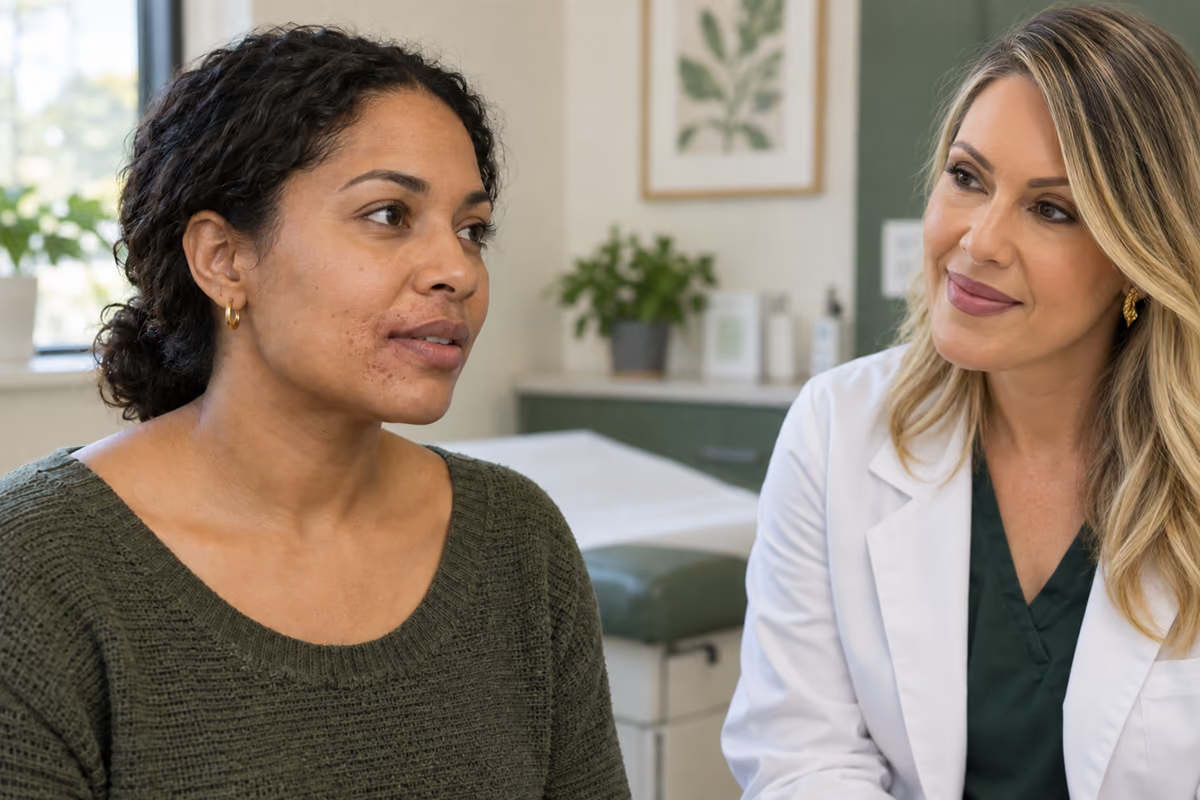
What can happen when treatment is delayed?
Delaying assessment can prolong burning, sensitivity and visible lesions, affecting well-being and social confidence. Continuing acids, scrubs or unsuitable steroids can worsen inflammation and make everyday skincare increasingly difficult.
Repeated short-lived steroid relief followed by relapse can create reliance on an unsuitable cream and add adverse effects from prolonged use, such as skin thinning. Pigment changes may also persist after inflammation.
Perioral dermatitis is generally not an emergency and does not usually progress to serious disease. The reason for timely care is to reduce ongoing distress and inappropriate treatment while recognising presentations that suggest another diagnosis.
[1] [2]When to seek medical care
Eye pain, visual changes, substantial swelling around the eyes, fever or spreading painful redness require urgent assessment. Persistent perioral lesions without these signs can be evaluated through a planned consultation rather than repeated self-treatment.
[1] [2]What it is and why it happens
Perioral dermatitis belongs to the periorificial dermatitis group, which can affect skin around the mouth, nose and eyes. Its cause is complex and incompletely understood. Facial corticosteroids, excessive product use and occlusive cosmetics can contribute in some people.
It is not simply acne, a contagious infection or dirty skin. Adults and children can be affected. Necessary inhaled or nasal medicines should be mentioned during assessment, but must not be stopped without the prescribing clinician’s advice.
[1] [2]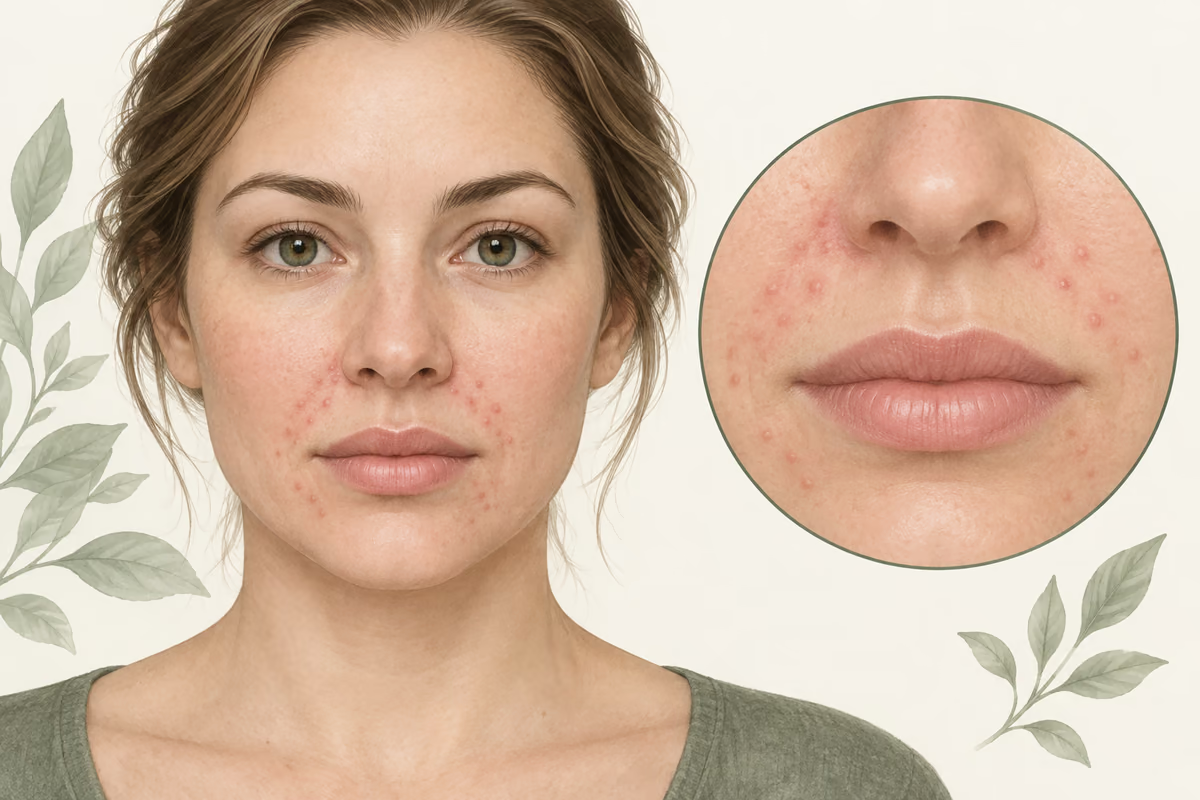
Symptoms and similar-looking conditions
Clusters of small papules, redness or other colour changes, scaling, burning and tightness are common. A narrow strip next to the lip border may remain clear. Appearance varies and a photograph alone cannot securely establish the diagnosis.
Acne often has additional features such as comedones. Rosacea, contact dermatitis and seborrheic dermatitis may also need consideration. Eye pain or visual changes should not automatically be attributed to irritation of nearby skin.
[1] [2]How diagnosis is established
Assessment includes lesion distribution and everything applied to the face. Bring the names of creams, sunscreens, makeup, acids and medicines, including sprays and inhalers. A cream being used for an unrelated condition can be an important clue.
Diagnosis is usually clinical. Tests may be needed if infection, allergy or another condition remains uncertain. A broad allergy-testing panel is not routinely required for every perioral rash.
Explain what happens when a facial steroid is stopped. Temporary worsening may occur after withdrawal, and its management should be planned rather than repeatedly stopping and restarting the product yourself.
[1] [2]Specialist treatment and follow-up
Management often involves simplifying skincare and removing unnecessary or aggravating products. Topical medicines and, in selected cases, oral treatment with an anti-inflammatory purpose may be used. Age, pregnancy, breastfeeding, extent and tolerance influence selection.
Do not use a facial steroid to calm these lesions without a diagnosis. If one has been used for a prolonged period or prescribed for another condition, discuss withdrawal or replacement with your clinician. Do not independently stop necessary respiratory medication.
Improvement may take weeks and should not be judged after a single application. Follow-up helps distinguish transient worsening, product irritation and treatment failure. Medicines need clear goals and duration, avoiding prolonged antibiotic use without review.
[1] [2]Safe care between appointments
Avoid introducing several new cosmetics at once. Do not apply toothpaste, lemon juice, vinegar, alcohol or homemade acne mixtures to the rash. A simple routine should retain appropriate protection and reflect what the skin tolerates under professional guidance.
Do not squeeze papules or scrub away flakes. Bring progress photographs and product labels. Where reducing inhaled medicine contact with facial skin is recommended, follow the prescriber’s instructions on technique and hygiene while maintaining respiratory treatment.
[1] [2]Do not treat inflammation with household remedies
Do not apply lemon juice, vinegar, alcohol, concentrated essential oils, acids or mixtures with unknown ingredients to inflamed skin. Natural products can irritate or cause allergy. Do not self-prescribe steroids, antibiotics or antifungals, or use someone else’s prescription.
Cure claims involving supplements, homeopathy or unproven methods should not replace investigation and treatment. Evidence varies between interventions; discuss any complementary product before using it. Delaying appropriate care while trying a remedy may prolong symptoms and obscure important changes.
Clinician-guided gentle cleansing, moisturising and barrier protection are legitimate home care. The goal is a safe, understandable plan with application instructions and clear reasons to return.
[3]Prepare for your appointment
- Record when symptoms began, affected areas and whether flares recur.
- Bring progress photographs and the names or labels of products you use.
- Mention medicines, known allergies, pregnancy, breastfeeding and other health conditions where applicable.
- Ask about the likely diagnosis, required investigations and what to do if treatment does not help.
- Agree on duration, maintenance, follow-up and warning signs.
10 PRACTICAL ANSWERS
Frequently asked questions
Is this the same as acne?
No. Distribution, comedones and product history help distinguish the conditions. Aggressive acne treatments may irritate the skin.
Will a steroid cream help?
It may briefly suppress symptoms while sustaining or worsening the condition. Do not self-treat perioral lesions with steroids.
Should I stop my inhaler?
Not on your own. Tell your prescriber and discuss technique, hygiene and measures to reduce skin contact.
Is it contagious?
Perioral dermatitis is not considered contagious. Lesions with another cause require their own assessment.
Can I cover it with makeup?
Some products can irritate or occlude. Simplify skincare during a flare and discuss which products can remain.
Will it clear in a few days?
There is no single timeline. Improvement can take weeks; follow-up helps adjust care and avoid premature product changes.
Can home remedies or alternative treatments replace medical assessment?
No. Irritating mixtures, products with unknown ingredients and cure claims can worsen skin disease and delay diagnosis. Clinician-guided home care, such as gentle cleansing and appropriate barrier care, is part of medical treatment.
Can I reuse an old prescription?
Not automatically. The diagnosis, site, age or severity may have changed. Share previous treatment details so the clinician can judge whether it remains appropriate.
What should I bring to the appointment?
Dated photographs, medicine and skincare names, previous results and a brief record of onset, aggravating factors and effects on sleep and everyday activities.
When should I request an earlier review?
For worsening, increasing pain, discharge, a product reaction or no improvement within the agreed period. Urgent warning signs in this guide must not wait for routine follow-up.
What the evidence supports and its limits
A systematic review found limitations and low or very low certainty for several studied interventions. This supports individualised decisions and follow-up rather than promises of one universally proven protocol.
[1] [2]Related reading
Bibliography and sources
References in Vancouver/NLM style. Sources accessed September 20, 2026. Guidelines, reviews and institutional guidance do not replace individual assessment.
- DERMNET. Periorificial dermatitis [Internet]. [S. l.]: DERMNET; 2022 [cited 2026 Sep 20]. Available from: https://dermnetnz.org/topics/periorificial-dermatitis.
- Gray NA, Tod B, Rohwer A, Fincham L, Visser WI, McCaul M. Pharmacological interventions for periorificial (perioral) dermatitis in children and adults: a systematic review. J Eur Acad Dermatol Venereol. 2022;36(3):380–390. DOI: 10.1111/jdv.17817. Read source.
- NATIONAL CENTER FOR COMPLEMENTARY AND INTEGRATIVE HEALTH. Skin conditions and complementary health approaches: what the science says [Internet]. Bethesda: NATIONAL CENTER FOR COMPLEMENTARY AND INTEGRATIVE HEALTH; [date unknown] [cited 2026 Sep 20]. Available from: https://www.nccih.nih.gov/health/providers/digest/skin-conditions-and-complementary-health-approaches-science.