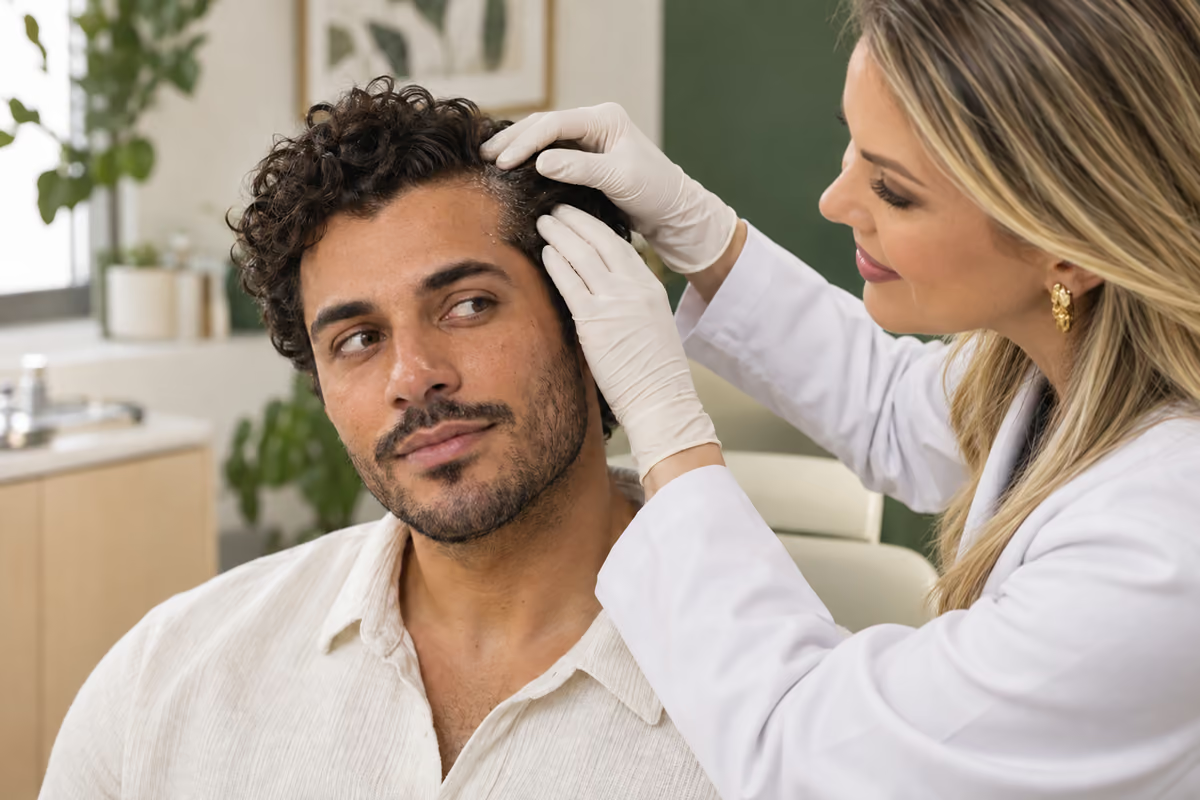
What can happen when treatment is delayed?
Leaving a persistent flare untreated can prolong itching, scaling, scratch injuries and social discomfort. Repeated scratching can break the skin and contribute to secondary infection. Post-inflammatory pigment changes may also remain after a flare.
Another risk of delay is treating scalp fungal infection, contact allergy or another disease as “just dandruff”. Seborrheic dermatitis alone does not usually cause permanent hair loss; persistent shedding or bald patches need their own assessment.
It is generally not an emergency. Pain, discharge, sores or extensive worsening increase the need for prompt care. Earlier assessment can help establish a workable plan before discomfort and scratching become more disruptive.
[1] [2]When to seek medical care
Significant pain, pus, fever or spreading redness require prompt assessment. Hair-loss patches with broken hairs, particularly in children, need examination to exclude scalp fungal infection. Eye pain or visual changes accompanying nearby skin irritation require urgent care.
[1] [2]What it is and why it happens
Seborrheic dermatitis is a recurring inflammatory condition that mainly affects areas with greater sebaceous activity. Interaction between skin, inflammation and Malassezia yeasts contributes to the condition. These organisms can normally live on the skin: their involvement does not mean poor hygiene or a contagious infection.
Dandruff can fall within this spectrum, but persistent scaling should not automatically receive the same label. Eyebrows, sides of the nose, ears and the upper chest may also be affected. Infant cradle cap requires age-appropriate advice.
[1] [2]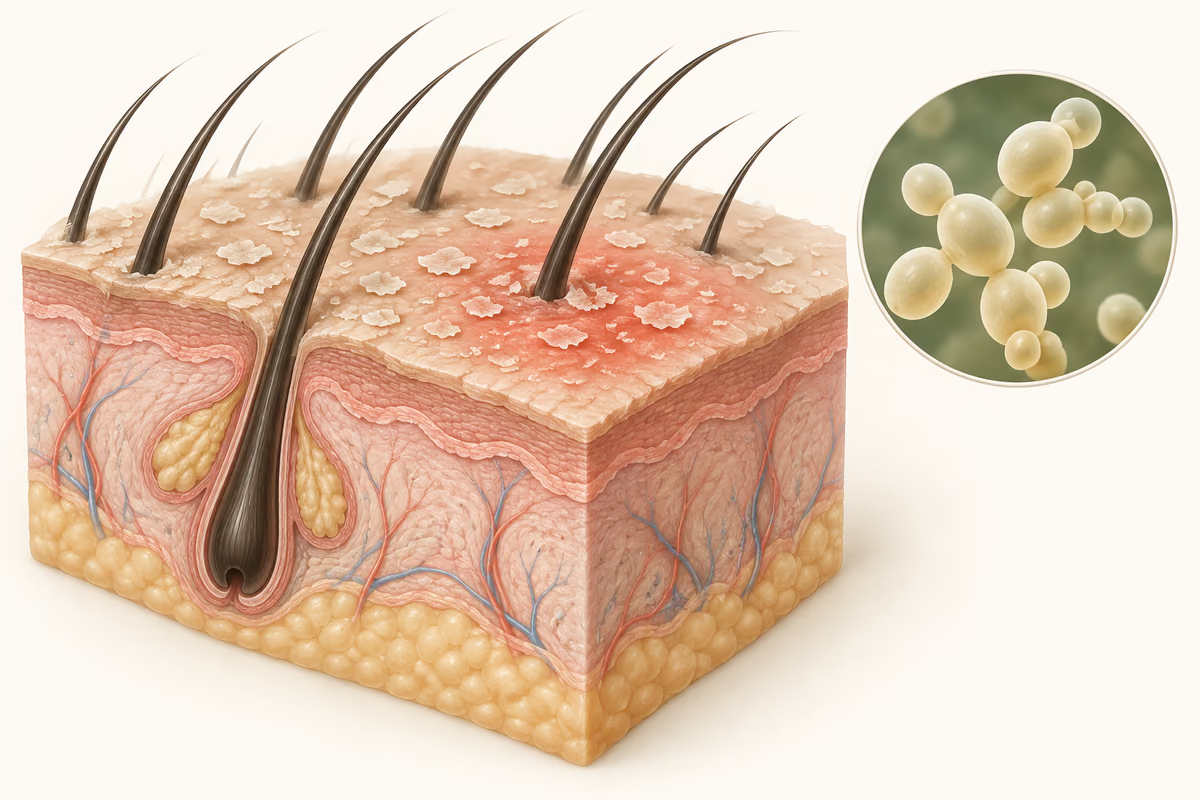
Symptoms and similar-looking conditions
White or yellowish flakes, itching and inflamed patches are common, with severity changing over time. In darker skin, pigment changes may be prominent while redness is subtle. Irritating products and changes in routine can worsen discomfort.
Very thick plaques, patchy hair loss, broken hairs, pain or discharge require assessment for other causes. Psoriasis, scalp fungal infection and allergy to hair dye can resemble seborrheic dermatitis but need different management.
[1] [2]How diagnosis is established
Assessment includes the affected areas, duration, washing habits and products applied. Mention whether symptoms started after hair dye, straightening treatments, shampoo or a new cosmetic. Temporary improvement with a cream does not establish the diagnosis.
Tests are not compulsory in a typical presentation. They may be appropriate for unusual, resistant disease or accompanying symptoms. Extensive or atypical disease deserves a contextual clinical assessment rather than an online assumption that a systemic illness must be present.
[1] [2]Specialist treatment and follow-up
Antifungal shampoos or other topical formulations are common options. Product selection, frequency and contact time depend on the location, hair type and tolerance. A scalp product is not automatically suitable for eyelids or facial skin.
During an inflammatory flare, a clinician may prescribe a topical anti-inflammatory for a defined period or a nonsteroid option in selected situations. Prolonged use of potent facial steroids can cause unwanted effects, including perioral dermatitis. An old prescription should not become indefinite self-treatment.
Maintenance can reduce relapse. This does not mean excessive washing or removing every trace of skin oil: aggressive cleansing can add irritation. Failure to improve should trigger a review of diagnosis, application and tolerability.
[1] [2]Safe care between appointments
Avoid picking off scales, harsh scrubs, lemon juice, vinegar and essential-oil remedies. Use the advised products and report persistent burning. Maintain a cleansing routine suited to your skin and hair rather than repeatedly switching strong products.
One family member’s shampoo advice may not suit everyone: infants, children and adults can need different products. Keep a record of formulations that helped or irritated your skin so treatment can be adjusted more efficiently.
[1] [2]Do not treat inflammation with household remedies
Do not apply lemon juice, vinegar, alcohol, concentrated essential oils, acids or mixtures with unknown ingredients to inflamed skin. Natural products can irritate or cause allergy. Do not self-prescribe steroids, antibiotics or antifungals, or use someone else’s prescription.
Cure claims involving supplements, homeopathy or unproven methods should not replace investigation and treatment. Evidence varies between interventions; discuss any complementary product before using it. Delaying appropriate care while trying a remedy may prolong symptoms and obscure important changes.
Clinician-guided gentle cleansing, moisturising and barrier protection are legitimate home care. The goal is a safe, understandable plan with application instructions and clear reasons to return.
[3]Prepare for your appointment
- Record when symptoms began, affected areas and whether flares recur.
- Bring progress photographs and the names or labels of products you use.
- Mention medicines, known allergies, pregnancy, breastfeeding and other health conditions where applicable.
- Ask about the likely diagnosis, required investigations and what to do if treatment does not help.
- Agree on duration, maintenance, follow-up and warning signs.
10 PRACTICAL ANSWERS
Frequently asked questions
Is dandruff caused by poor hygiene?
No. Skin characteristics and inflammation contribute. Excessive washing or scrubbing can worsen irritation.
Is it contagious?
Seborrheic dermatitis is not contagious. Other causes of scaling, including some fungal infections, need a different diagnosis and advice.
Can I use dandruff shampoo on my face?
Only if a clinician recommends that particular product for that area. Facial skin and the eye area can become irritated.
Does it cause baldness?
It does not usually cause permanent alopecia by itself. Persistent shedding, patches or broken hairs need specific assessment.
Why does it return after treatment?
The tendency to inflammation remains. Maintenance may reduce relapse, but permanent cure cannot be guaranteed.
Should I stop washing my hair?
No. Washing frequency should suit the condition, product and hair type, avoiding both uncomfortable buildup and harsh cleansing.
Can home remedies or alternative treatments replace medical assessment?
No. Irritating mixtures, products with unknown ingredients and cure claims can worsen skin disease and delay diagnosis. Clinician-guided home care, such as gentle cleansing and appropriate barrier care, is part of medical treatment.
Can I reuse an old prescription?
Not automatically. The diagnosis, site, age or severity may have changed. Share previous treatment details so the clinician can judge whether it remains appropriate.
What should I bring to the appointment?
Dated photographs, medicine and skincare names, previous results and a brief record of onset, aggravating factors and effects on sleep and everyday activities.
When should I request an earlier review?
For worsening, increasing pain, discharge, a product reaction or no improvement within the agreed period. Urgent warning signs in this guide must not wait for routine follow-up.
What the evidence supports and its limits
Reviews of clinical trials support topical antifungals in appropriate circumstances. Study methods and follow-up periods vary, and no shampoo guarantees freedom from recurrence. Treatment should reflect evidence alongside age, body site and tolerance.
[1] [2]Related reading
Bibliography and sources
References in Vancouver/NLM style. Sources accessed September 20, 2026. Guidelines, reviews and institutional guidance do not replace individual assessment.
- AMERICAN ACADEMY OF DERMATOLOGY. Seborrheic dermatitis: diagnosis and treatment [Internet]. Rosemont: AMERICAN ACADEMY OF DERMATOLOGY; 2024 [cited 2026 Sep 20]. Available from: https://www.aad.org/public/diseases/a-z/seborrheic-dermatitis-treatment.
- Okokon EO, Verbeek JH, Ruotsalainen JH, Ojo OA, Bakhoya VN. Topical antifungals for seborrhoeic dermatitis. Cochrane Database Syst Rev. 2015(5):CD008138. DOI: 10.1002/14651858.CD008138.pub3. Read source.
- NATIONAL CENTER FOR COMPLEMENTARY AND INTEGRATIVE HEALTH. Skin conditions and complementary health approaches: what the science says [Internet]. Bethesda: NATIONAL CENTER FOR COMPLEMENTARY AND INTEGRATIVE HEALTH; [date unknown] [cited 2026 Sep 20]. Available from: https://www.nccih.nih.gov/health/providers/digest/skin-conditions-and-complementary-health-approaches-science.