The Science Behind the Neuromodulator
Botulinum Toxin Type A () is a highly purified neurotoxic protein. When utilized in cosmetic dermatology, it acts as a precise neuromodulator. Unlike dermal fillers that add volume to hollow areas, botulinum toxin targets the underlying cause of dynamic wrinkles: repetitive muscle contractions.
At a microscopic level, the toxin works by inhibiting the release of acetylcholine—a neurotransmitter responsible for signaling muscles to contract. It achieves this by selectively cleaving the SNAP-25 protein within the SNARE complex at the neuromuscular junction. Without this signal, the targeted muscle enters a state of temporary, localized relaxation. Consequently, the overlying skin is no longer subjected to constant folding, allowing it to smooth out and recover its youthful texture.
Clinical Indications and Facial Anatomy
A profound understanding of facial anatomy is crucial for successful outcomes. Dr. Caroline Minchio tailors the dosage and injection sites to each patient's unique muscular dynamics. The primary aesthetic indications include:
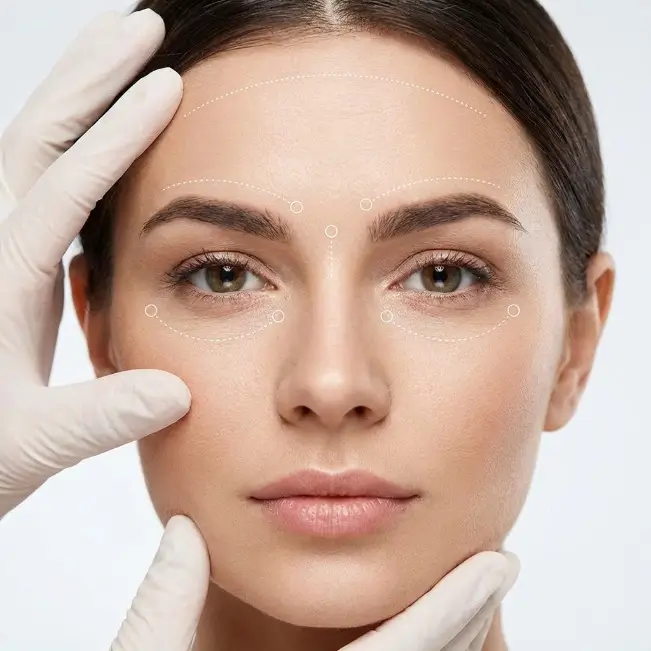
- The Glabellar Complex (Frown Lines): Targeting the corrugator supercilii and procerus muscles to eliminate the angry or stressed "11" lines between the eyebrows.
- Frontalis Muscle (Forehead Lines): Softening the horizontal creases that appear when raising the eyebrows, balancing the muscle to avoid a heavy or "dropped" brow.
- Orbicularis Oculi (Crow's Feet): Relaxing the lateral eye muscles to smooth out the fine lines that fan out during smiling or squinting.
- Lower Face and Neck (Advanced Techniques): Treating the masseter muscle to relieve bruxism (teeth grinding) and slim the lower face. Injecting the depressor anguli oris (DAO) and platysma bands can also create a subtle lifting effect, commonly referred to as the "Nefertiti Lift".
- Gummy Smile Correction: Relaxing the levator labii superioris to prevent the upper lip from elevating excessively and exposing the gums.
The Era of "Prejuvenation" (Preventative Botolinium Toxin)
Historically, patients sought botulinum toxin treatments only after deep wrinkles had already formed. Today, dermatological consensus strongly advocates for preventative treatments, often referred to as "Prejuvenation".
Dynamic wrinkles (visible only during muscle movement) will inevitably convert into static wrinkles (visible even at rest) due to the constant mechanical fracturing of dermal collagen and elastin over the years. By administering micro-doses of botulinum toxin to patients in their late 20s or early 30s, dermatologists can prevent these permanent dermal fractures from ever taking hold. It is significantly easier to prevent a wrinkle than to erase a deep, established scar.
Safety Profile, Efficacy, and Longevity
Botulinum toxin type A possesses an exceptional safety profile when administered by a board-certified physician. It has been FDA-approved for cosmetic use since 2002. The procedure is minimally invasive, virtually painless (using ultra-fine needles), and requires zero downtime, making it a true "lunchtime procedure."
The clinical onset of action typically begins between 3 to 5 days post-injection, peaking at around 14 days. The duration of the muscle-relaxing effect is biologically determined by the gradual regeneration of new nerve endings (axonal sprouting). On average, clinical results last between 3 to 6 months. The longevity varies among individuals and is influenced by factors such as baseline muscle mass, patient metabolism, and the specific dosage administered.
Bibliographic References
This medical article was reviewed and authored by Dr. Caroline Minchio, supported by the following peer-reviewed literature:
1. Carruthers, A., & Carruthers, J. (2004). Botulinum toxin type A: history and current cosmetic use in the upper face. Seminars in Cutaneous Medicine and Surgery.
2. Flynn, T. C. (2012). Botulinum toxin: examining duration of effect in facial aesthetic applications. American Journal of Clinical Dermatology.
3. Ascher, B., et al. (2010). A 12-month follow-up, randomized comparison of the safety and efficacy of two botulinum toxin type A products for glabellar lines. Dermatologic Surgery.
4. de Maio, M. (2021). Myomodulation with Injectable Fillers: An Innovative Approach to Addressing Facial Muscle Movement. Aesthetic Plastic Surgery.