1. What causes acne?
Acne is caused by four main factors: excess oil production, clogged pores, bacterial proliferation (Cutibacterium acnes), and inflammation. Hormonal, genetic, and environmental factors all contribute.
The 50 most common questions answered by Dr. Caroline Minchio.
Acne is caused by four main factors: excess oil production, clogged pores, bacterial proliferation (Cutibacterium acnes), and inflammation. Hormonal, genetic, and environmental factors all contribute.
Yes, it is a chronic inflammatory skin disease recognized by the World Health Organization.
There is no definitive cure, but it is completely possible to control it with appropriate treatment, preventing new lesions and scarring.
A blackhead (comedone) is a non-inflammatory lesion. A pimple is an inflamed comedone, forming papules, pustules, or cysts.
No. Acne can appear in newborns, children (rare), adults (late-onset acne), and even during menopause.
Acne that persists after age 25 or appears in this age group. It is more common in women, with lesions on the lower face (jawline, chin).
Not directly. Foods with a high glycemic index (sweets, white flour) and dairy can worsen acne in some people.
Yes, stress increases cortisol and androgens, stimulating sebum production and inflammation.
No. Washing twice a day with a gentle cleanser is sufficient. Overwashing irritates the skin and worsens acne.
Yes. It worsens inflammation, increases the risk of infection, and can cause permanent scars and dark spots.
Yes. Besides protecting against cancer and aging, it prevents residual dark spots (post-inflammatory hyperpigmentation). Use oil-free and non-comedogenic products.
Cleansers with salicylic acid, glycolic acid, or benzoyl peroxide, for nighttime or alternating use. For the day, a gentle cleanser.
No. They can burn and irritate the skin, making acne worse.
It is an antimicrobial and comedolytic agent, very effective against acne-causing bacteria. Available in gels or lotions.
Yes, they are excellent for unclogging pores, renewing the skin, and treating acne. They can cause initial irritation (redness, peeling).
They control inflammation and bacteria but do not cure it. They should be used for a limited time (3-4 months) to avoid bacterial resistance.
It is a potent medication with side effects. It must be prescribed and strictly monitored by a physician.
Cases of severe (nodulocystic) acne, resistant to other treatments, with a risk of scarring, or that significantly affects the quality of life.
It is controversial. There may be an association in some patients, but it is not proven to be causal. Psychological monitoring is recommended.
Yes, some combined oral contraceptives improve hormonal acne. It is not the first line of treatment for all cases.
Yes, it is a very effective anti-androgen for hormonal acne in adult women, especially on the jawline and chin.
Yes, especially when associated with irregular periods, hair loss, and increased body hair. In these cases, Polycystic Ovary Syndrome (PCOS) should be investigated.
Yes, they remove comedones, reduce oiliness, and prepare the skin for other treatments. Must be done by a professional.
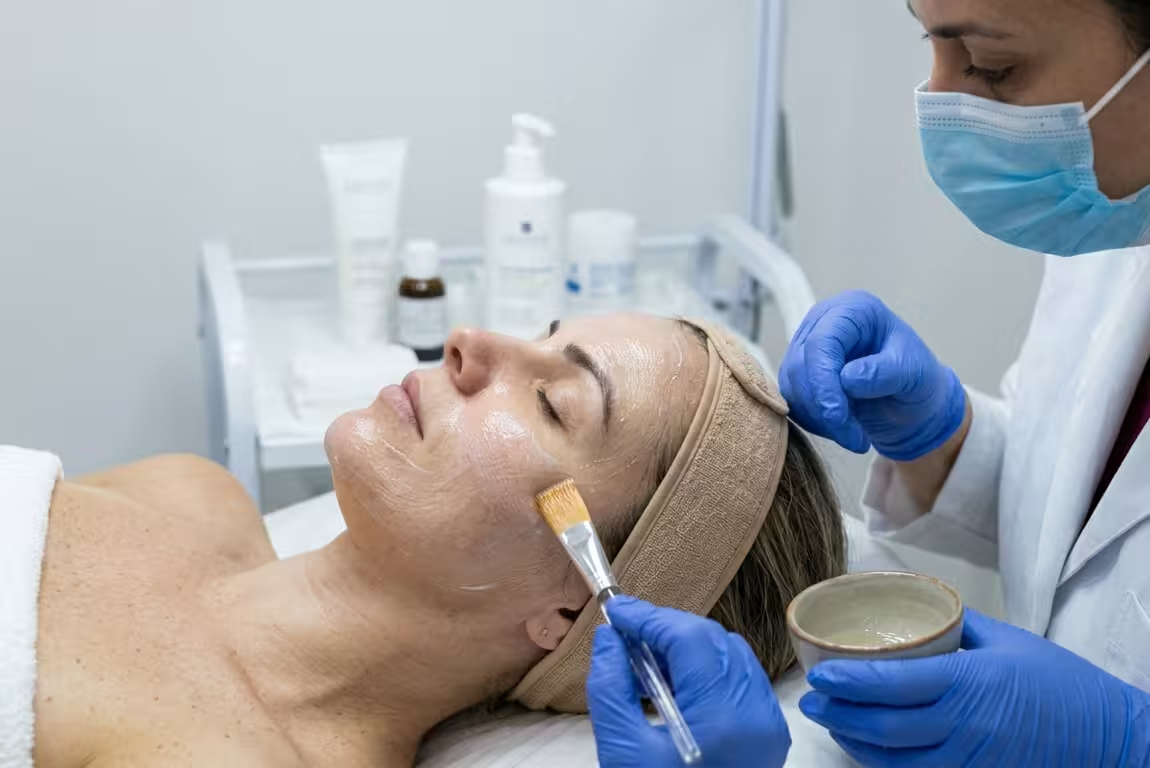
Yes. Salicylic, glycolic, and mandelic acid peels help unclog pores and smooth superficial scars.
On average 4 to 6 sessions with 15 to 30-day intervals. Maintenance is required.
Yes, it is one of the best treatments for atrophic scars (icepick, boxcar, rolling). It stimulates collagen and remodels the skin.
Usually 3 to 6 sessions with intervals of 30 to 45 days.
It depends. Laser is better suited for deep scars. Microneedling is safer for darker skin types.
Yes, for boxcar and rolling scars. The result is immediate but temporary (6 to 12 months).
It is a procedure where a needle is inserted under the scar to break the fibrous bands that pull it down. Indicated for rolling scars.
Yes. Corticosteroid infiltration, lasers, or associated surgery.
They can take months to years to fade. With treatment (sunscreen, lighteners), fading is much faster.
Yes, it is fundamental. Sun exposure darkens the spots and prolongs their duration.
Yes, it has antibacterial, anti-inflammatory, and lightening action. It is very safe, even for pregnant women.
Salicylic acid penetrates pores and is great for comedones. Glycolic acid is more hydrating and evens out texture. Both can be used.
In summer, with strict sunscreen, it can be used at night, but there is a high risk of photosensitivity.
Avoid excess milk and dairy, and high-glycemic carbohydrates (sugar, white flour). Prefer fruits, vegetables, and lean proteins.
There is evidence that zinc and probiotics can assist as adjuvants, but they do not replace medical treatment.
Yes, if it is comedogenic. Use oil-free makeup and remove it completely at the end of the day.
Generally, yes, due to higher testosterone levels. They tend to have more inflammatory and cystic lesions.
Yes, very much so. Treatment is not only aesthetic but also psychosocial.
Some treatments are safe (azelaic acid). Retinoids and isotretinoin are strictly contraindicated.
Topical use in low concentrations is considered safe. Avoid large areas or occlusion.
With topicals, initial improvement in 4-8 weeks. With oral meds, 4-6 weeks. Isotretinoin can take 3-4 months to show significant changes.
Not completely. Maintenance (nightly topical retinoid, daily sunscreen) prevents relapses.
No. It is caused by yeast (Malassezia) and appears as small follicular pustules. It is treated with antifungals, not antibiotics.
It is when the patient excessively picks and scratches the lesions, causing wounds and scars. It may be associated with psychological factors.
Yes, it is a rare and severe form accompanied by fever and necrotic ulcers. Requires hospital treatment.
No. Avoid sun exposure for at least 30 days after peels, microneedling, or lasers. Use physical sunscreen.
Consultations and treatments are provided by Dr. Caroline Minchio in person at her clinic in Brazil.