The Pathophysiology of Female Hair Loss: Understanding the Hair Matrix
Hair loss in women is one of the most distressing and psychologically debilitating complaints in dermatological practice. Unlike male pattern baldness — which follows a predictable and widely socially accepted genetic and hormonal pattern —, female alopecia is multifactorial, complex, and often masks underlying systemic pathologies. At Dr. Caroline Minchio's clinic, trichology (the science that studies hair and scalp) is treated with the highest level of scientific evidence, abandoning empirical therapies in favor of precision molecular and follicular diagnosis.
To understand hair loss, the patient must first understand the natural physiology of the hair follicle. Every strand of hair on the human body goes through a programmed life cycle, independent of its neighbors (asynchronous cycle), which is divided into three vital phases:
- Anagen Phase (Growth): Lasts 2 to 6 years. About 85% to 90% of a healthy woman's hair is in this phase. The cellular matrix at the root is actively dividing, pushing the hair shaft out of the scalp.
- Catagen Phase (Transition): Lasts about 2 to 3 weeks. The follicle retracts, cell division ceases, and the hair disconnects from its blood supply (dermal papilla).
- Telogen Phase (Rest and Shedding): Lasts about 3 months. The dead hair remains loosely anchored until it is pushed out by a new anagen hair growing beneath it. It is normal to lose 100 to 150 telogen hairs per day.
Hair disease sets in when a biochemical or genetic disruption occurs in this cycle, shortening the anagen phase, prolonging the telogen phase, or causing permanent immunological destruction of the follicle (as in cicatricial alopecias). Below, we dissect the two most frequent hair loss pathologies in the female universe.
1. Telogen Effluvium: The Acute Hair "Shock"
Telogen Effluvium (TE) is the most common cause of acute hair loss in women. It is characterized by a frightening and diffuse loss of hair, noticed in handfuls during the shower or when combing. Patients often report a loss of volume in their "ponytail".
The pathophysiology of TE is fascinating: faced with a severe stress event for the organism, the human body must redirect energy and nutrients to vital organs (heart, brain, liver). Since hair is a rapidly proliferating cellular tissue but is not essential for survival, the body abruptly "shuts down" up to 30% to 50% of the anagen follicles, forcing them prematurely into the telogen phase (death and rest).
Main Metabolic Triggers of Telogen Effluvium:
- Nutritional Deficiencies: Ferritin (iron storage) below 40 to 50 ng/mL prevents the rapid cellular replication of the hair matrix. Vitamin D and B12 deficiency, and restrictive diets (severe low-carb/ketogenic) are common villains.
- Endocrine Changes: Postpartum (due to the abrupt drop in estrogen and progesterone), thyroid dysfunction (hypothyroidism or hyperthyroidism), and discontinuation of birth control pills.
- Physical and Infectious Stress: Post-operative periods of major surgeries (especially bariatric), severe viral infections (such as the massive reports of post-COVID-19 hair loss), and high fevers.
The good clinical news about Telogen Effluvium is that it does not cause irreversible baldness. Once the trigger (the root cause) is identified and medically corrected through intravenous, injectable, or oral supplementation prescribed by Dr. Caroline, the follicles enter the anagen regeneration phase, and the hair re-fills the scalp over a period of 6 to 12 months.
2. Female Pattern Hair Loss (FPHL)
While telogen effluvium is characterized by "shedding," Female Pattern Hair Loss (FPHL) is characterized by the progressive and silent thinning of the hair shaft. It is a condition of polygenic inheritance where the hair follicles on the top of the head have a genetic hypersensitivity to circulating androgens (male hormones, such as testosterone), even when blood tests show these hormones are at completely normal levels for a woman.
The pathophysiological cascade occurs within the dermal papilla. The enzyme 5-alpha-reductase converts testosterone into the potent hormone DHT (Dihydrotestosterone). DHT binds to the receptors of the genetically susceptible follicle and initiates a process of Follicular Miniaturization. With each new cycle, the follicle becomes smaller, the growth phase (anagen) shortens, and the hair that grows is progressively thinner, shorter, weaker, and depigmented (turning from a thick terminal hair into an invisible fuzz called vellus hair).

Clinically, the patient with FPHL notices a widening of the central hair "part", the scalp becomes more visible under direct light (transparency), and the overall volume of the ponytail decreases severely over the years. This pathology has no cure, but it has extremely effective clinical control if diagnosed early.
3. Cicatricial Alopecias: The Medical Emergency
There are conditions where hair loss is just the tip of the iceberg of a destructive autoimmune disease. Conditions such as Frontal Fibrosing Alopecia (FFA), Lichen Planopilaris (LPP), and Discoid Lupus Erythematosus directly attack the follicular bulge area (where hair stem cells reside). Inflammation replaces the follicle with fibrotic scar tissue. Once the scar forms, hair will never grow back in that specific region. Rapid medical diagnosis with a guided biopsy and aggressive immunosuppressive intervention are crucial to halt the disease and save the remaining follicles.
4. The Therapeutic Arsenal and Advanced Procedures
Self-medication with internet "vitamin gummies" delays diagnosis and allows miniaturization or scarring to progress irreversibly. Modern therapy in trichology uses a high-precision three-pronged attack:
- Systemic Therapy (Oral): For androgenetic alopecia, the use of antiandrogenic hormone blockers (such as Spironolactone, Cyproterone, Finasteride, or Dutasteride) is essential to prevent DHT from destroying the follicle. Low-Dose Oral Minoxidil (LDOM) has become a revolution in treatment, acting as a potent follicular vasodilator and drastically prolonging the anagen phase, thickening the hair shaft globally.
- Microinfusion of Medications into the Skin (MMP®): The scalp barrier is highly impermeable to lotions. The MMP technique uses a robotic microneedling device that punctures the skin and deposits sterile medications (such as growth factors, 5-alpha-reductase inhibitors, latanoprost, and minoxidil) directly into the deep dermis, at the base of the hair papilla. The therapeutic response is infinitely superior to the exclusive use of home lotions.

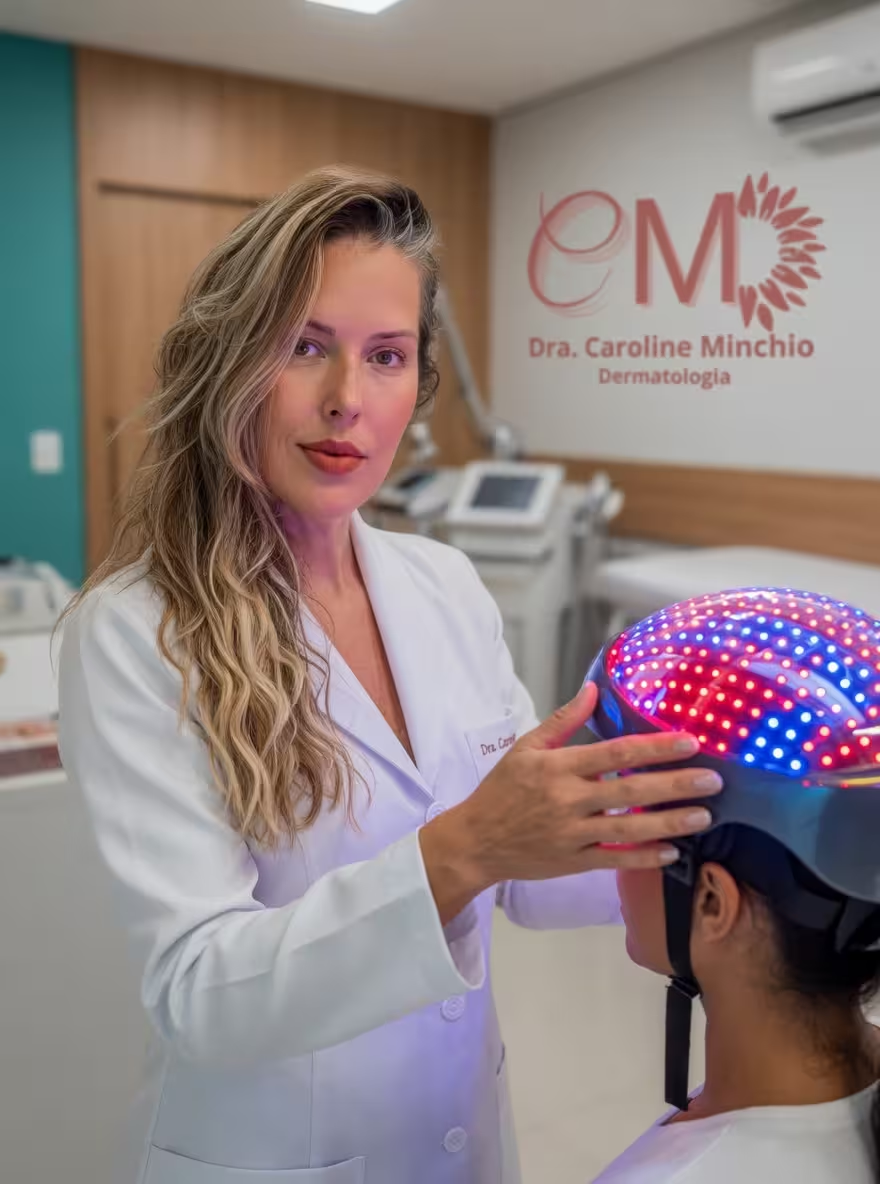
- Hair Phototherapy (LED/Laser LLLT Helmet): This is a non-invasive and completely painless pillar of our protocol. Low-Level Laser Therapy (LLLT) uses specific wavelengths to bathe the scalp with therapeutic lights, stimulating cells at the mitochondrial level. The red light (usually between 630-660 nm) penetrates down to the dermis, drastically improving local blood microcirculation, reducing follicular inflammation, and activating mitochondrial ATP, which translates into a real increase in hair density and thickness. Simultaneously, the blue light acts more superficially, acting directly on the hair shaft to increase shine and softness, in addition to having a potent bactericidal and fungicidal effect. This ensures a sanitized scalp, free of excess oil, dandruff, and dermatitis that frequently aggravate the hair loss condition.
In short, female hair recovery is a marathon, not a sprint. It requires patient commitment, months of therapeutic discipline, and the holistic vision of a dermatologist capable of seeing beyond the scalp. Restoring hair density is, ultimately, restoring female self-image and dignity.

1. SINCLAIR, R., et al. (2015). Female pattern hair loss: a clinical practice guideline. Medical Journal of Australia.
2. HARRISON, S.; BERGFELD, W. (2009). Diffuse hair loss: its triggers and management. Cleveland Clinic Journal of Medicine.
3. JIMENEZ-CAUHE, J., et al. (2019). Effectiveness and safety of low-dose oral minoxidil in male androgenetic alopecia. Journal of the American Academy of Dermatology.
4. GOLDSWORTHY, D., et al. (2016). Microneedling and Minoxidil for Androgenetic Alopecia. Dermatology and Therapy.