1. What is melasma?
Melasma is an acquired, chronic hyperpigmentation that appears as brownish or grayish patches, usually symmetrical, in sun-exposed areas.
The 50 most common questions answered by Dr. Caroline Minchio.
Melasma is an acquired, chronic hyperpigmentation that appears as brownish or grayish patches, usually symmetrical, in sun-exposed areas.
Melasma has a hormonal and solar origin and is symmetrical; solar lentigines (age spots) are small, round spots of aging; freckles are genetic and fade in winter.
Women of childbearing age, pregnant women, users of oral contraceptives, people with darker skin types (phototypes III-IV), and those with a family history.
Yes, although less common (about 10% of cases), men can also develop it, especially with intense sun exposure.
There is no definitive cure, but with continuous treatment and strict sun protection, it is possible to lighten and keep it controlled.
Sunlight, heat, visible light (cell phone screens, lamps), stress, hormonal fluctuations, and harsh cosmetics.
Yes, it is the pillar of the treatment. It must be used every day, even indoors or on cloudy days, with SPF 50+ and protection against visible light (tinted or with antioxidants).
Physical sunscreen (titanium dioxide, zinc oxide) or broad-spectrum chemical sunscreen with UVA/UVB and visible light protection. Minimum SPF 50.
Yes, makeup with sun protection is welcome, but it does not replace sunscreen. Apply sunscreen before foundation.
Not directly. It hydrates the skin but does not lighten it. It can be used as a complement.
Hydroquinone (with prescription), kojic acid, azelaic acid, arbutin, topical tranexamic acid, vitamin C, and retinoids.
In an appropriate concentration (2-4%), with supervised use and for a limited time (up to 3-4 months), it is safe. Prolonged or indiscriminate use can cause ochronosis.
No. It must be prescribed by a doctor, with an evaluation of the phototype and follow-up.
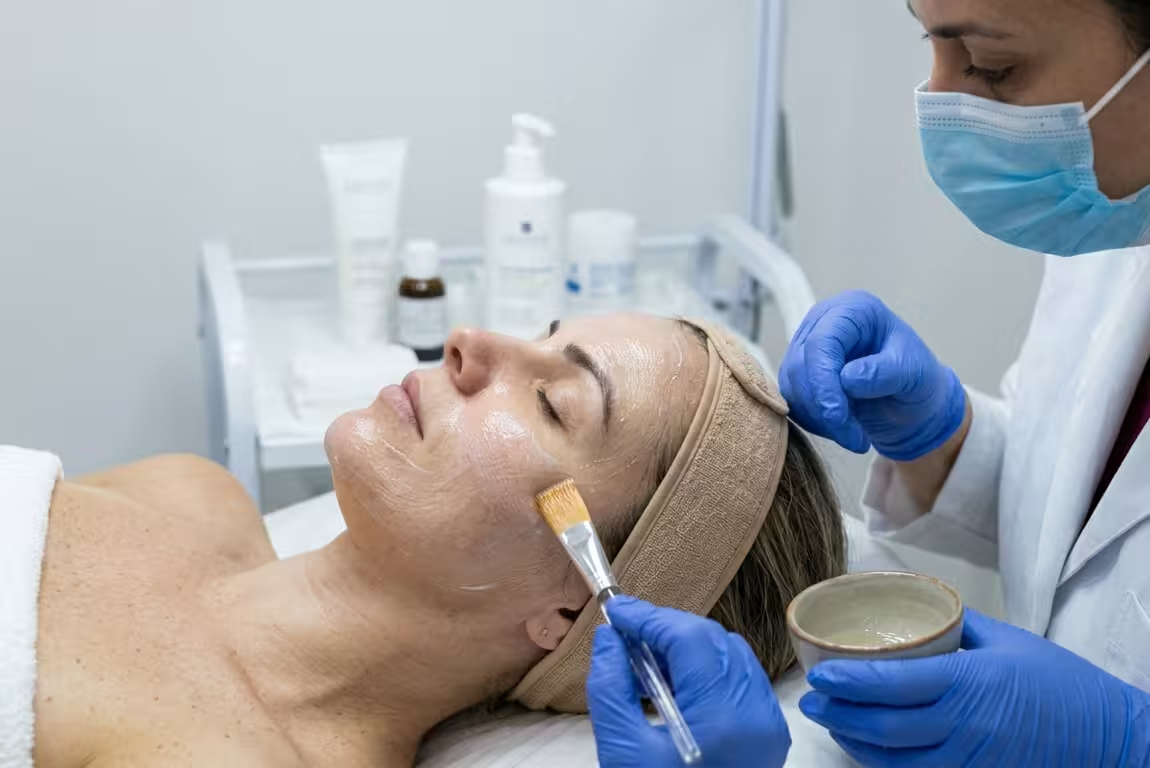
Yes, superficial and medium peels (glycolic, mandelic, low TCA) help to exfoliate and lighten. Deep peels are contraindicated in darker skin.
On average 4 to 6 sessions with intervals of 15 to 30 days, depending on the response.
Non-ablative fractional lasers and intense pulsed light (IPL) can help, but there is a risk of worsening in higher phototypes. Evaluated on a case-by-case basis.
Yes, it is an excellent option for resistant melasma, as it creates microchannels that facilitate the penetration of lighteners.
Indirectly, they improve skin quality and can enhance lightening, but they do not act directly on melanin.
Oral tranexamic acid (with prescription) has shown good results in moderate to severe cases. Also, supplements like Polypodium leucotomos.
Epidermal: light brown spot, responds well to treatments. Dermal: grayish, deeper, difficult to lighten. Mixed: a combination.
Through a Wood's lamp examination (a simple test performed in the office).
During pregnancy, only sunscreen and safe topical care (azelaic acid, low glycolic acid). Hydroquinone and lasers are contraindicated.
Yes, with safe substances. Consult your dermatologist for guidance.
Yes, hormones can trigger or aggravate it. Switching to a progestin-only pill or a non-hormonal IUD can help.
It may lighten, but the spots usually do not disappear completely because the sun has already fixed the pigmentation.
Yes, it is chronic. Maintenance with sunscreen and intermittent use of lighteners prevents its return.
Indirectly. A diet rich in antioxidants (fruits, vegetables) and low in inflammatory carbohydrates can help control it.
Yes, because it increases cortisol, which can stimulate melanin production.
It is usually asymptomatic. If there is itching, it may be associated contact dermatitis.
There is no specific test. Hormones (TSH, estradiol) can be evaluated if an alteration is suspected.
No. Melasma is benign; it does not transform into melanoma or carcinoma.
Yes, they are accumulations of melanocytes due to chronic sun exposure, usually small and multiple. Treatment is similar, but they respond better to laser.
No. It is a spot that appears after inflammation (pimple, wound). It tends to fade over time and with lighteners.
Yes, it stimulates cellular renewal but can cause irritation. It must be used with caution.
Yes, it is an antioxidant and inhibits tyrosinase (the melanin enzyme). Prefer stable formulations.
Yes, provided there is no excessive mechanical aggression (avoid strong exfoliation). Gentle cleansing is beneficial.
Not recommended. It can cause infection, scarring, and worsen the spots if not done in a medical setting.
No, they are irritating and can worsen melasma, causing inflammation and rebound hyperpigmentation.
There is no scientific proof. The term "liver spot" is popular, but it is a myth.
Lightening reduces the intensity of the spot; depigmentation completely eliminates the color (used in vitiligo, not in melasma).
No. Without protection, the spot returns in weeks.
Rarely. The goal is to make it barely noticeable, not to eliminate it 100%.
Very rare. Spots in children are usually other conditions (nevi, café-au-lait macules).
Yes, the association of sunscreen + topical lightener + procedure (peel or microneedling) brings better results.
With sunscreen and cream, initial improvement in 4-8 weeks. With procedures, it can be faster.
More common in Latinos, Asians, and people with darker skin (phototypes III to V).
Yes, oil-free makeup with sun protection is ideal.
Mandelic is gentler and better for darker and sensitive skin; glycolic penetrates deeper and is more irritating.
No. Injectable tranexamic acid is used off-label in some cases, but it is not a vaccine.
The clinic is located in Brazil. Consultations and treatments are provided by Dr. Caroline Minchio in person.