1. What is baldness?
It is the progressive and abnormal loss of hair, usually influenced by genetics, hormones, and age.
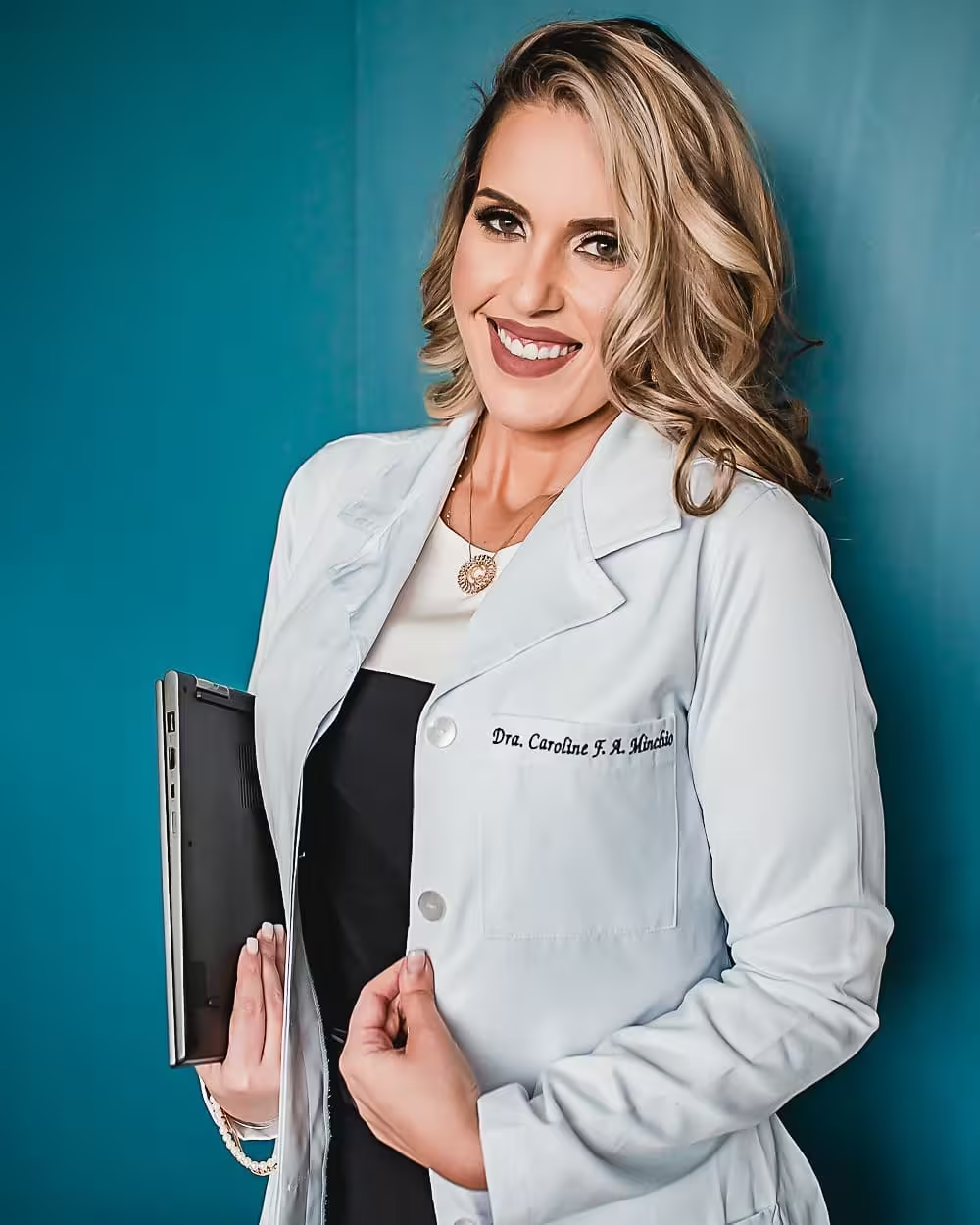
The 50 most common questions answered by Dr. Caroline Minchio.
Baldness (especially androgenetic alopecia) is a progressive but treatable condition. This guide was developed based on the best available science to offer you clear and safe information — before, during, and after treatment. Here, you will find everything from the mechanisms of hair loss to post-procedure care, always with the commitment to evidence-based medical follow-up.
It is the progressive and abnormal loss of hair, usually influenced by genetics, hormones, and age.
It is the most common type of baldness, caused by the action of the hormone dihydrotestosterone (DHT) on genetically sensitive hair follicles, leading to thinning and shedding.
There is currently no definitive cure, but there are highly effective treatments to control progression, reduce hair loss, and stimulate the growth of new hair.
Yes. Although more common in men, female pattern hair loss is frequent, manifesting primarily as diffuse thinning on the top of the head.
It can start in adolescence, but it is more common from the age of 20-30. The earlier it starts, the greater the importance of intervention.
Through detailed clinical evaluation + hair dermoscopy (trichoscopy), a non-invasive exam that magnifies the scalp and hair follicles.
In some cases, yes. Hormonal blood tests (DHT, testosterone, TSH, ferritin, vitamin D, zinc) may be requested to rule out other causes.
Progressive thinning of the hair, increased shedding when washing or combing, and noticeable receding hairlines or widening of the hair part.
No. Acute and reversible hair loss (like telogen effluvium post-pregnancy, due to stress or post-surgery) is common and resolves spontaneously.
Yes, it is one of the most important factors. If close relatives have baldness, the risk increases significantly.
Yes. There are several options with scientific proof: topical/oral medications, minimally invasive procedures, and hair transplants.
It is a vasodilator medication that directly stimulates the hair follicle, increasing the growth phase and the caliber of the hair. It can be used topically (solution or foam) or orally in low doses.
It is a medication that inhibits the 5-alpha-reductase enzyme, reducing DHT (the main agent of male baldness). Highly effective in halting progression and recovering hair.
In specific cases and always under strict medical guidance (usually post-menopause, as it can cause adverse effects in women of childbearing age).
A technique that injects microdoses of active ingredients (like Minoxidil, finasteride, vitamins) directly into the scalp dermis, increasing efficacy and reducing systemic effects.
The use of a roller or pen with microneedles that create controlled lesions on the scalp, stimulating growth factors and increasing the absorption of topical medications.
The application of the patient's own blood, centrifuged and rich in growth factors, to regenerate follicles and reduce hair shedding.
Yes, transplanted hair (from the donor area, usually the back of the neck) is resistant to DHT and does not fall out. However, native, non-transplanted hair remains subject to baldness.
Patients with a healthy donor area (abundant and good quality hair) and baldness that is stabilized or controlled with medication.
No. It is performed under local anesthesia, with minimal discomfort during the procedure. Post-operatively, there may be mild discomfort controlled with painkillers.
Yes. Guidelines include suspending certain medications (anti-inflammatories, anticoagulants), avoiding alcohol 48 hours before, and keeping the scalp clean.
It depends. Medications like aspirin, antiplatelet drugs, or some supplements may need to be paused. Never stop without medical advice.
It is not recommended. Smoking reduces tissue oxygenation and worsens the results of any capillary procedure.
Yes. Diets rich in proteins, iron, zinc, B and D vitamins favor hair growth. Nutritional deficiencies compromise the results.
No. Only for hair transplants (usually) and some MMP protocols. Microneedling and PRP can be done with long hair.
The first new hairs appear between 3 and 6 months. Maximum improvement is usually seen after 12 to 18 months of continuous treatment.
It is a temporary and expected loss of old hair, usually 2 to 6 weeks after starting Minoxidil or procedures. It is a sign that new hairs are being stimulated.
Yes, but following specific instructions. Generally, wait 24-48 hours, use lukewarm water, gentle shampoos, and avoid intense rubbing.
Avoid direct sun exposure on the scalp for the first 7 days. Use a cloth hat (not a tight cap) or physical sunscreen if necessary.
Light exercise (walking) can be resumed in 48 hours. Intense activities with excessive sweating or impact (heavy lifting, running, CrossFit) should wait 5 to 7 days.
It depends on the degree of baldness. In early to moderate cases, recovery can be excellent. In fully scarred areas (no viable follicles), only a transplant will work.
In most cases, it is continuous. Medications and maintenance procedures are needed to preserve the results.
Yes. The benefits are maintained as long as the treatment is ongoing. Stopping leads to a gradual regression to the original state within a few months.
Yes, especially with modern techniques (FUE transplant, MMP, PRP) and individualized follow-up. The appearance is of natural hair.
With proper maintenance, gains can last years or decades. Without maintenance, hair is progressively lost.
Most are mild and transient: redness, itching, initial shedding. More serious effects are rare when treatment is well-indicated and monitored.
Yes, for men. Possible side effects (decreased libido, erectile dysfunction) occur in about 1-2% of cases and generally reverse upon discontinuation. Pregnant women should not handle the pill.
Yes, the "shedding" phase is expected and benign, lasting about 2-4 weeks. It is a sign that follicles are entering a new growth phase.
Yes, when performed by a medical specialist in a sterile environment. Risks include mild infection or scarring (very rare).
Rarely. Topical Minoxidil can cause contact dermatitis in some patients; alternatives like oral Minoxidil or propylene glycol-free foam resolve this.
No. That is a myth. However, keeping the scalp constantly covered and unwashed can favor dermatitis, but it does not cause androgenetic alopecia.
Only as an adjuvant. Shampoos with caffeine, ketoconazole, or biotin clean and reduce inflammation, but do not treat the hormonal cause of baldness.
It can trigger or aggravate acute shedding (telogen effluvium) and worsen androgenetic alopecia, but it is not the primary cause.
Yes, when there is a proven deficiency (iron, zinc, vitamin D, biotin). Supplementing unnecessarily brings no additional benefit.
Rosemary oil has some level of evidence (comparable to 2% Minoxidil in one small study). The others lack robust scientific proof and do not replace conventional treatments.
Yes. It is essential for dose adjustment, evaluation of side effects, monitoring of progress, and patient motivation.
Usually every 3 to 6 months in the first few years, then annually for maintenance.
Yes, and this is the most effective approach. Example: Minoxidil + finasteride + MMP + PRP + microneedling, depending on each case.
Completely. Every patient has a unique degree of baldness, hormonal sensitivity, expectations, and lifestyle — the therapeutic plan is always individualized.
With a board-certified dermatologist specializing in trichology. Dr. Caroline Minchio provides science-based care with a focus on natural results and continuous support in Brazil.