Safety First
Surgery is performed in a fully equipped clinical or hospital environment with dedicated anesthesia and comprehensive monitoring.
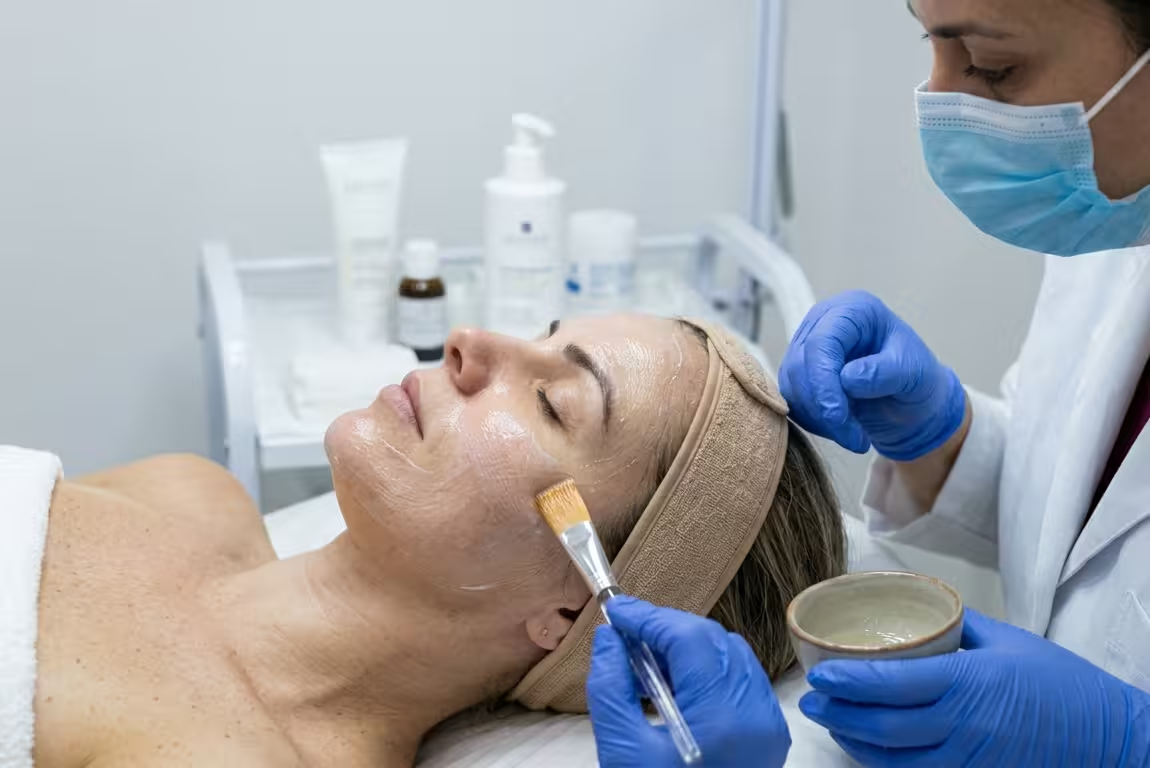
Correction of prominent ears, torn earlobes, and auricular remodeling. Dr. Caroline Minchio uses refined techniques to deliver natural results, restoring facial harmony and self-esteem.
READ ALL FAQs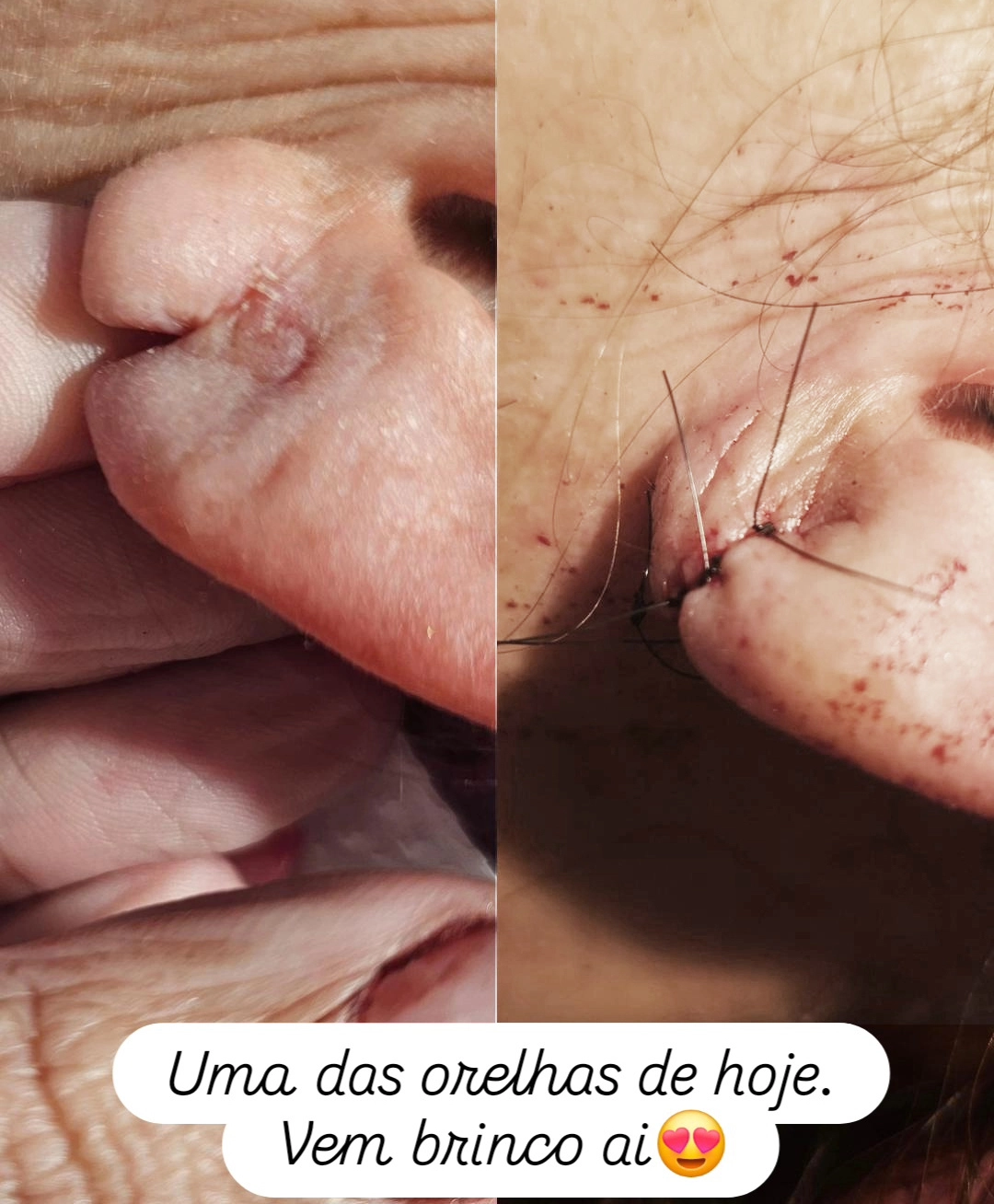
*Illustrative image. Results may vary depending on the patient's anatomy.
Surgery is performed in a fully equipped clinical or hospital environment with dedicated anesthesia and comprehensive monitoring.
Refined techniques that avoid the "pinned back" look, maintaining facial harmony and the ear's natural contours.
Return to light activities in 5 days, with the surgical scar hidden discreetly behind the ear.
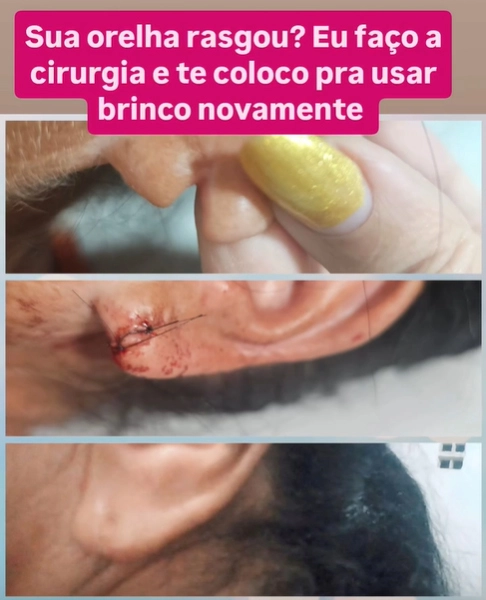
Correction of earlobes torn by heavy earrings or accidents, performed under local anesthesia in the office.
Earlobe Repair (Lobuloplasty): A quick 30-minute procedure performed in the office under local anesthesia. It reconstructs the torn earlobe, restoring its rounded shape, and allows the patient to wear earrings again after 60 days.
Minimally Invasive Ear Pinning (Otomodelação): A technique for mild cases of prominent ears, using only internal threads—no external cuts required. Highly indicated for patients with flexible cartilage.
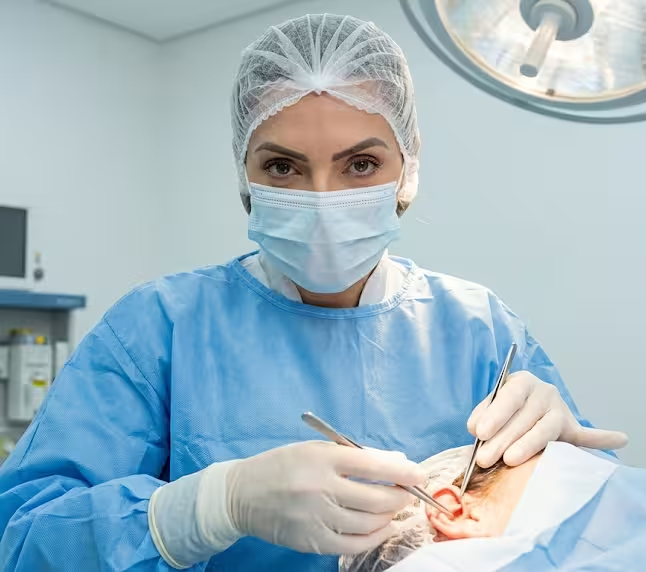
Dr. Caroline performs Otoplasty and Earlobe Repair surgeries in a rigorously equipped clinical or hospital environment. Every procedure is preceded by a detailed anatomical planning session, aiming not just for correction, but for total facial harmony and natural-looking cartilage.
Scientific rigor, safety, and a natural outcome for every patient.
Not during the procedure, as it is performed under local anesthesia and sedation. In the postoperative period, there is mild pain easily controlled with prescribed painkillers.
Yes, you must wear a compressive headband for 30 days (especially at night) to protect the cartilage and maintain the new shape.
You can usually resume driving after 5 to 7 days, provided you are no longer taking strong pain medication.
It is very rare (less than 5%), usually associated with postoperative trauma or failure to use the protective headband as instructed.
Read our complete guide with 55 questions and answers about the procedure, recovery, and results.
READ THE COMPLETE FAQ