Possible signs
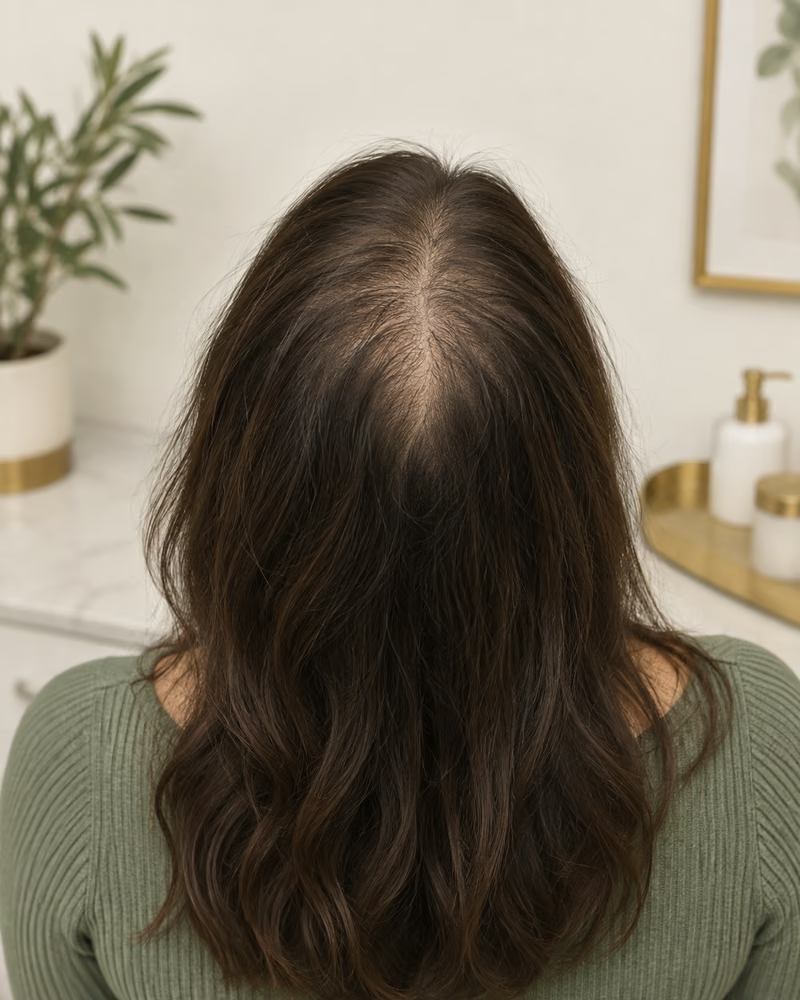
- a wider central part
- less volume on the top of the scalp
- progressively finer hairs
- slowly increasing thinning
Hair dermatology · São Mateus, Espírito Santo
Female pattern hair loss is a common cause of progressive thinning, especially along the central part of the scalp. Early assessment helps distinguish other causes and plan care.
Dermatology care
The pattern is often diffuse, with a wider part and gradually reduced density. It can coexist with telogen effluvium, hormonal changes, nutritional deficiency or scalp disease.
Possible presentation
Genetic predisposition and follicle sensitivity to androgens contribute to the condition. Family history, menopause, hormonal changes and other illnesses may affect its presentation.
Appearance alone cannot confirm the type of alopecia. Pattern, timing and symptoms change the investigation.
Evaluation
Onset, speed, triggers, illness, medicines, styling habits and family history are reviewed.
Assessment combines medical history, scalp examination and, when indicated, trichoscopy and targeted laboratory tests. The aim is to distinguish pattern hair loss from shedding, alopecia areata and scarring alopecias.
The type and activity of alopecia, together with general health, determine whether tests, biopsy, treatment or monitoring are appropriate.
Care
Care may include density monitoring, prescribed topical or systemic treatments when appropriate, and selected adjunctive procedures such as MMP or microneedling. There is no single formula and results vary.
Correct or control an identifiable trigger whenever possible.
Reduce inflammation, traction or progression to protect viable follicles.
Compare symptoms, photographs and density over time without promising the same result for everyone.
Seek an earlier evaluation if hair loss is sudden, patchy, painful, intensely itchy, scaly, pustular, scarred or associated with eyebrow loss.
FAQ · common questions
It usually causes progressive thinning, but the extent varies. Diagnosis and follow-up help investigate associated causes and reduce progression.
Yes. Pattern hair loss is usually slow and focused on thinning, while telogen effluvium causes faster shedding after a trigger. They may coexist.
Not automatically. The formulation, dose and precautions depend on medical assessment, including pregnancy and breastfeeding status.
It provides useful signs and improves accuracy, but must be interpreted with the medical history and clinical examination.
When the part is widening, thinning persists, shedding does not improve or scalp symptoms appear.
References
Educational content reviewed for patient communication. It does not replace a medical consultation, diagnosis or prescription.