Possible signs
- irregular patches
- itch, burning or pain
- scale around hairs
- smooth areas with fewer follicular openings
Hair dermatology · São Mateus, Espírito Santo
Lichen planopilaris is an inflammatory scarring alopecia. Burning, itch, pain, scale and progressive patches should be examined by a dermatologist.
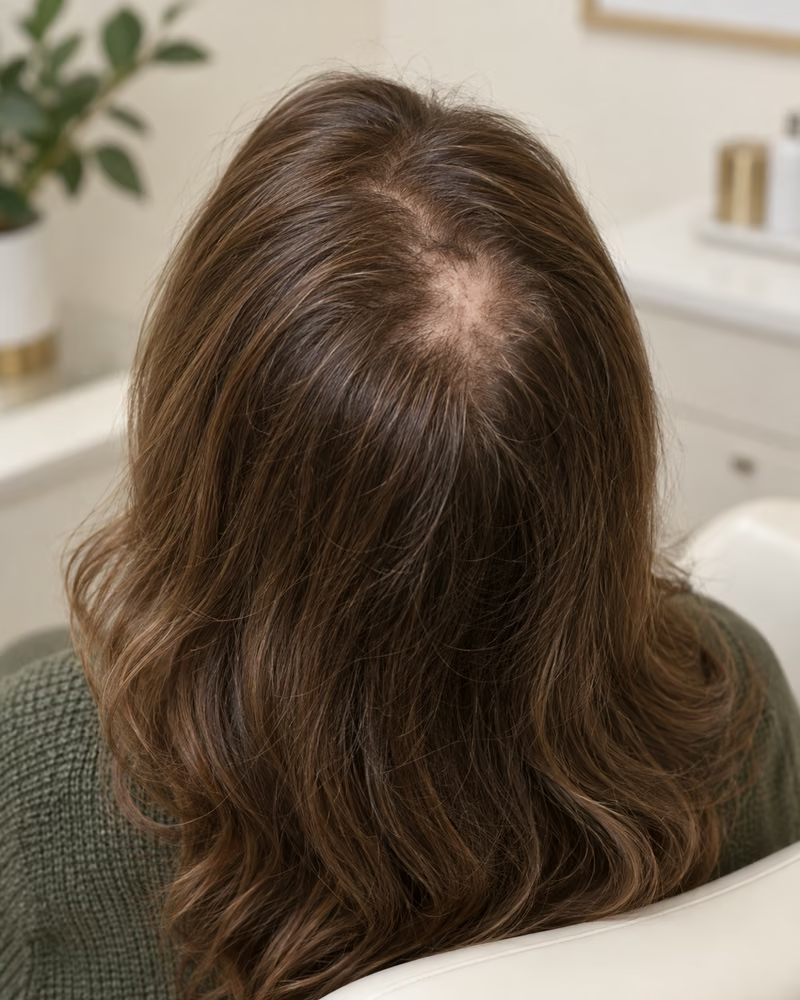
Dermatology care
Active areas may show redness and scale around hairs; established areas become smoother and show fewer follicular openings.
Possible presentation
It is an immune-mediated inflammation of the follicle. It is not caused by poor hygiene and is not contagious.
Appearance alone cannot confirm the type of alopecia. Pattern, timing and symptoms change the investigation.
Evaluation
Onset, speed, triggers, illness, medicines, styling habits and family history are reviewed.
Trichoscopy and examination may suggest the diagnosis. A scalp biopsy is often considered to confirm the disease and assess activity.
The type and activity of alopecia, together with general health, determine whether tests, biopsy, treatment or monitoring are appropriate.
Care
The goal is to reduce inflammation and prevent new scarring. Local, injected or systemic therapies may be prescribed with follow-up.
Correct or control an identifiable trigger whenever possible.
Reduce inflammation, traction or progression to protect viable follicles.
Compare symptoms, photographs and density over time without promising the same result for everyone.
Persistent pain, burning, scale, perifollicular redness or enlarging patches should be assessed promptly.
FAQ · common questions
Active inflammation may be controlled, but a follicle destroyed by scarring generally cannot produce hair again.
No. Scale with hair loss and symptoms has many possible causes and needs examination.
Some related scarring alopecias can involve eyebrows; examination defines the extent.
It is planned in a small area and risks are explained. The indication depends on diagnostic need.
Efficacy is not guaranteed and irritation is possible. Avoid applying untested substances to an inflamed scalp.
References
Educational content reviewed for patient communication. It does not replace a medical consultation, diagnosis or prescription.