Possible signs
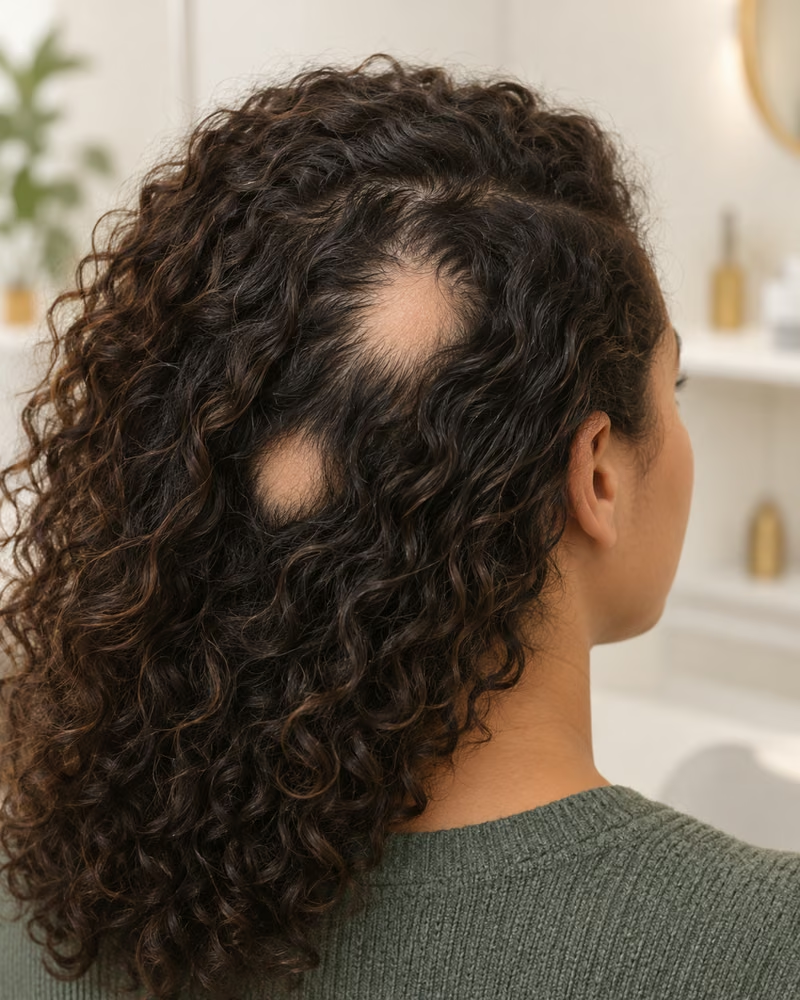
- smooth, well-defined patches
- short exclamation-mark hairs
- nail changes in some cases
- eyebrow or eyelash loss in extensive forms
Hair dermatology · São Mateus, Espírito Santo
Alopecia areata is a condition in which the immune system temporarily targets hair-follicle structures, producing well-defined patches. It can begin at any age and needs medical diagnosis.
Dermatology care
Patches can appear suddenly and vary in size. Some people regrow hair spontaneously; others have recurrent disease or involvement of eyebrows, eyelashes and body hair.
Possible presentation
It is a complex autoimmune disease. Genetics, other autoimmune conditions and environmental factors may contribute; it should not be attributed to a single emotional event.
Appearance alone cannot confirm the type of alopecia. Pattern, timing and symptoms change the investigation.
Evaluation
Onset, speed, triggers, illness, medicines, styling habits and family history are reviewed.
Diagnosis is clinical and may be supported by trichoscopy. Biopsy or tests are considered for atypical cases or when infection and scarring alopecia must be excluded.
The type and activity of alopecia, together with general health, determine whether tests, biopsy, treatment or monitoring are appropriate.
Care
Care depends on extent, age, duration, sites involved and psychosocial impact. Local, injectable or systemic treatments may be discussed with prescription and follow-up.
Correct or control an identifiable trigger whenever possible.
Reduce inflammation, traction or progression to protect viable follicles.
Compare symptoms, photographs and density over time without promising the same result for everyone.
Extensive patches, eyebrow or eyelash loss, infection, marked scale or rapid progression warrant prompt assessment.
FAQ · common questions
No. It does not spread from one person to another.
Stress may coincide with onset or worsening, but the disease is autoimmune and should not be reduced to an emotional cause.
It may, but the course is unpredictable. Recurrence and new areas are possible, so follow-up matters.
Alopecia areata usually does not destroy the follicle like scarring forms, but the diagnosis must be confirmed when scarring or inflammation is present.
They may irritate the scalp and delay diagnosis. Seek assessment before applying products to the affected skin.
References
Educational content reviewed for patient communication. It does not replace a medical consultation, diagnosis or prescription.