Possible signs
- more visible temples
- thinning at the vertex
- miniaturised hairs
- a family history of hair loss
Hair dermatology · São Mateus, Espírito Santo
Male pattern hair loss often begins with temple recession, vertex thinning or a gradual reduction in hair calibre. Dermatology follow-up confirms the pattern and supports a safe discussion of options.
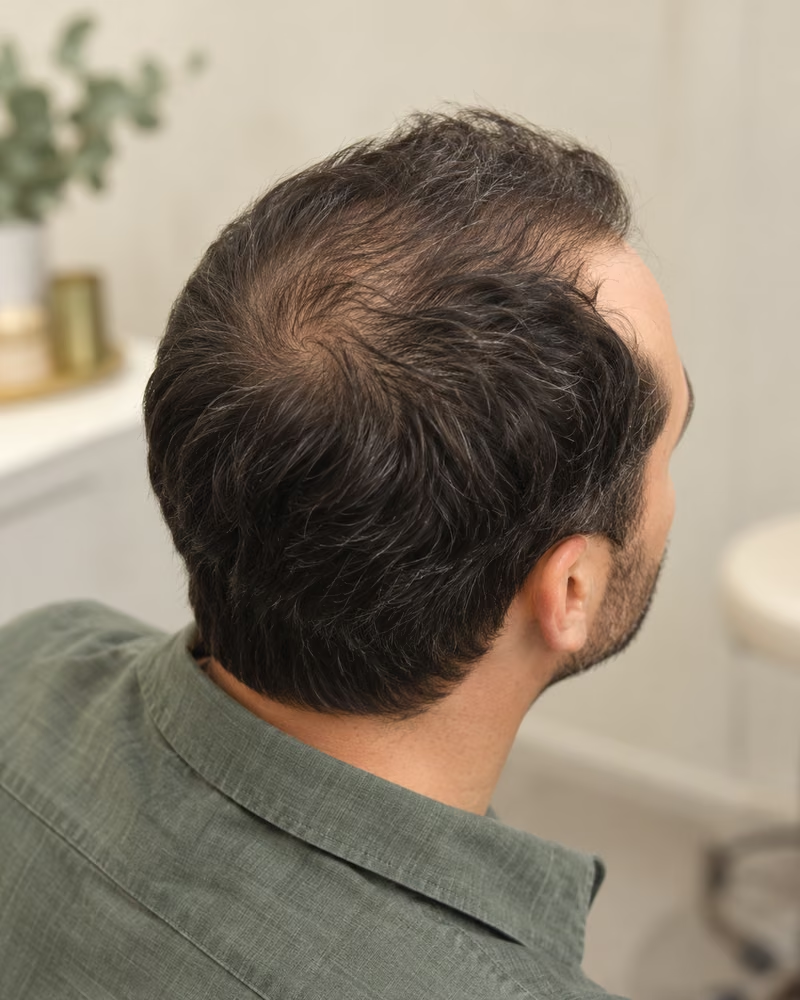
Dermatology care
Progression varies: some people change slowly, while others notice a marked change over a few years. Differential diagnoses include telogen effluvium, alopecia areata, inflammation and scarring disease.
Possible presentation
Genetics and follicle response to androgens are central factors. Age, family history and coexisting conditions influence the pace and pattern.
Appearance alone cannot confirm the type of alopecia. Pattern, timing and symptoms change the investigation.
Evaluation
Onset, speed, triggers, illness, medicines, styling habits and family history are reviewed.
The assessment reviews distribution, hair calibre, trichoscopy and the timeline. Additional tests are requested when the history suggests another cause.
The type and activity of alopecia, together with general health, determine whether tests, biopsy, treatment or monitoring are appropriate.
Care
Depending on the case, prescribed topical or systemic medicines, photographic follow-up and adjunctive procedures may be discussed. The choice must consider contraindications, adverse effects and realistic expectations.
Correct or control an identifiable trigger whenever possible.
Reduce inflammation, traction or progression to protect viable follicles.
Compare symptoms, photographs and density over time without promising the same result for everyone.
Very rapid loss, smooth patches, inflammation, crusts, significant itch or hair loss outside the usual pattern should be assessed rather than assumed to be simple baldness.
FAQ · common questions
Genetic predisposition is important, but the pattern and speed vary among relatives.
No. Shaving changes the appearance of the hair shaft, not the follicle or the cause of hair loss.
It should not be started without medical assessment and a discussion of benefits, risks and monitoring.
A transplant redistributes hairs in selected cases, but may not stop loss of native hairs; planning is individual.
As soon as persistent thinning, progressive temple recession or vertex loss is noticed.
References
Educational content reviewed for patient communication. It does not replace a medical consultation, diagnosis or prescription.