Possible signs
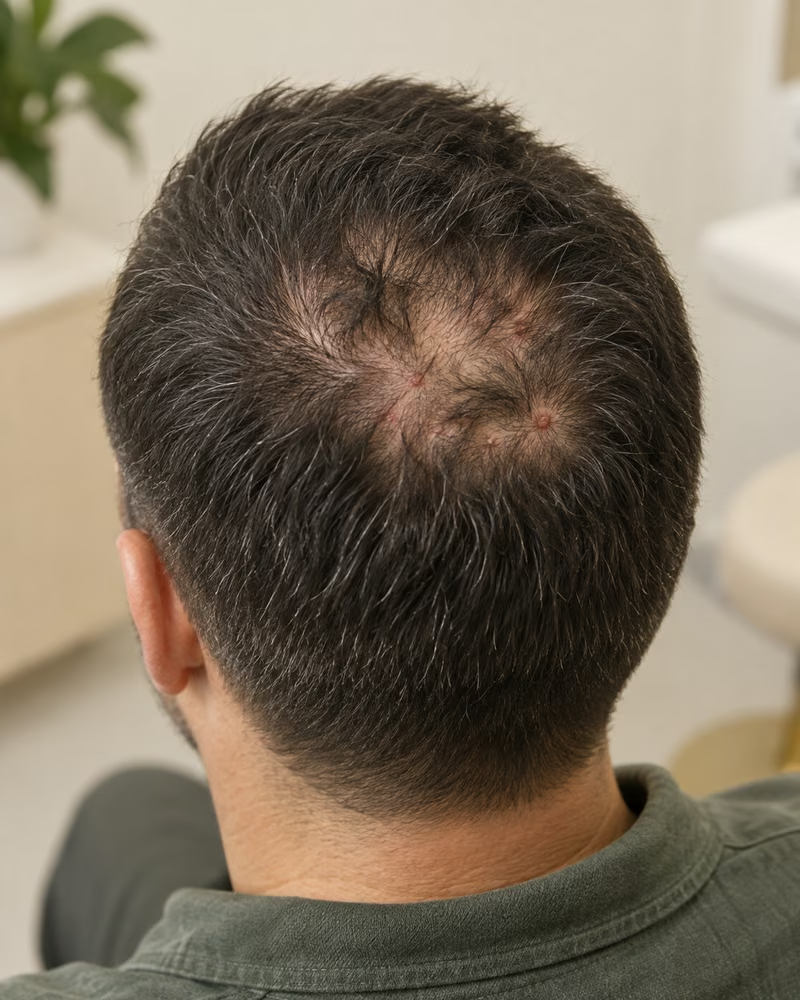
- pustules and crusts
- pain, burning or tenderness
- tufting or polytrichia
- progressive scarred patches
Hair dermatology · São Mateus, Espírito Santo
Folliculitis decalvans is a chronic scalp inflammation that may cause pustules, crusts, pain and scarring hair loss. Controlling activity can limit further loss.
Dermatology care
A classic sign may be several hairs emerging from one opening, called tufting or polytrichia. Activity can alternate with periods of remission.
Possible presentation
The condition involves neutrophilic inflammation and may include bacteria, biofilms and immune response. It should not be assumed to be a simple infection.
Appearance alone cannot confirm the type of alopecia. Pattern, timing and symptoms change the investigation.
Evaluation
Onset, speed, triggers, illness, medicines, styling habits and family history are reviewed.
Diagnosis combines examination and trichoscopy; culture and biopsy may be selected. Ringworm and other inflammatory alopecias may need exclusion.
The type and activity of alopecia, together with general health, determine whether tests, biopsy, treatment or monitoring are appropriate.
Care
Treatment is individualised and may include prescribed antibiotics, anti-inflammatory therapy, scalp care and other strategies. Resistance and adverse effects must be considered.
Correct or control an identifiable trigger whenever possible.
Reduce inflammation, traction or progression to protect viable follicles.
Compare symptoms, photographs and density over time without promising the same result for everyone.
Recurrent pustules, crusts, discharge, pain, odour or expanding hairless areas require dermatology assessment soon.
FAQ · common questions
It is not considered a contagious disease, although microorganisms may contribute to inflammation in some cases.
When the follicle has been destroyed, regrowth is unlikely; controlling activity protects viable areas.
No. Choice and duration depend on diagnosis and resistance and side-effect risks.
It is when several hairs appear to emerge from one follicular opening, a possible sign of folliculitis decalvans.
Not always, but they may help in atypical, resistant or diagnostically uncertain cases.
References
Educational content reviewed for patient communication. It does not replace a medical consultation, diagnosis or prescription.