Possible signs
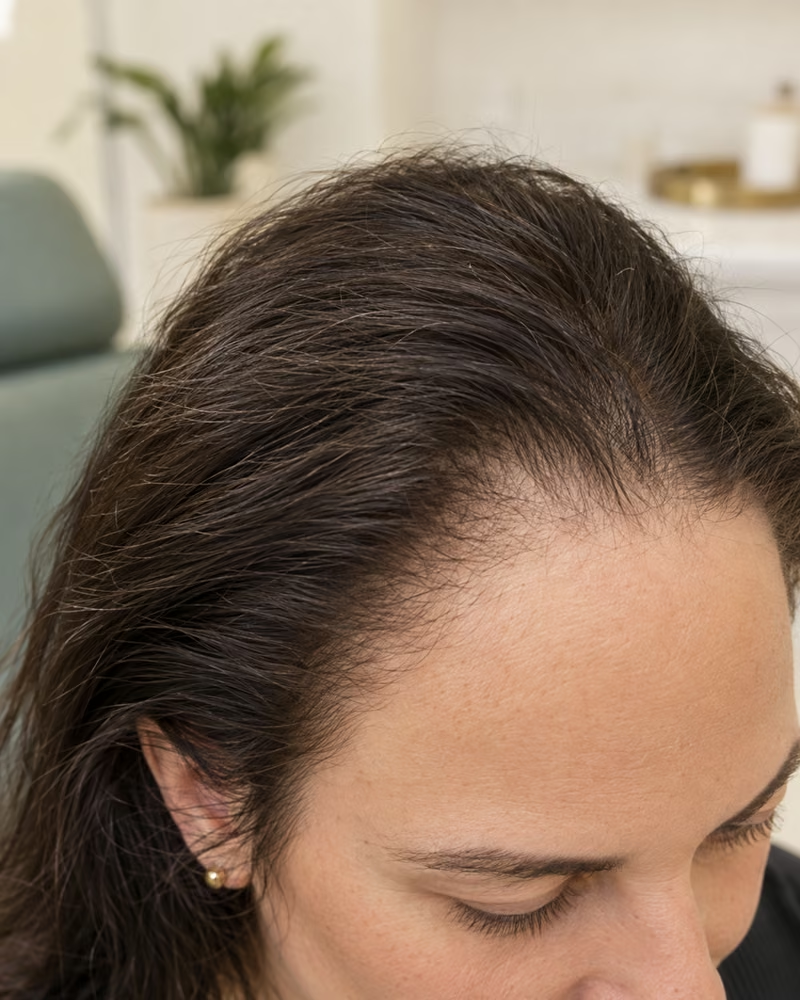
- frontal or temporal recession
- eyebrow loss
- perifollicular redness or scale
- smooth, shiny skin in older areas
Hair dermatology · São Mateus, Espírito Santo
Frontal fibrosing alopecia is a scarring form of hair loss that may recede the frontal hairline and reduce eyebrow hair. Because follicles can be destroyed, recognising activity early matters.
Dermatology care
Redness or scale around hairs, itch, burning or pain may occur, or the hairline may change slowly without symptoms. It can affect women and men.
Possible presentation
The exact cause is not fully understood. It involves inflammation directed at follicles, with immune and individual factors contributing.
Appearance alone cannot confirm the type of alopecia. Pattern, timing and symptoms change the investigation.
Evaluation
Onset, speed, triggers, illness, medicines, styling habits and family history are reviewed.
Clinical examination and trichoscopy guide diagnosis. Biopsy may be considered when the presentation is uncertain or activity and subtype need confirmation.
The type and activity of alopecia, together with general health, determine whether tests, biopsy, treatment or monitoring are appropriate.
Care
The goal is to control inflammation and preserve remaining follicles. Topical, injectable or systemic therapies may be discussed with monitoring for safety.
Correct or control an identifiable trigger whenever possible.
Reduce inflammation, traction or progression to protect viable follicles.
Compare symptoms, photographs and density over time without promising the same result for everyone.
Rapid recession, recent eyebrow loss, burning, pain, itch or scale at the hairline call for an early consultation.
FAQ · common questions
In established scarred areas, regrowth is unlikely. Treatment aims to stop activity and preserve viable follicles.
No. It is an inflammatory disease, not a transmissible infection.
Yes. Eyebrow loss may be an early sign or accompany frontal recession.
Not always. The decision depends on how clear the clinical and trichoscopic findings are.
Any procedure should be discussed after assessing inflammatory activity, healing and individual safety.
References
Educational content reviewed for patient communication. It does not replace a medical consultation, diagnosis or prescription.