Possible signs
- thinning at the frontal or temporal hairline
- pain or tenderness after styling
- breakage and short hairs
- small papules or crusts
Hair dermatology · São Mateus, Espírito Santo
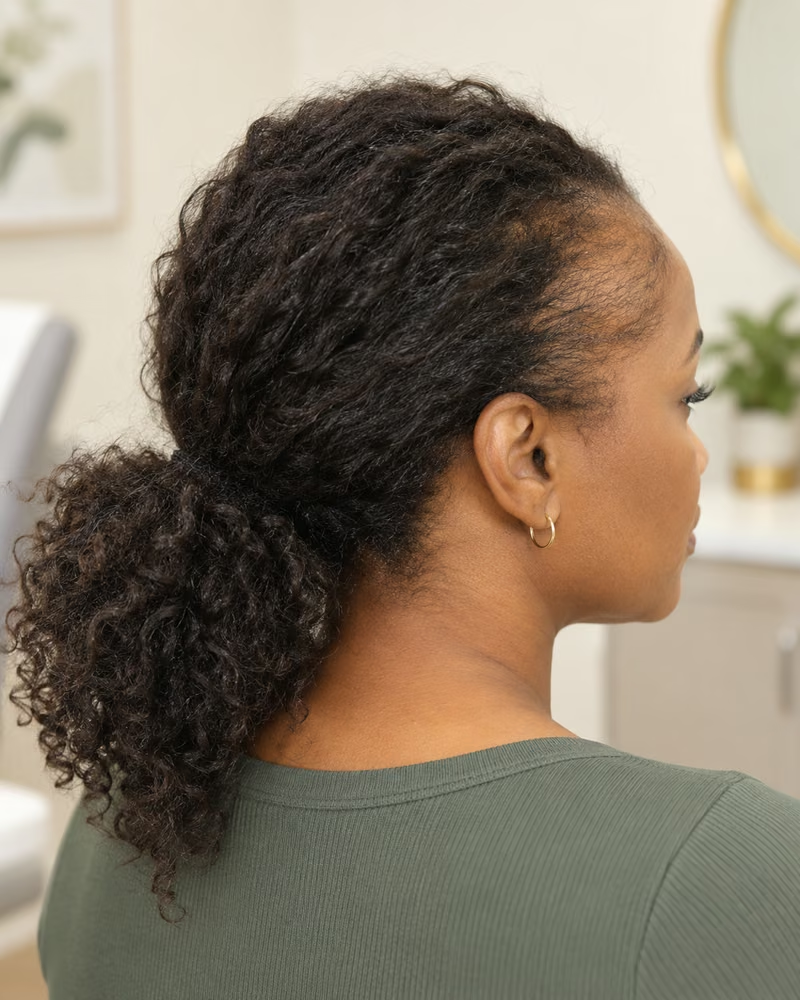
Traction alopecia develops when hair is repeatedly exposed to pulling, weight or tension. Removing the source early may allow recovery; prolonged traction can scar follicles.
Dermatology care
It is common at the frontal and temporal hairline but can occur wherever hair is under tension. Pain during styling, breakage, crusts and short hairs are warning signs.
Possible presentation
Tight braids, ponytails, buns, extensions, hairpieces and repeated pulling can contribute. Heat and chemicals may increase fragility but are not the same cause.
Appearance alone cannot confirm the type of alopecia. Pattern, timing and symptoms change the investigation.
Evaluation
Onset, speed, triggers, illness, medicines, styling habits and family history are reviewed.
The hairstyle history and distribution of thinning often guide diagnosis. Trichoscopy helps evaluate breakage and scarring.
The type and activity of alopecia, together with general health, determine whether tests, biopsy, treatment or monitoring are appropriate.
Care
The first step is to stop or reduce traction and use looser styles. Additional care and treatment of inflammation may be discussed when needed.
Correct or control an identifiable trigger whenever possible.
Reduce inflammation, traction or progression to protect viable follicles.
Compare symptoms, photographs and density over time without promising the same result for everyone.
Pain, crusts, bleeding, persistent frontal recession or no improvement after changing styling habits indicate the need for consultation.
FAQ · common questions
Early disease may improve after tension is removed. Chronic traction can destroy follicles and leave scarring.
Safety depends on tension, weight, wear time and scalp response. Pain is not normal and suggests excessive traction.
Loose styles are usually less stressful; risk increases with repeated pulling, weight and pain.
Products do not neutralise mechanical force. Removing the source and checking for inflammation or scarring are essential.
With pain, persistent breakage, patches, a receding hairline or no recovery after changing habits.
References
Educational content reviewed for patient communication. It does not replace a medical consultation, diagnosis or prescription.