Possible signs
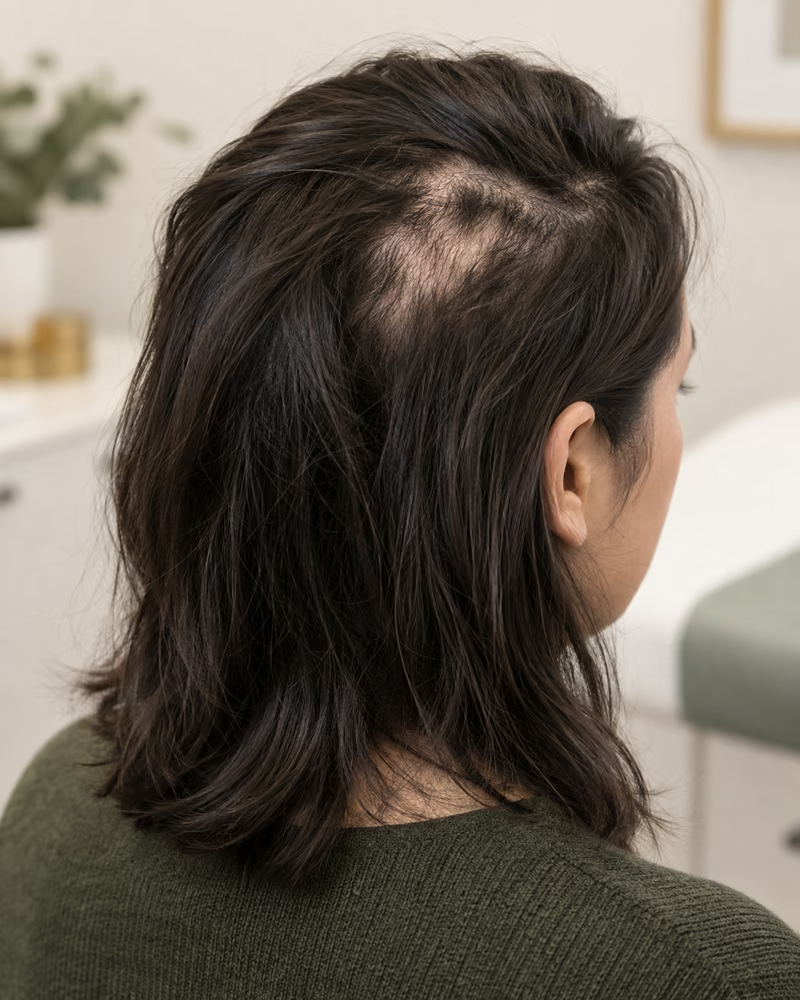
- irregular patches
- broken hairs of different lengths
- areas within reach of the hands
- tension before pulling and relief afterwards in some people
Hair dermatology · São Mateus, Espírito Santo
Trichotillomania involves a recurrent urge to pull or pluck one’s own hair, causing breakage and thinning. Compassionate, non-judgemental care is part of the assessment.
Dermatology care
Patches often have irregular shapes and hairs of different lengths. Some people notice the behaviour; others notice only the hair loss or try to hide it.
Possible presentation
It is related to impulse-control and behavioural factors. It is not simply a lack of willpower.
Appearance alone cannot confirm the type of alopecia. Pattern, timing and symptoms change the investigation.
Evaluation
Onset, speed, triggers, illness, medicines, styling habits and family history are reviewed.
The dermatologist evaluates breakage and excludes alopecia areata, ringworm, traction and inflammation. The history may support referral to psychology or psychiatry.
The type and activity of alopecia, together with general health, determine whether tests, biopsy, treatment or monitoring are appropriate.
Care
Care is often multidisciplinary, combining behavioural strategies with scalp care. Treatment is individualised and respects privacy and the person’s pace.
Correct or control an identifiable trigger whenever possible.
Reduce inflammation, traction or progression to protect viable follicles.
Compare symptoms, photographs and density over time without promising the same result for everyone.
Wounds, infection, bleeding, swallowing hair, severe distress or inability to control the urge require professional help.
FAQ · common questions
No. It is a real condition that can cause distress and injury. Support and treatment are more helpful than blame.
Trichotillomania tends to produce broken hairs of different lengths and irregular patches; confirmation requires examination and history.
It may when pulling stops and the follicle is not damaged. Repeated trauma and inflammation can make recovery harder.
Mental-health support is often important and can be combined with dermatology care.
Note when urges occur, keep your hands occupied and reduce triggers without self-blame. Do not apply irritants to wounds.
References
Educational content reviewed for patient communication. It does not replace a medical consultation, diagnosis or prescription.