Possible signs
- shedding after a medicine was started or changed
- diffuse thinning
- rapid loss in specific situations
- improvement or persistence after medical adjustment
Hair dermatology · São Mateus, Espírito Santo
Some medicines can alter the hair cycle and cause shedding. The relationship depends on the drug, dose, timing, other illnesses and alternative causes that began around the same time.
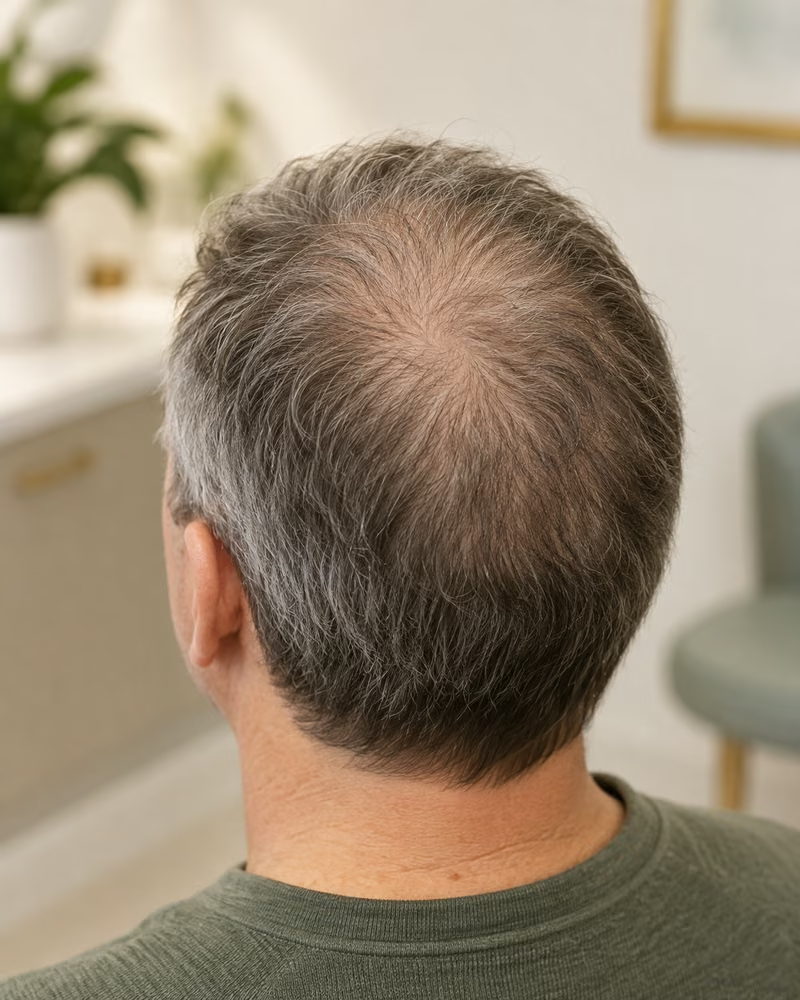
Dermatology care
The loss may resemble telogen or anagen effluvium and, more rarely, other patterns. A complete review of medicines, supplements and treatments is essential.
Possible presentation
Retinoids, anticoagulants, some anticonvulsants, hormones, blood-pressure medicines and others may be associated in specific situations. Association does not prove the cause in an individual case.
Appearance alone cannot confirm the type of alopecia. Pattern, timing and symptoms change the investigation.
Evaluation
Onset, speed, triggers, illness, medicines, styling habits and family history are reviewed.
Assessment builds a timeline of medicines, illness, diet and events over recent months. Tests are selected according to symptoms and risk.
The type and activity of alopecia, together with general health, determine whether tests, biopsy, treatment or monitoring are appropriate.
Care
Never stop or change a medicine alone. The prescriber and dermatologist may discuss adjustment, substitution or monitoring when a relationship is likely.
Correct or control an identifiable trigger whenever possible.
Reduce inflammation, traction or progression to protect viable follicles.
Compare symptoms, photographs and density over time without promising the same result for everyone.
Hair loss with breathing difficulty, swelling, widespread rash, fever, wounds, neurological symptoms or allergic signs requires urgent care.
FAQ · common questions
No. Stopping may be risky. Speak with the prescribing doctor and bring a complete medicine list.
Many cases improve after the factor is controlled, but prognosis depends on the drug, cause and associated conditions.
Some supplements and excess nutrients can affect the hair cycle. Report everything you use, including non-prescription products.
Timing is helpful but not proof. Telogen effluvium, pattern hair loss, deficiency and scalp disease must also be considered.
Hair cycles are slow. When recovery occurs, it is usually gradual after the cause is controlled.
References
Educational content reviewed for patient communication. It does not replace a medical consultation, diagnosis or prescription.