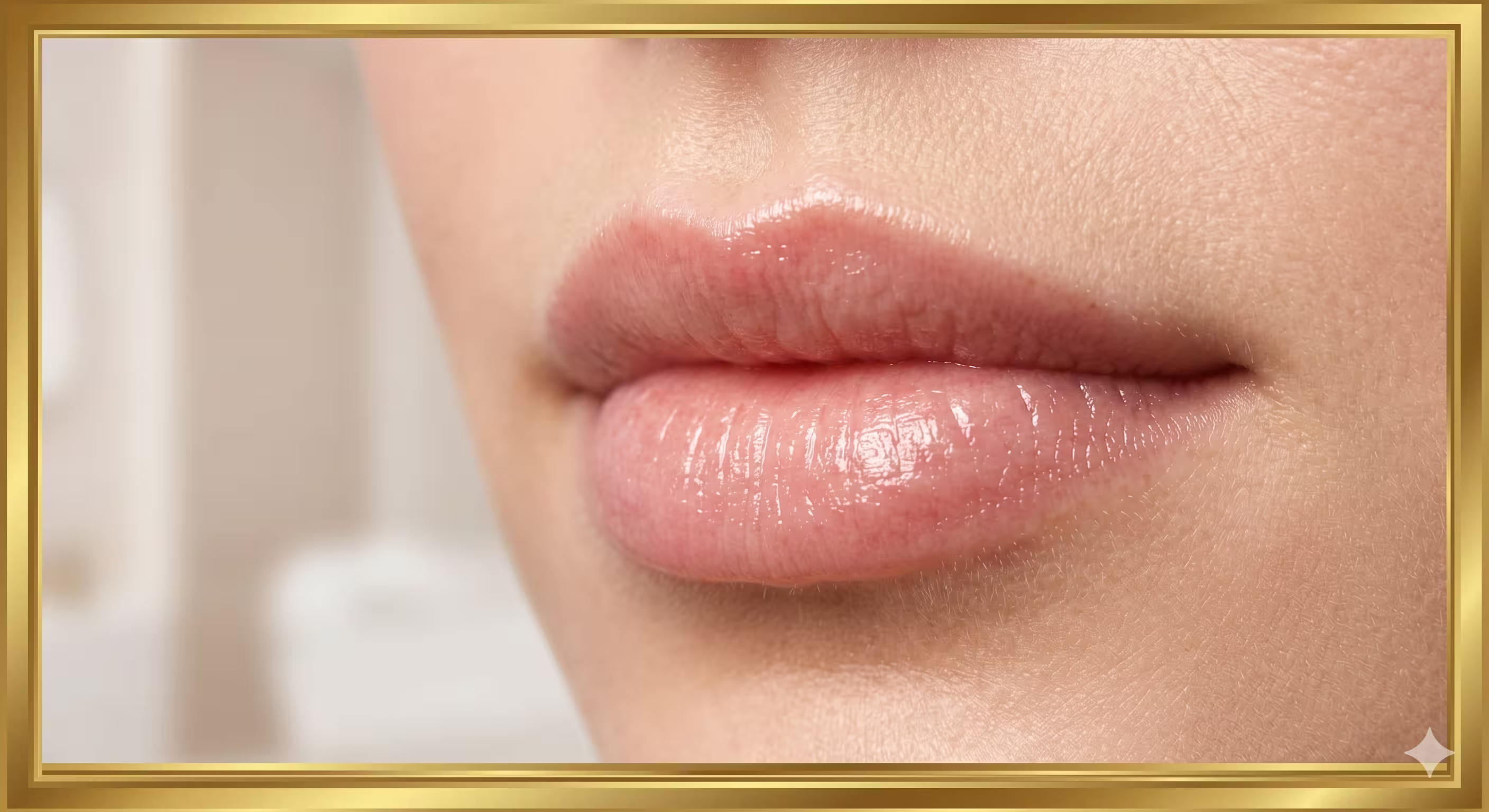
The Science Behind Deep Lip Hydration
Deep lip hydration, technically known in the medical field as dermal revitalization or lip Skinbooster, is one of the most refined cosmiatric procedures in modern dermatology. Unlike classic Lip Fillers — whose primary goal is structural volumization and three-dimensional projection —, hydration focuses exclusively on the biological restoration of the labial extracellular matrix (ECM), without significantly altering the size, shape, or innate architecture of the patient's lips.
To understand the vital need for this procedure, we must analyze the singular anatomy of the human lip. The labial semi-mucosa is a unique transitional zone in the human body. Unlike the skin on the rest of the face, the epidermis of the lips is extremely thin, having only 3 to 5 cell layers, whereas normal facial skin has up to 16 layers. Even more critically: lips do not have sebaceous or sweat glands, meaning there is no production of the hydrolipidic mantle (the film of water and oil that protects the skin against dryness).
1. Physiological Loss and TEWL (Transepidermal Water Loss)
Due to the absence of thick keratin and the sebum film, lips are perpetually exposed to an aggressive physiological phenomenon called Transepidermal Water Loss (TEWL). The water contained in the tissues evaporates rapidly into the environment, especially in dry, cold climates or with high exposure to air conditioning and strong winds. This is why lips are the first part of the body to crack, peel, and bleed.
In addition to TEWL, the intrinsic aging process (chronoaging) and the damage caused by UV radiation (photoaging) cause the accelerated degradation of endogenous Hyaluronic Acid (HA) — the natural molecule produced by our fibroblasts. Without natural HA, the lips lose their turgor (elastic tension), deflate slightly, and begin to develop micro-fissures and vertical rhytides, commonly nicknamed "barcode lines".
2. The Rheology of Hydration Hyaluronic Acid
The great fear of patients regarding lip procedures is the stigma of "duck lips" or exaggeratedly voluminous lips. This is where the science of Filler Rheology comes in to reassure the patient.
Rheology studies how materials flow and deform. Injectable Hyaluronic Acid (HA) exists in different densities. The HA used to create volume, projection, and contour is Cross-linked HA. Cross-linking is a chemical process that joins acid molecules with a bridge (usually BDDE), transforming it into a firm and rigid gel (High G Prime - G'). This gel does not spread; it stays where the doctor places it, creating structure and volume.
In absolute contrast, Deep Lip Hydration uses a Non-Cross-Linked or Very Low Cross-Linked Hyaluronic Acid. This product has an extremely low G Prime (G'). It is highly fluid, soft, and has exceptional hydrophilicity (ability to attract water). When Dr. Caroline Minchio injects this HA into the superficial dermis of the lips, it does not form a "bolus" (a ball of volume). Instead, it spreads evenly through the tissue like a microscopic net, acting like a sponge that attracts up to 1000 times its weight in water.
3. Mechanotransduction and Dermal Biomodulation
The benefits of deep lip hydration go far beyond simply putting "water" in the lips. There is a fascinating secondary biological effect called mechanotransduction.
When hydrophilic HA molecules expand the interstitial space with water, they cause a slight mechanical stretching of the dermis fibers. Fibroblasts (the skin's builder cells) sense this tension through their membrane receptors. In response to this biological stretch, fibroblasts leave their resting state and initiate a process of neocollagenesis, producing new collagen, high-quality elastin, and, incredibly, inducing the skin to produce its own endogenous hyaluronic acid. Therefore, injectable hydration is a progressive anti-aging treatment that restructures the long-term health of the lip.
4. The Procedure, Vascular Safety, and Medical Technique
Lip injection is considered one of the most delicate procedures in facial cosmiatry. Lips have a complex and dense vascular network, being nourished primarily by the superior and inferior labial arteries. The patient's safety depends exclusively on the executing physician's anatomical knowledge.
For the hydration treatment (Lip Skinbooster), the technique requires depositing the product in a highly specific plane: the superficial dermis or shallow submucosa. Injection into deep planes (where the arteries and the orbicularis oris muscle lie) is strictly avoided. The procedure can be performed with ultra-fine needles for micro-papules (to intensely focus on the epidermal barcode) or through flexible microcannulas, which glide under the skin without cutting blood vessels, reducing the risk of bruising and virtually eliminating the risk of vascular occlusion (necrosis).
Comfort is maximized with the prior application of potent topical anesthetics, making the session, which lasts an average of 20 to 30 minutes, a quick and perfectly tolerable procedure.
5. Post-Procedure: The Recovery Triad
Immediately following the procedure, it is absolutely normal to observe slight edema (swelling) due to the highly hydrophilic nature of the acid, which pulls water violently in the first 48 hours. Recovery requires a "triad" of home care:
- Edema Management: Application of indirect cold compresses in the first 12 to 24 hours to promote vasoconstriction and limit inflammatory expansion.
- Friction Prevention: Avoid vigorous manipulation, drinking very hot liquids, or biting the lips. Intense physical exercises should be suspended for 24 to 48 hours.
- Antiviral Prophylaxis: For patients with a recurrent history of Herpes Simplex Labialis, systemic prophylaxis with oral antivirals (such as Acyclovir or Valacyclovir) is mandatorily prescribed by Dr. Caroline prior to the procedure, as the mechanical trauma of the needle can reactivate the virus.
The final results settle beautifully between 7 to 14 days. The durability of deep lip hydration varies from 6 to 9 months, depending closely on the expression of the patient's own hyaluronidase enzyme (which degrades the acid) and their lifestyle habits (smoking, severe sun exposure, and chronic dehydration accelerate product loss).
In conclusion, deep lip hydration with Skinboosters represents the pinnacle of rejuvenation focused on tissue quality. It is the perfect medical intervention for the sophisticated patient who rejects extreme morphological transformations but insists on plump, smooth lips with the unmistakable radiance of true dermatological health.
1. TEZEL, A.; FREDERICKSON, G. H. (2008). The science of hyaluronic acid dermal fillers. Journal of Cosmetic and Laser Therapy.
2. BEZZOLA, A., et al. (2020). Hyaluronic Acid Skinboosters: A Comprehensive Review of Formulations and Indications. Plastic and Reconstructive Surgery.
3. KABASHIMA, K., et al. (2018). Transepidermal Water Loss (TEWL) and the Barrier Function of the Vermilion Border of the Lips. Dermatology Science.
4. FARIS, C. (2015). Vascular Anatomy of the Lips and Implications for Injectables. Aesthetic Surgery Journal.